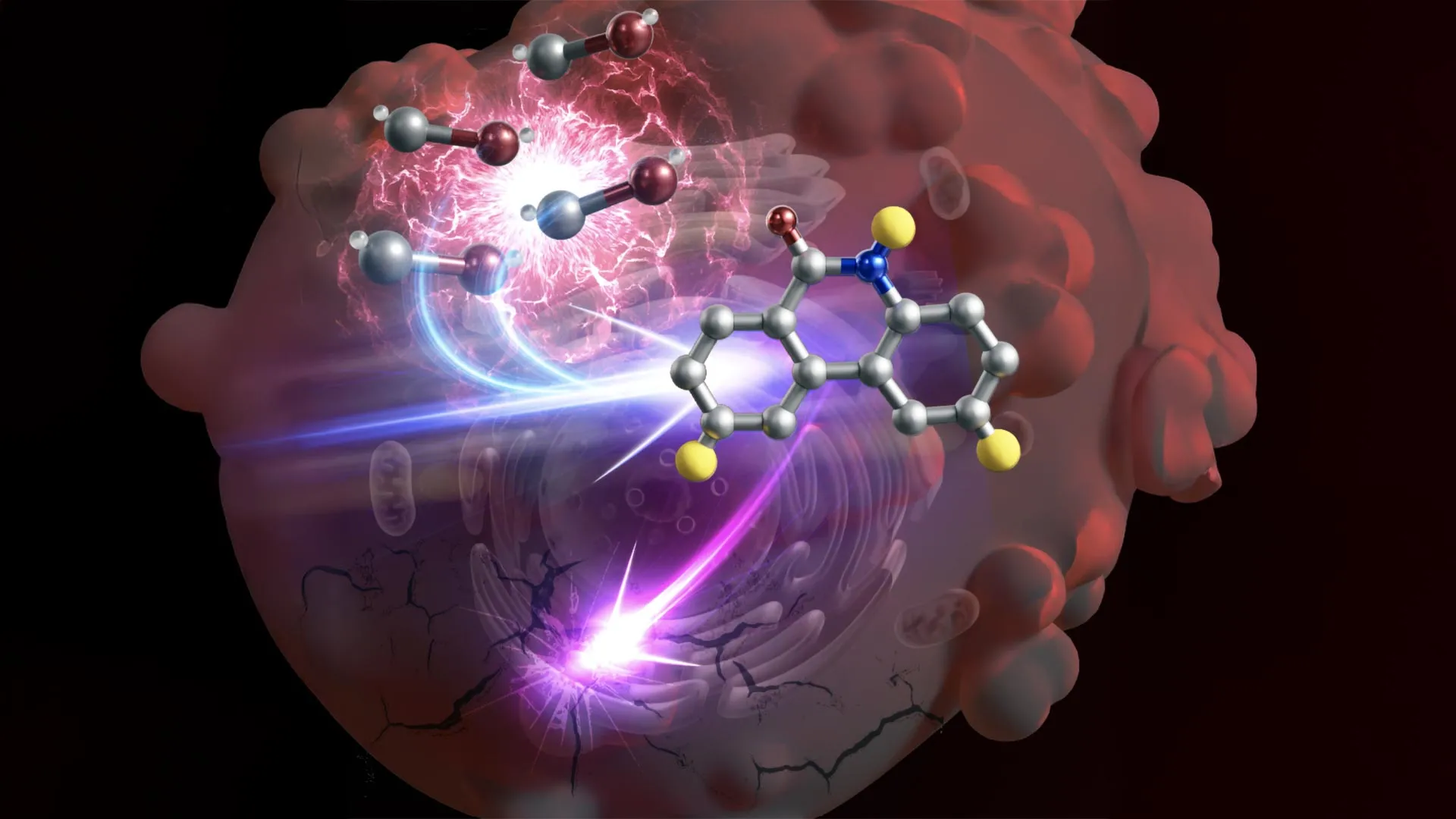
Researchers in Japan have developed an innovative way to turn a chemical produced by cancer cells into a weapon against them. Instead of delivering toxic drugs throughout the body, their experimental approach uses carbon monoxide released by cancer cells to manufacture anticancer compounds directly inside the cells themselves. The research, led by Katsunori Tanaka at the RIKEN Pioneering Research Institute (PRI) in Japan, was published in Nature Communications.
In laboratory experiments, the team demonstrated that a specially designed compound could trigger drug production inside cancer cells without generating the same toxic substances in healthy cells. Although the technique is still at an early stage, it could eventually provide a way to attack tumors while reducing the harmful side effects associated with conventional cancer treatments. Turning Cancer's Own Toxic Gas Against It One of the greatest challenges in cancer treatment is destroying malignant cells without damaging healthy tissue.
Traditional chemotherapy can cause serious side effects because its toxic effects are not always limited to tumors. Tanaka and other researchers are investigating more selective strategies that could make cancer treatments safer. Their long-term goal is to replace the direct delivery of toxic drugs with relatively harmless compounds that become active only after entering cancer cells.
These compounds would use substances already present inside tumors to generate therapeutic drugs exactly where they are needed. Carbon monoxide offers an intriguing opportunity for this approach. Although best known as a poisonous gas produced by sources such as gasoline engines, carbon monoxide is also generated naturally by many types of cancer cells.
Because tumors can produce unusually high amounts of the gas, it may serve as a useful biological marker for identifying cancer cells, provided it can be detected. Scientists in RIKEN's Biofunctional Synthetic Chemistry Laboratory investigated whether they could exploit this difference. Their strategy involved delivering a metal catalyst into cells and using the excess carbon monoxide in cancer cells to drive a chemical reaction that produces a toxic compound.
In principle, the reaction would occur primarily in cancer cells, where enough carbon monoxide is available, while sparing normal cells. Protecting the Catalyst Inside Cancer Cells To make the system work, the researchers turned to a class of compounds known as palladacycles. These metal-containing compounds can react with carbon monoxide to produce an organic molecule called phenanthridinone.
Extract — continue reading at the source.