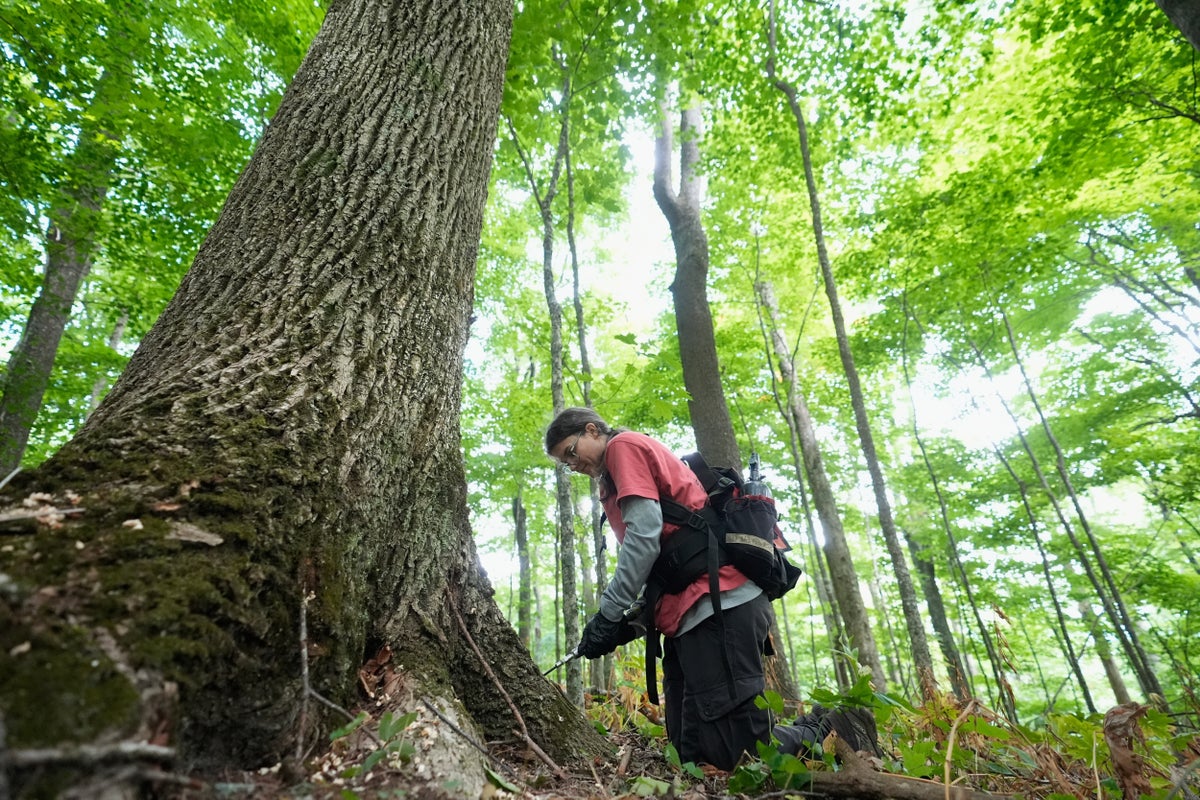
The fungal pathogen that decimated millions of American elms across the U.S. is now being used to restore the iconic species. In Vermont, Leila Wilson, a research ecologist with the U.S. Forest Service, is among the scientists leading an effort to overcome Dutch elm disease, which has killed tens of millions of elm trees over the last century.
Scientists with the Forest Service and The Nature Conservancy Vermont spent the summer injecting 6,000 young elms with Dutch elm disease spores to evaluate their resistance. The surviving saplings will go to a breeding program designed to expand the genetic diversity of disease-tolerant elms, with the goal of eventually using them for restoration across forests, riverbanks, and yards. "We will put those newly propagated trees into a seed orchard, basically just a big fenced area, will grow and love those trees for about 15 or so years, at which point they should produce seeds, and that seed can be used for restoration," Wilson said.
The young elms were bred from a group of several dozen Northeast trees that survived Dutch elm disease, a fungus introduced to the U.S. nearly a century ago. Spread by bark beetles, the pathogen blocks water transport in trees, causing them to starve. This disease is the primary reason elms exceeding 70 feet (21 meters) in height are far less common in New England today than in past generations.
The initiative to protect elms forms part of a broader national push to curb forest pests and diseases that jeopardize longstanding industries like logging and endanger delicate ecosystems. Preserving American elms is critical to climate change efforts because they strongly affect the hydrology of surrounding ecosystems, explained Kathleen Knight, a Forest Service research ecologist based in Ohio. This role is especially vital during an era of changing weather, when unpredictable droughts and flood events threaten forest lands.
Elms are particularly vital in wet forest regions, Knight noted. They tolerate standing floodwaters, withstand harsh northern winters, and absorb excess rainfall like a sponge to help prevent devastating flood damage along river networks. "And these invasive pests and pathogens have been having a huge impact on these tree species.
And we're just trying to get those species back to the role they previously played in these systems," Knight said. The elm also holds deep cultural significance in the Northeast, said Gus Goodwin, a senior conservation planner for The Nature Conservancy. Although elms grow throughout many parts of the country, they were once a ubiquitous feature in New England towns, making their loss deeply felt across local communities.
Extract — continue reading at the source.