Some zoom in to the millimeter scale, capturing fungus-like protists called slime molds, while others feature big, charismatic mammals. Both the adult and young photographer winners were in black and white this year, a first for the contest. It demonstrates the “enduring power of monochrome imagery to tell compelling wildlife stories,” according to the statement.
The competition, widely considered the most prestigious wildlife photography contest in the world, aims to do more than just highlight animals. The wide-ranging scenes of life that earn accolades from the judges often have a conservation purpose, revealing “powerful stories from the natural world and the urgent need to protect it,” per the statement. Displayed in a gallery online, this year’s recognized images will also be on view at London’s Natural History Museum from October 16 through July 11, 2027.
In the meantime, check out the winning photos below. In Namibia’s Huab River Valley, Italian photographer Federico Veronesi was tracking elephants. He spotted drag marks in the sand of a dry riverbed and followed them to a group of the mammals.
A female elephant revealed what had left the tracks: She was carrying a dead calf, with its leg wedged between her tusk and trunk. Intellectually it’s proof that animals have cognition.” Both Asian and African elephants have been known to mourn their dead and even bury them. Lying flat on the ground, young photographer Oscar Whitfield was eye-to-eye with this dung beetle in Zimbabwe.
By rolling, eating and burying poop, the thousands of species of dung beetle worldwide help clean up environments and promote decomposition of waste. Other newts, hungry and in densely packed populations, might be able to gulp down a clutch. So, female newts stick around to protect their eggs after laying, waiting until the gelatinous sac around them swells and the clutch becomes too big to be swallowed.
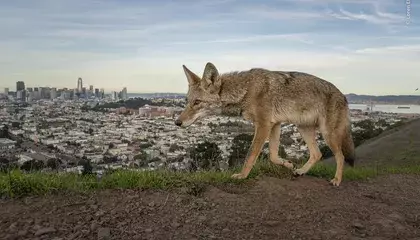
Biologist and photographer Anton Sorokin has watched newts many times, but this was the first time he saw this posture. In his winning shot, a newt cradles another clutch of eggs in her arms as she lays, her feet interlocked on an underwater stem to protect the eggs. Wild coyotes prowl San Francisco’s Bernal Heights Park, hunting rodents in the urban environment alongside humans and their dogs.
Extract — continue reading at the source.