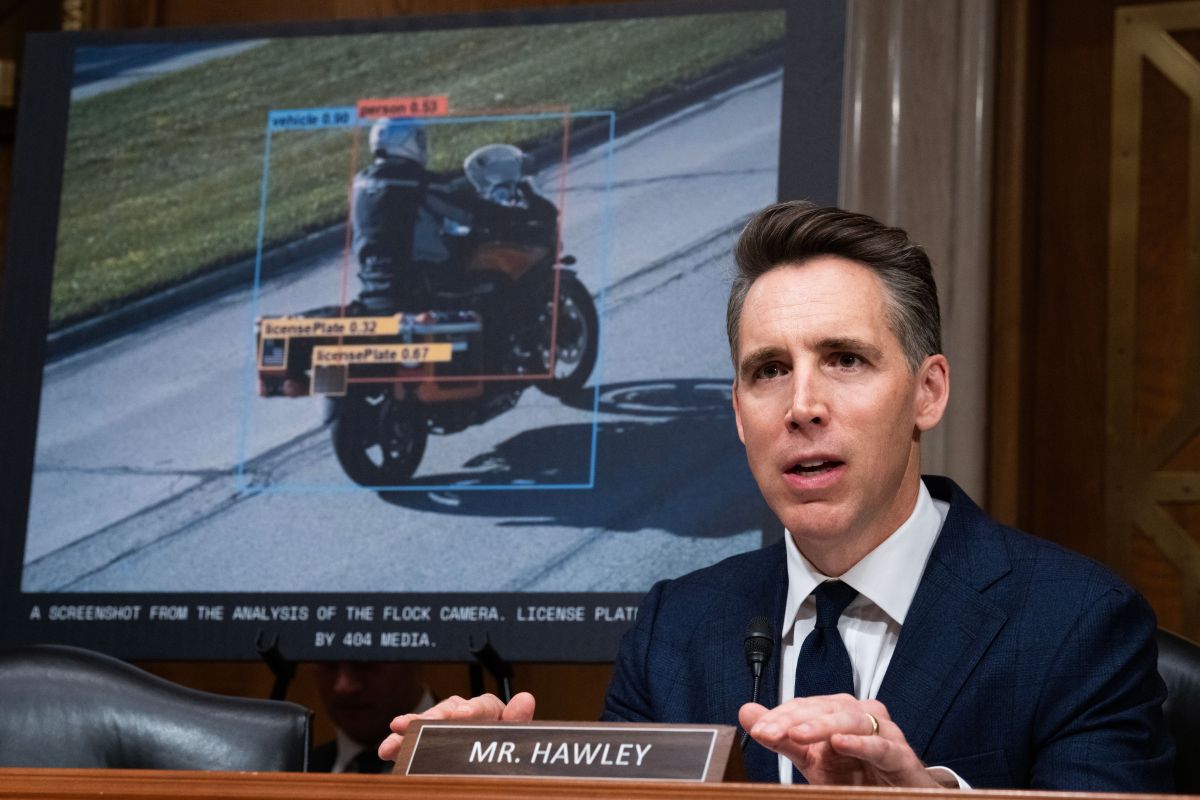
Senators called for tighter rules and privacy safeguards around AI-powered license plate readers Wednesday, as they raised concerns about the potential consequences of errors and unrestricted access to vehicle-location data. The demands emerged Wednesday during a Senate Judiciary Subcommittee on Crime and Counterterrorism hearing focused on Flock Safety, whose network has grown to more than 120,000 cameras across 49 states, according to the company. Flock says its connected network allows law-enforcement agencies to share vehicle evidence across jurisdictions, with searches subject to audit controls.
But senators and witnesses said the growing scale of the network raises new questions about privacy and Fourth Amendment protections. Republican Senator Josh Hawley, who chairs the subcommittee, said lawmakers need answers about what surveillance companies collect, who can access it, how long information is stored and how searches are conducted. He also criticized the CEOs of Flock and other major surveillance companies for declining invitations to testify.
The concern is not simply that cameras record passing vehicles. Modern systems can make those records searchable across a large network, potentially allowing investigators to reconstruct where a vehicle has traveled over time. Ranking Member Dick Durbin, a Democrat, acknowledged that license plate readers had existed for a number of years and could have legitimate law-enforcement uses.
That capability has prompted calls for restrictions on historical searches, data retention and access between law-enforcement agencies. Alasdair Whitney, legislative counsel for the Institute for Justice, told the panel that networked license plate readers have transformed what was once a point-in-time identification tool into a system capable of reconstructing movements. The Fourth Amendment protects Americans against unreasonable searches and seizures.
The Supreme Court has previously ruled that people can retain Fourth Amendment protections in location information collected by third parties. United States, the court held in 2018 that the government's acquisition of historical cell-site location information constituted a search under the Fourth Amendment. The court emphasized that long-term location records can reveal detailed information about a person's life.
Whether similar protections apply to extensive automated license plate-reader records is now emerging as a legal and legislative question. Whitney urged Congress to require warrants before law enforcement searches historical location data and to impose limits on how long it can be retained. He also said federal funding could be conditioned on states and localities adopting similar safeguards.
Extract — continue reading at the source.