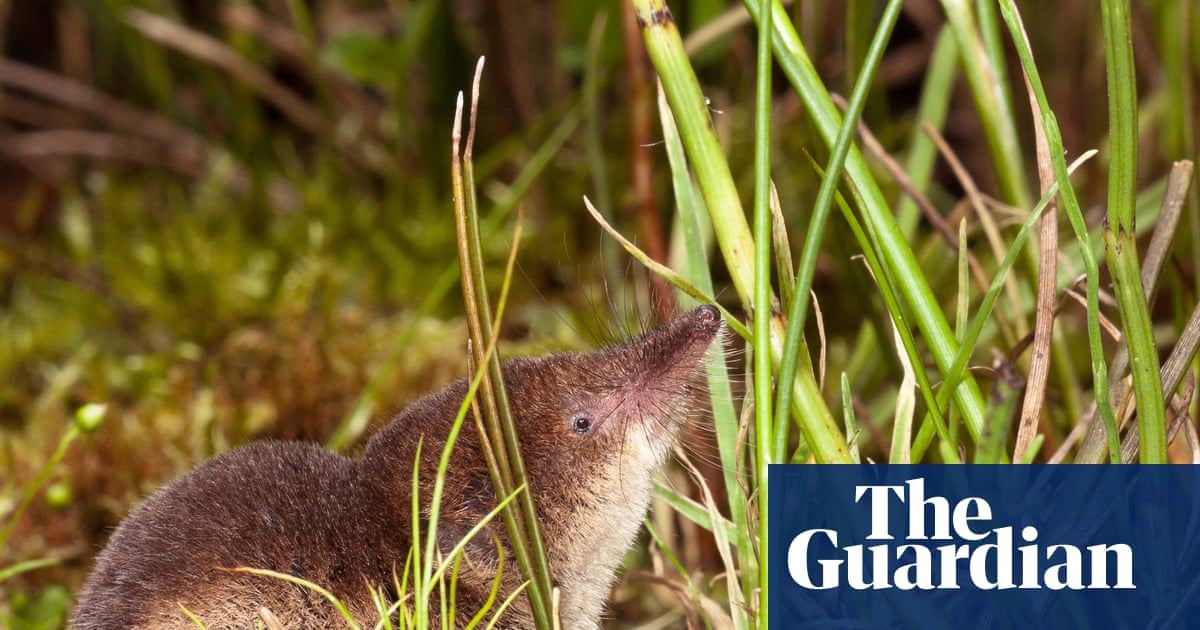
Humans turn to heated blankets and fluffy socks to cope with winter, but long-clawed shrews have a very different adaptation: they increase the size of their snouts. Researchers have previously discovered that certain small mammals, including the common shrew and European mole, reversibly shrink their body mass, skull size and brain mass in winter, with regrowth seen in the spring – a strategy that has been named Dehnel’s phenomenon. Scientists now say they have documented similar changes in the long-clawed shrew, but have discovered the opposite trend occurs for the snout.
Writing in the journal Proceedings of the Royal Society B, Ikeda and colleagues describe how they examined 136 skulls from long-clawed shrews, collected in Hokkaido between 1948 and 1988 and now housed at the Botanical Garden of Hokkaido University in Japan. The researchers note that wild, long-clawed shrews are born between spring and autumn and typically die before they reach their second winter. The specimens available covered each month of this lifespan, and were classed as belonging to either a sexually immature or sexually mature shrew.
Tracking 16 measurements by month, they found several changed by month or season – and not in a uniform way. Among other findings, shrews collected over the winter season, between January and April, were found to have a brain case height (vertical skull measurement) 12% smaller than that of younger shrews collected from August to September in their first year of life. However, the height of the snout, also known as the rostrum, was 7% larger and its width was 6% greater in shrews collected in winter.
By contrast, snout width – although not snout height – was smaller. The researchers suggest a number of explanations for the seasonal change in snout size, including regulating body temperature. The researchers said a third possible explanation was mechanical reinforcement of the snout, allowing the shrew to process tougher prey when food is scarce – although they found little evidence to support this.
Ikeda said it was possible seasonal changes in snout size could occur in other shrews, adding that Hokkaido was home to three further species.
Extract — continue reading at the source.