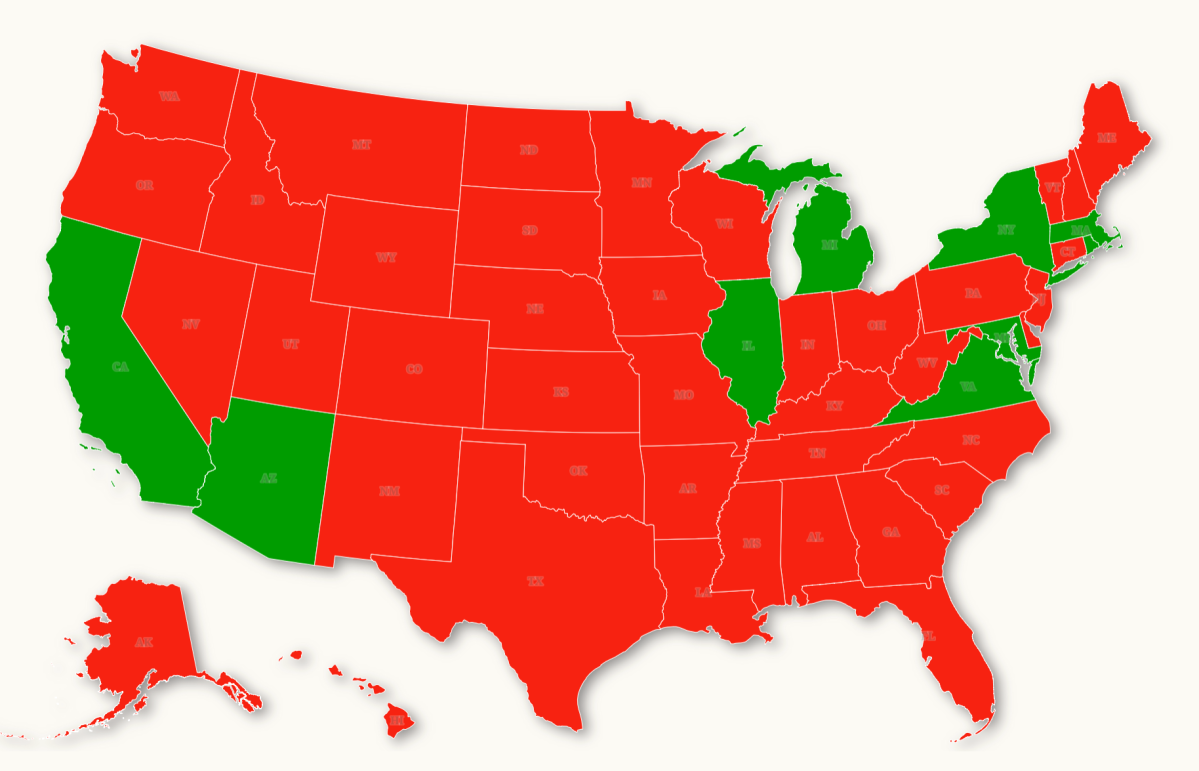
Some of the most vulnerable low income Americans may no longer be able to use their SNAP benefits to buy fast food restaurant meals, under a new law proposed by a Texas Republican. Representative Brandon Gill introduced the Ending Restaurant Purchases with SNAP Act on Thursday, legislation that would eliminate the SNAP Restaurant Meals Program (RMP), preventing claimants from using their vouchers to get prepared food from any participating restaurants, including McDonald’s and Burger King. As our map shows, the bill would impact nine states that have RMP in place, including California and New York.
"SNAP is supposed to help struggling Americans put nutritious food on the table, not stick taxpayers with the bill for fast food," Gill told The New York Post, arguing that more than half a billion dollars had been spent at restaurants in two years while the Trump administration is trying to restrict purchases of unhealthy food. Newsweek has contacted Gill's office, McDonald's, Burger King and SNAP advocacy groups for comment via email outside of regular working hours. SNAP benefits are paid to low- and no-income households across the United States, with benefits loaded onto cards that can be spent at participating grocery stores and some restaurants.
Around 37 million people are enrolled in the program. The proposal comes as the Trump administration attempts to steer SNAP toward healthier purchases, approving a slate of state waivers that restrict benefits from being used to purchase products including soda and candy under the banner of its Make America Healthy Again, or MAHA, agenda. The measure targets an exception to SNAP’s general prohibition on purchasing food that is hot when sold.
The USDA describes the RMP as an optional state program for recipients who may be unable to prepare meals themselves or do not have permanent housing where food can be stored and cooked. The proposal would leave in place provisions allowing qualifying public and nonprofit organizations to provide meals, including home-delivered meals for some elderly and disabled recipients. In participating states, every member of an eligible household must be elderly, disabled or homeless, or be the spouse of someone who qualifies.
EBT cards are coded to identify eligible recipients and are automatically declined at participating restaurants if the cardholder does not qualify. According to Propel, a company that builds technology for safety net programs, restaurants accepting EBT lists participating locations from chains including Subway, KFC, Taco Bell and Pizza Hut, as well as McDonald’s and Burger King, alongside independent restaurants. Gill’s proposal follows a July effort with Senator Joni Ernst of Iowa and several other Republican lawmakers asking Agriculture Secretary Brooke Rollins and Health and Human Services Secretary Robert F.
Kennedy Jr. to review the program. In their letter to the administration, the lawmakers argued that what began as a limited accommodation had expanded substantially and was increasingly dominated by large fast-food and quick-service chains. The nine states currently operating an RMP are: Arizona, California, Illinois, Maryland, Massachusetts, Michigan, New York, Rhode Island and Virginia, according to the USDA.
Extract — continue reading at the source.