As President Donald Trump bashes Americans for killing the "Golden Goose" with their growing opposition to data centers, his administration is moving to make it harder for the public to comment and weigh in on proposed data centers. Under a proposal by the Environmental Protection Agency (EPA), states would no longer need to notify the public and seek comment before issuing air pollution permits for data centers and other industrial facilities. The plan would let developers start building data centers before their permits are approved, effectively weakening or eliminating requirements for public comment.
According to critics, the move would strip local communities of their say in the construction of new data centers in their neighborhoods, leaving the public in the dark as to what is happening around them. While states would still be able to offer the public an opportunity to comment on these projects, this would no longer be a binding requirement mandated by EPA. If the proposal is made final, more data centers could get approved faster.
Many AI data centers need permits for backup diesel generators, gas turbines and other equipment that can trigger air-permitting requirements. Developers often complain that hearings and public-comment periods slow projects down. But the most important consequence of the proposal would be to shift more responsibility on to individual states, potentially creating a patchwork system where some states maintain robust public-hearing procedures, others offer limited opportunities, and some could dramatically speed up approvals.
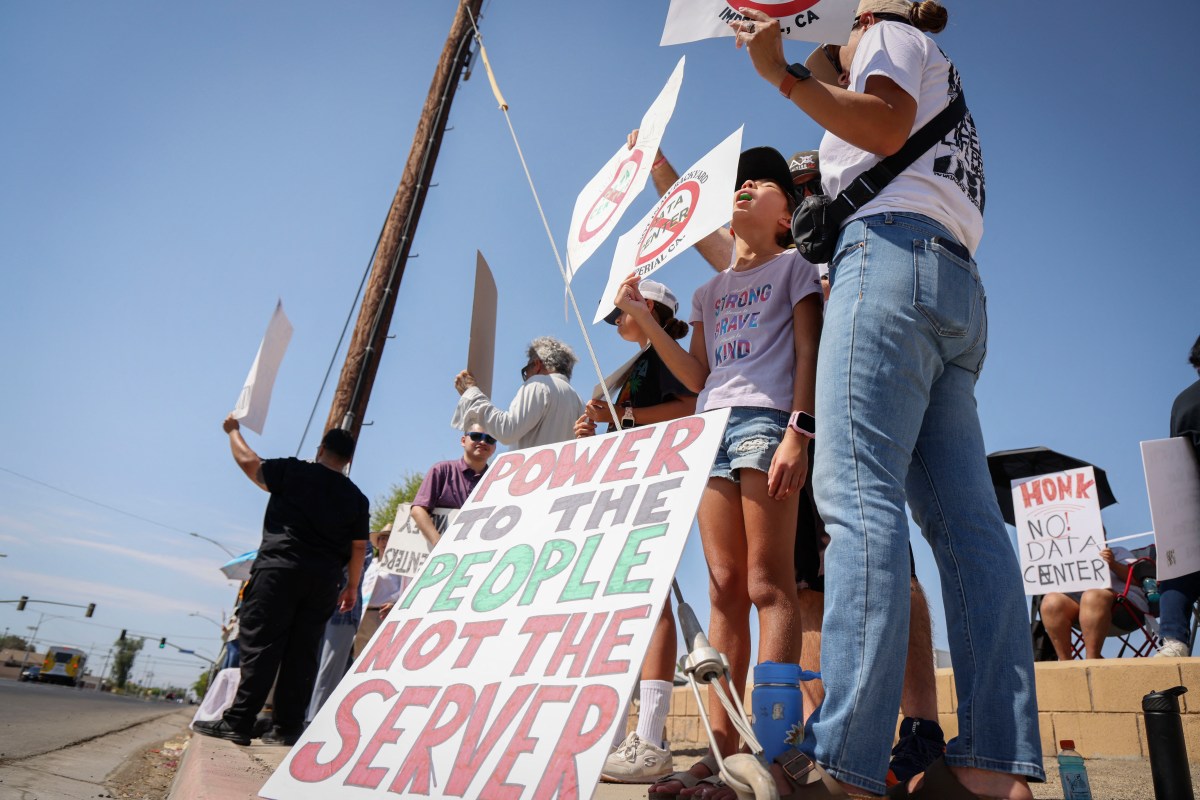
In states that do not require public notice or hearings beyond those set by federal agencies, especially in the South and Midwest, projects could move from proposal to construction more quickly even as they would do so against local communities’ will. This would particularly matter in fast-growing data-center hubs such as Virginia, Texas, Georgia, Arizona and parts of the Midwest, which already have a heavy data center presence in their territories. Nearly 200 advocacy groups and several states have voiced their opposition to EPA’s plan, saying it would disempower communities by depriving them of opportunities for public participation.
"People need to have a chance to have a say before they see bulldozers," Keri Powell, a senior attorney at the Southern Environmental Law Center, a nonprofit legal advocacy group, said in a statement quoted by The New York Times. "By eliminating the long-standing federal requirement for public notice, this proposal continues efforts by the Trump administration to turn its back on the fundamental principle of transparency," Mike Koerber, a former deputy director of EPA’s air quality office, said in a statement reported by The . If approved, the proposal would create "an unlevel playing field where citizens in one state are kept completely in the dark about new data centers and heavy industrial emissions in their backyards, while neighboring states maintain oversight," Koerber added.
Democratic attorneys general from 14 states wrote a joint letter to voice their opposition to the proposal, including those from Massachusetts, California, Connecticut, Delaware, Hawaii, Illinois, Maryland, Michigan, Minnesota, Oregon, Rhode Island, Vermont, Washington, Wisconsin, the District of Columbia, the City of New York, and the City of Chicago. None of these states is a data center hub. In their letter, they argued that "even ‘minor’ sources," as categorized data centers, "can pose significant health and environmental impacts." has responded to criticism by saying critics are spinning a false narrative.
Extract — continue reading at the source.