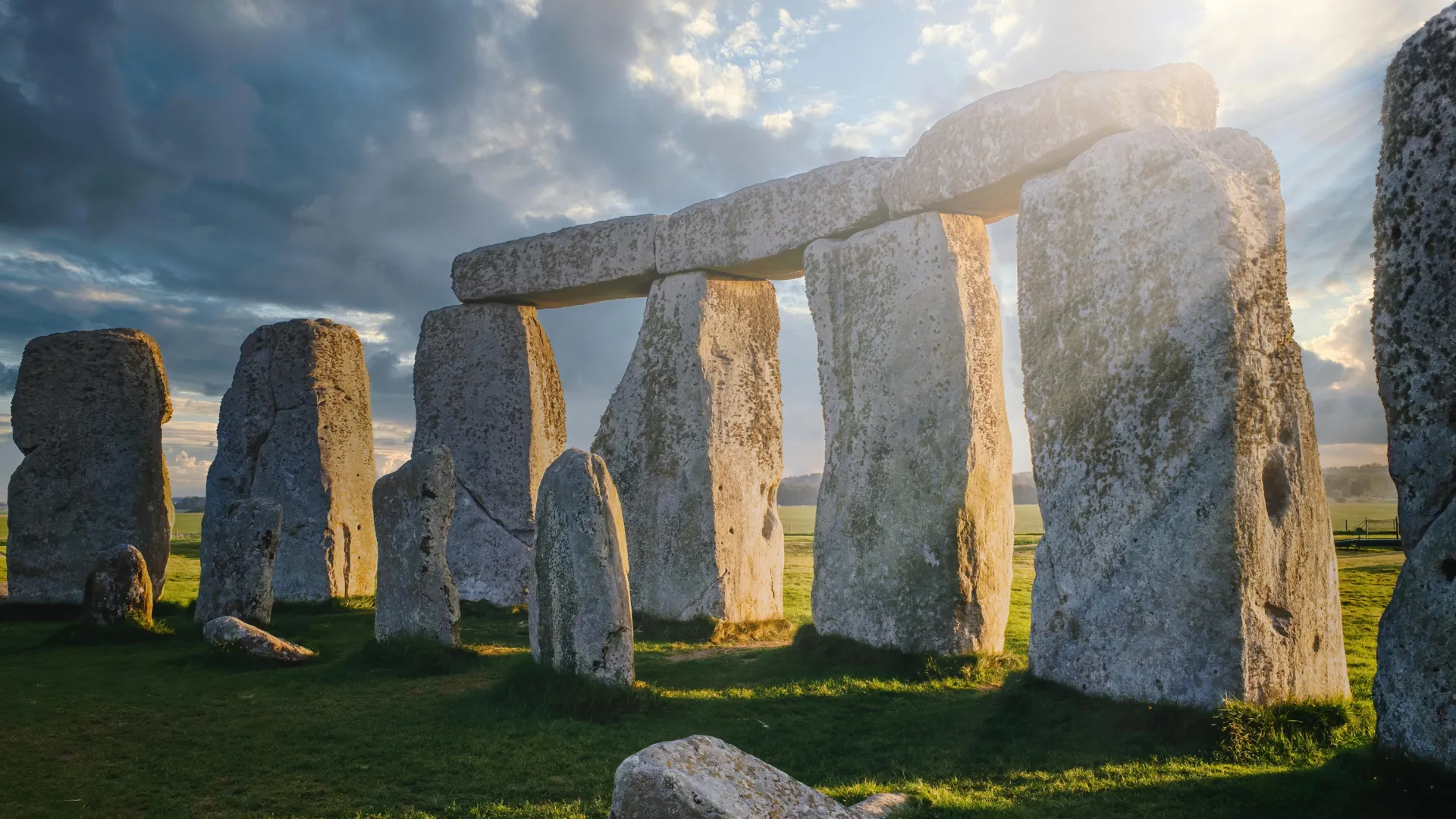
Researchers studying the origins of Stonehenge's Altar Stone have proposed a new possibility for how the enormous rock began its journey from Scotland to southern England. A team from Sheffield Hallam University and Curtin University, Australia, analyzed ancient ice movement and found that glaciers during Britain's last ice age may have transported the stone from Scotland's Orcadian Basin as far as Dogger Bank in the North Sea. From there, however, people would still have had to move it hundreds of kilometers to Salisbury Plain.
Stonehenge's central Altar Stone is a six-tonne sandstone megalith that researchers now believe came from northeast Scotland, roughly 700 km (435 miles) from Stonehenge. Its distant origin has raised one of the monument's most intriguing questions: how did such an enormous stone travel so far? To reconstruct the possible route, researchers combined mineral grain dating with computer models of ancient ice sheets.
This allowed them to investigate both where the stone originated and whether glaciers could realistically have carried it south. Remy Veness, co-lead author of the paper from Sheffield Hallam University, said: "We recently discovered that the origin of the Altar Stone is northeast Scotland, but how it traveled 700 km to Salisbury Plain is widely debated. "Our research gives a new plausible explanation for part of the journey to Salisbury Plain.
"What is exciting about these findings is that they could imply that the people of Doggerland attached cultural significance to the Altar Stone long before it was incorporated into Stonehenge. Hypothetically, the Altar Stone could have been significant enough to be willing to move the stone at least twice; First to potentially save it from being submerged by rising sea levels at the end of the last ice age and then again to its final resting place on Salisbury Plains." Doggerland was a Neolithic landscape off the east coast of England that is now submerged beneath the North Sea. Because the area had no natural rock outcrops, any large stones found there would have had to arrive from somewhere else, potentially carried by glaciers.
The researchers suggest the Altar Stone could have been deposited in the Dogger Bank region by ice. People living in the area may then have moved it again as the landscape changed and sea levels rose. From Doggerland, the stone could eventually have been transported toward the Berkshire Ridgeway, regarded as the oldest road in Europe.
The route was in use around the time Stonehenge was built and may have provided an important corridor toward Salisbury Plain. Glaciers Could Only Explain Part of the Journey Co-lead author Dr. Anthony Clarke, from the Timescales of Minerals Systems Group within Curtin's School of Earth and Planetary Sciences, said the evidence points toward a complicated journey involving multiple stages rather than one simple route.
Extract — continue reading at the source.