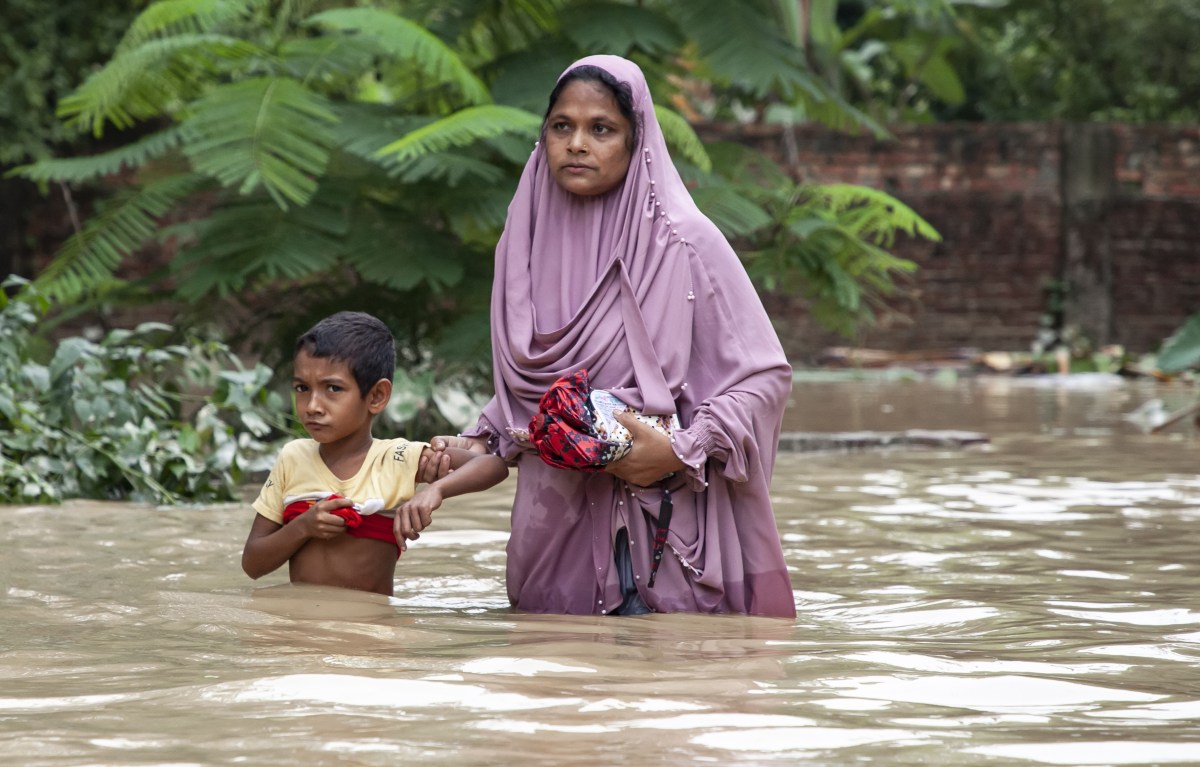
Every time another catastrophic flood, wildfire, or heat wave strikes, I know exactly what is coming next. Not a weather report, but a hastily called press conference where someone will stand behind a podium and call it “unimaginable.” That word should make us uncomfortable. Calling a disaster unimaginable suggests that nobody could reasonably have anticipated it.
After decades of climate science, that explanation is becoming increasingly difficult to defend. The United States alone endured 403 weather and climate disasters between 1980 and 2024, each causing at least $1 billion in damage. Their combined cost exceeded $2.9 trillion.
In 2024, 27 such disasters occurred, making it the second-highest annual total on record. But this is not simply an American story. Around the world, communities are confronting extreme heat, flooding, wildfire and other hazards, the consequences of which increasingly extend across economies and borders.
I have spent decades studying climate science. Every time I hear another disaster described as “unimaginable,” I don’t hear an accurate description. If something could not have been imagined, then nobody can reasonably be held responsible for failing to prepare for it.
But scientists did imagine these conditions. More importantly, they modeled them. Syukuro Manabe’s pioneering climate research demonstrated decades ago how increasing carbon dioxide concentrations would alter atmospheric temperatures.
His work helped establish the foundations of modern climate modeling and ultimately contributed to his 2021 Nobel Prize in Physics. The warnings became increasingly specific. In 2011, climate scientists Noah Diffenbaugh and Martin Scherer examined when exceptionally hot summers could become increasingly common as global temperatures rose.
Extract — continue reading at the source.