Sweet, soft and fragrant, the fig is one of those fruits that seems to capture summer in a single bite. Fresh from the tree, it has a delicate sweetness and juicy texture; dried, its flavour becomes deeper and richer. Alongside its taste, figs are valued for their fibre, natural sugars, minerals and other nutrients, making them a popular part of a balanced diet.
In Azerbaijan, however, the fig means more than what is on the plate. Particularly in Absheron, fig trees have long been part of the local landscape, gardens and household traditions. Families have enjoyed the fruit fresh during the summer, dried it for later use and turned it into jams, preserves, compotes and homemade sweets.
The fruit has also found a place in Azerbaijani cuisine, where seasonal produce has traditionally been treated with care and imagination. A ripe fig can be enjoyed on its own, served alongside other foods or transformed into a sweet preserve that brings the flavour of summer to the table long after the season has ended. Perhaps that is why the fig carries such a strong sense of place.
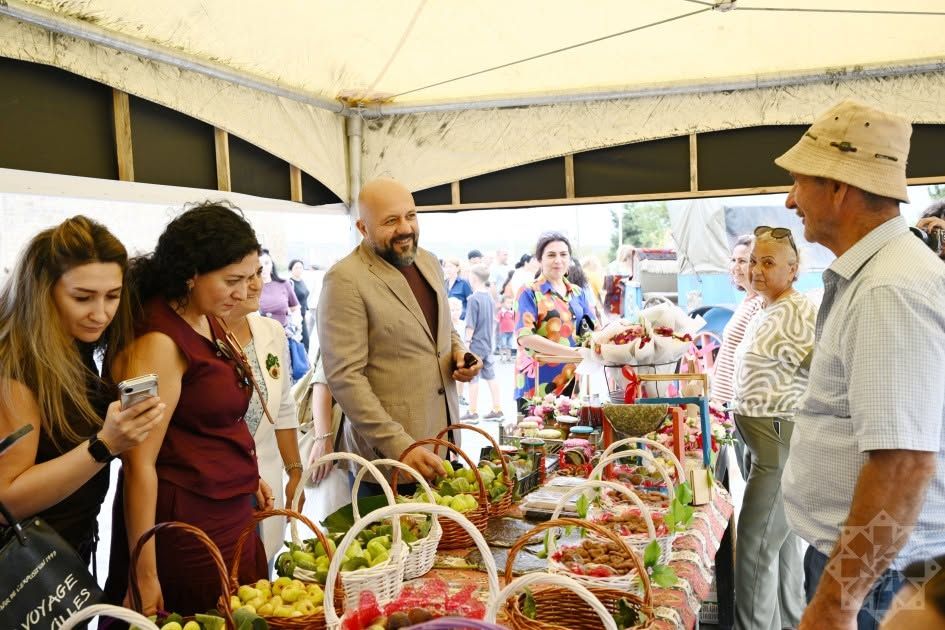
Its flavour recalls warm days, village gardens, family kitchens and the generosity associated with Azerbaijani hospitality. In Absheron, it is not simply something that grows in the garden - it is part of the character of the region. This connection between food, land and tradition was at the heart of a recent celebration at the Gala State Historical and Ethnographic Reserve, where the familiar summer fruit became the centre of an entire festival.
With organisational support from the Administration of the Icherisheher State Historical-Architectural Reserve and in partnership with the Social & Ecological Center EkoSfera, the Fig Festival brought together gastronomy, traditional crafts, music, entertainment and family activities. For a day, Gala Reserve became a colourful world dedicated to one of Absheron's most recognisable fruits. The festival presented the fig not simply as a seasonal delicacy but as part of the cultural heritage of the region.
Its story is closely connected with the land itself and with the people who have cultivated, harvested and prepared it over generations. Visitors had the chance to explore this connection through a programme designed for both adults and children. Workshops introduced guests to traditional crafts, while puppet theatre, musical performances, dances and presentations added to the festive atmosphere.
Extract — continue reading at the source.