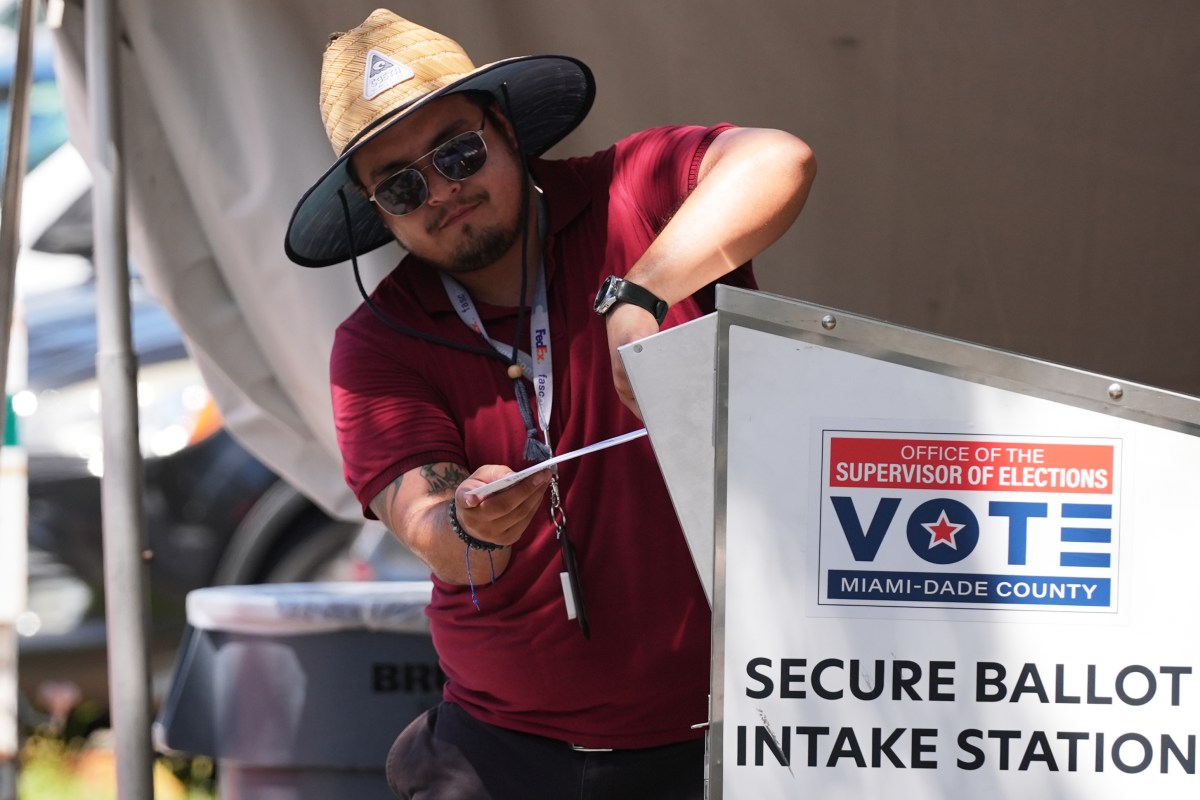
A federal judge in Massachusetts rebuked the Trump administration after finding that it violated a court order related to election rules for mail-in ballots, while also taking aim at a recent U.S. Supreme Court ruling that favored the government. In a sharply worded order issued Wednesday, U.S.
District Judge Indira Talwani said federal officials moved forward with a ballot-mail rule despite a preliminary injunction and suggested the Supreme Court had accepted the government's claims of compliance, echoing concerns raised by Justice Ketanji Brown Jackson about the limits of executive power. The dispute centers on a broader legal battle over President Donald Trump's executive order on federal elections and mail-in voting. The case has become a flashpoint in the ongoing struggle between lower federal courts and the Supreme Court over nationwide injunctions and the scope of presidential authority.
Talwani's order came one day after the Supreme Court stayed a separate injunction in a related case, allowing parts of the administration's election-related plans to move forward. Her decision underscores growing friction between some lower-court judges and the high court as litigation over this year's midterm elections intensifies. Signed on March 31, Trump's Executive Order 14399 directs federal agencies to take a larger role in verifying voter eligibility and administering mail voting procedures.
Citizenship and Immigration Services and the Social Security Administration are instructed to share data with states to help identify individuals who are eligible to vote in federal elections. The order also directs the United States Postal Service (USPS) to work with election officials on the handling of mail ballots, including limiting certain ballot-related mail services to voters whose eligibility has been verified through state voter rolls and federal databases. Trump has argued that the measures are necessary to protect election integrity and prevent noncitizens from casting ballots in federal elections.
The order also calls for stricter proof-of-citizenship requirements for voter registration, conditions certain federal election funding on state compliance with federal election standards, and seeks to ensure that mail ballots are received by Election Day. Critics, including voting-rights groups and several state officials, contend that the order exceeds presidential authority and could create barriers for eligible voters. Instances of noncitizen voting are rare, however, and federal law already makes it a crime punishable by fines, imprisonment and deportation for noncitizens to vote in federal elections.
The Supreme Court on August 24 granted the administration's request to stay an injunction in a related lawsuit, Trump v. In that order, the justices said the lower-court ruling prevented the USPS from "so much as initiating a rulemaking" that could eventually apply to certain states. Talwani referenced that ruling in her decision, noting that the administration had argued before the Supreme Court that it was being harmed because it could not take steps to implement the executive order ahead of the 2026 elections.
Extract — continue reading at the source.