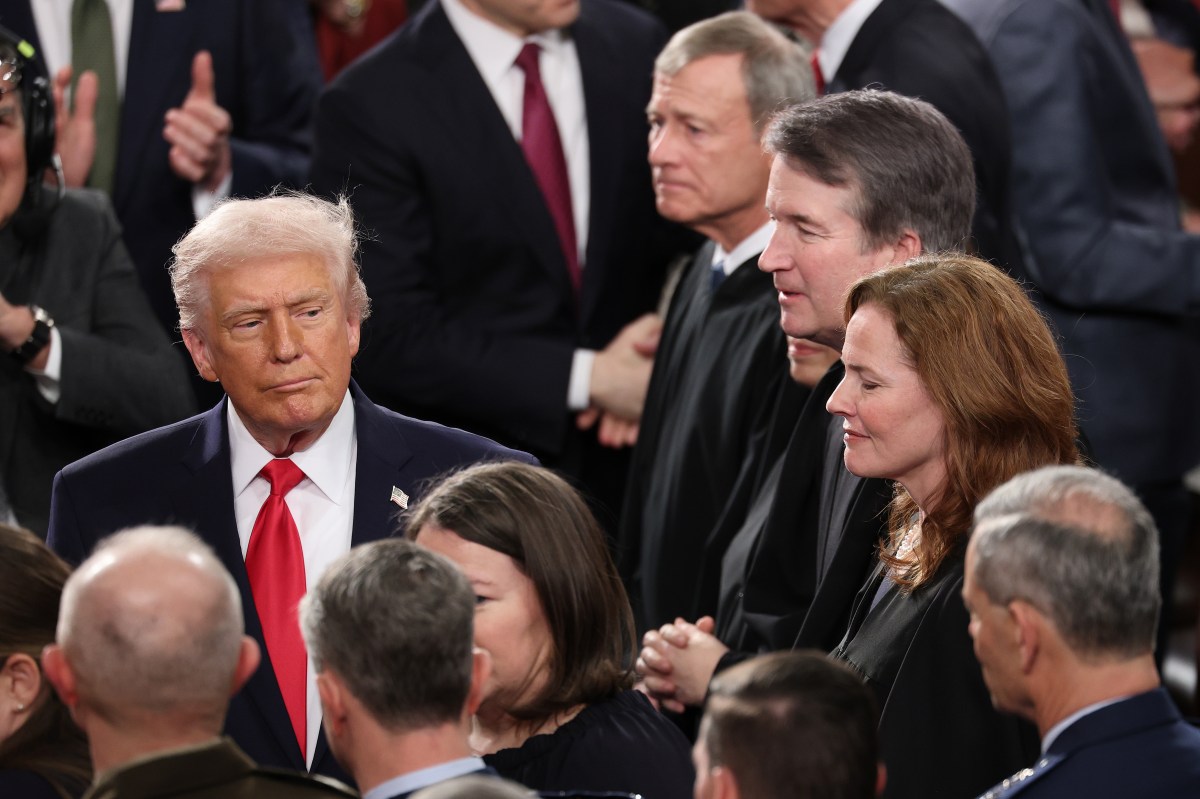
President Donald Trump has grown increasingly frustrated with the justices he appointed to the U.S. Supreme Court, accusing them of disloyalty after a string of landmark rulings went against his administration. The court opens its new term on Monday with the president openly saying he regrets all three of his picks.
Over the coming months, Justices Neil Gorsuch, Brett Kavanaugh and Amy Coney Barrett will weigh cases on immigration detention, deportations and voting rules, putting them once again in the position of ruling for or against the man who nominated them. A Newsweek analysis of 10 major court rulings involving the Trump administration since January 2025 found that Barrett broke with the president most often, voting against his administration's position in seven of them. Kavanaugh did so in five.
Gorsuch, who has drawn some of Trump's harshest personal attacks, ruled against the administration in three. Chief Justice John Roberts, who was appointed by former President George W. Bush, also voted against the administration in seven of the 10 cases and wrote the majority opinion in three of its biggest losses: tariffs, birthright citizenship and the attempted firing of Federal Reserve Governor Lisa Cook.
Trump has treated those votes as personal betrayals. After the court struck down his sweeping tariffs in February, he said the justices in the majority were "very unpatriotic and disloyal to our Constitution." Eight months later, his view had not softened. "They voted against me too often.
I gave them the position of a lifetime, and they vote against me often. They vote for me too," Trump said in an interview with TIME, when asked whether he regretted nominating them. The analysis covered the cases on tariffs, birthright citizenship, the Fed, independent agencies, the National Guard deployment in Illinois, a U.S.
Postal Service rule on mail ballots, late-arriving ballots, two Alien Enemies Act cases and nationwide injunctions. In one of them, Watson v. RNC, the administration backed one side without being a party.
Extract — continue reading at the source.