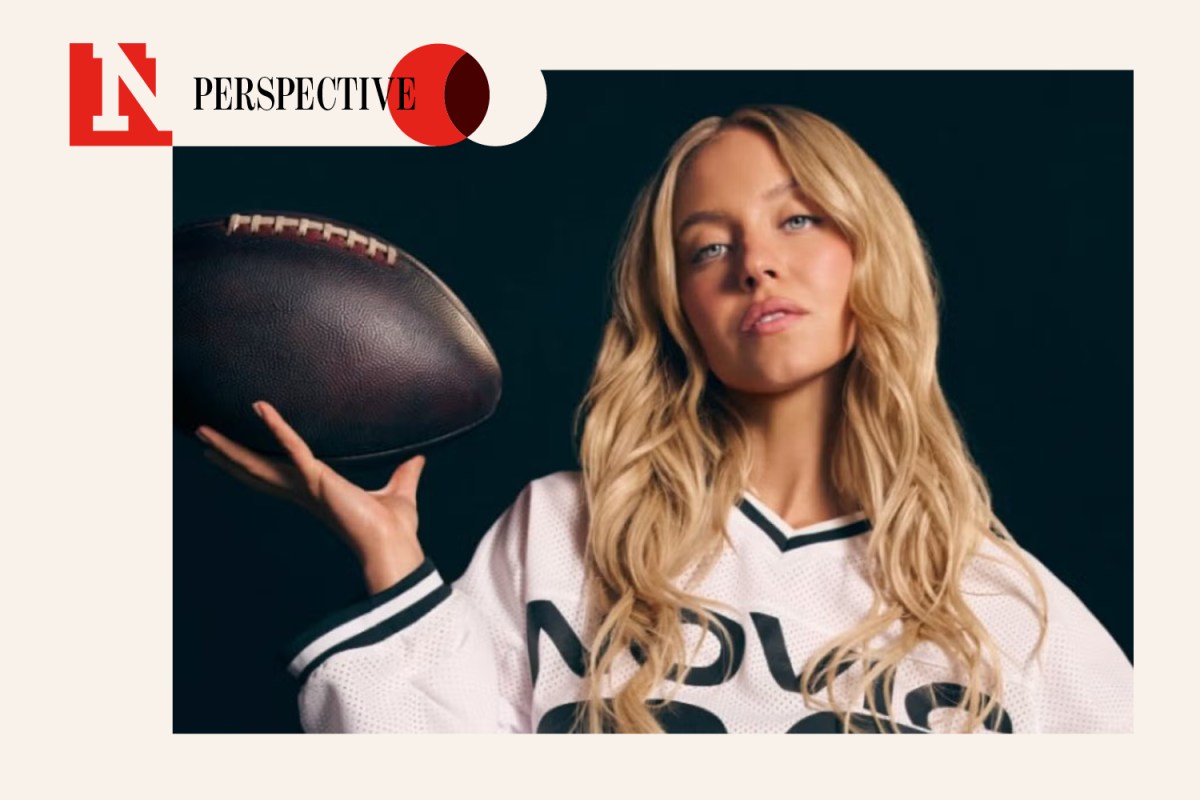
I watched Sydney Sweeney’s new Novig commercial four times in a row. The first time, I wondered how many more gym sessions stood between me and her abs. The second, I tried to work out what makeup she was wearing because her skin looked fantastic.
By viewing four, I had almost remembered that the commercial was supposed to make me think about sports. On that score, the critics have a point. The new campaign for sports prediction market Novig features Sweeney wearing very little and strategically deploying footballs, basketballs and other equipment to keep the ad suitable for social media.
Female athletes were unimpressed. Four-time Olympic swimming champion Ariarne Titmus said she was “infuriated,” asking how society could still be “monetizing a woman’s body and sexualizing women’s sport.” British sprinter Amy Hunt looked into a BBC camera after a race and told Sweeney: “This is what women in sport look like. Muscles, hard work, sweat, blood, tears.” Those objections are serious, sure.
But they also return us to a familiar argument, and one feminism has spent decades without entirely resolving: When a woman deliberately displays her body, when exactly is she exercising sexual agency and when is she allowing herself to be objectified? Sweeney’s latest controversy suggests there may be an unofficial third factor in that calculation: whether the woman displaying it already conforms too closely to the old-fashioned ideal of what men find sexy. In other words: would this really provoke the same reaction if Sweeney weren’t quite so obviously, conventionally hot?
Or is the problem less that she keeps taking her clothes off than that, when she does, she looks exactly as spectacular as the people selling sex have always promised a woman should? Sweeney’s response was considerably more effective than a Notes-app apology: she posted old ESPN Body Issue images featuring Serena Williams, Ronda Rousey, Sue Bird, Megan Rapinoe and other athletes who had posed nude. ESPN explicitly created the Body Issue to celebrate the athletic body.
Its inaugural 2009 edition, which featured Williams on one of six covers, said it would honor athletes across “diverse shapes, sizes, genders and races.” In 2018, Rapinoe described appearing nude alongside then-partner Bird as a celebration of athletes’ “muscles” and “scars” and said their appearance as the issue’s first openly gay couple mattered because “visibility is important.” There was, in other words, an approved emancipatory explanation for the nudity. Modern culture has extended similar permission elsewhere. Lizzo has repeatedly used nudity as an argument about beauty standards and body acceptance, for example.
Extract — continue reading at the source.