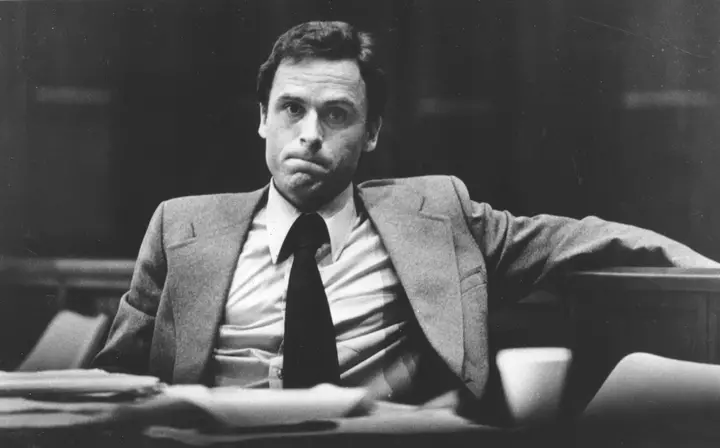
More than 50 years after hunters discovered the body of 17-year-old Melissa Ann Smith in the woods outside Salt Lake City, Utah, authorities say advances in DNA testing have allowed them to tie her death to Ted Bundy—one of the most notorious serial killers in U.S. history—closing one of the state's oldest cold cases. Officials from multiple Utah law enforcement agencies announced Tuesday that forensic evidence discovered during the investigation of the death of Utah teenager Laura Ann Aime led investigators to conclude that the notorious serial killer was responsible for Smith's 1974 murder. Both cases were solved using newer technology capable of separating mixed DNA samples, authorities said.
"This DNA evidence, when considered alongside evidence related to pattern, motive, means and opportunity, established that Ted Bundy was responsible for Melissa Ann Smith's murder," Summit County Sheriff Casey Bates said during a news conference Tuesday. This pushes Bundy's body count to 32, after he had confessed to 30. Utah officials said they are still working to link the death of Nancy Wilcox to Bundy.
Bundy was an American serial killer who murdered young women and girls during the 1970s across several U.S. states, including Washington, Utah, Colorado and Florida. He was known for seeming educated, affable and trustworthy, often using deception to ensnare his victims. In 1977, he escaped from police custody twice before getting recaptured.
In Florida, he committed the infamous 1978 attacks at Florida State University's Chi Omega sorority house. Bundy was convicted of multiple murders and sentenced to death. Bundy's reign of terror has been the subject of several films, documentaries, books and criminology studies over the decades.
At age 42, he was executed on January 24, 1989, in Florida's electric chair. Bundy became one of America's most feared serial killers, often targeting young women and college students, approaching victims in public places and sometimes pretending to be injured to gain their trust. Investigators linked him to killings in Washington, Utah, Colorado, Idaho, Oregon and Florida.
His brutal crimes attracted national attention, and Bundy frequently evaded authorities. By the time he was arrested for the final time in 1978, fear of the killer had spread across much of the country. Bundy confessed to 30 murders before he was executed, although investigators have long suspected the true number of victims was higher.
Extract — continue reading at the source.