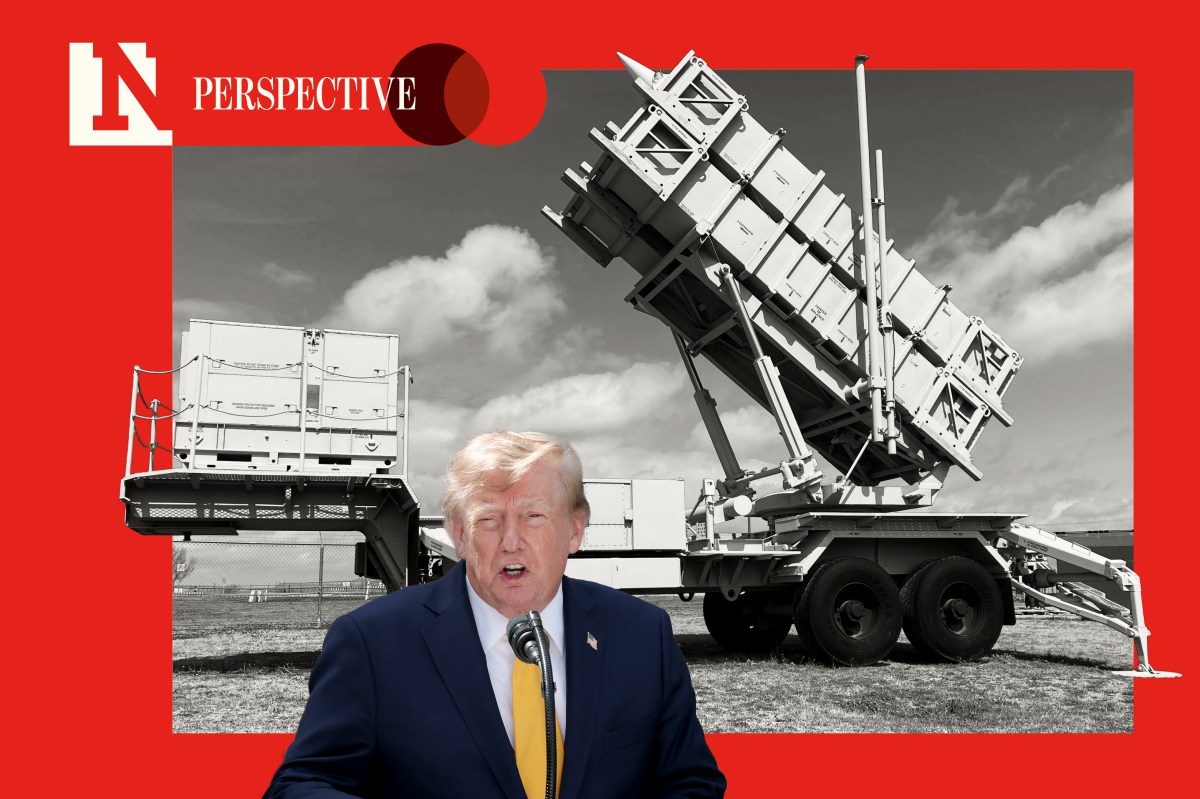
Patriot air defense missiles has taken another turn for the worse this week, after fresh reports of a depletion of stocks down to "beyond critical" levels in Europe. President Donald Trump's war with Iran—now six months old—is to blame. It is, we should say, a characterization the Pentagon and a senior NATO spokesman reject.
Though the latest report from The is not the first and surely won’t be the last. Behind the argument about the readiness of America and its allies to meet the threats posed by the Western world’s various foes sits a second question, one asked of the Trump administration’s flagship industrial strategy. How fast can the economics of "America First" turn depletion into factory capacity—and can it move fast enough to matter?
According to AP, Patriot inventories fell after American stocks in Europe were shifted toward the Middle East, and the Iran conflict has consumed roughly 1,500 of an estimated prewar inventory of 2,330 interceptors. That is about 65 percent, on Center for Strategic and International Studies (CSIS) figures. The economics start with demand the government itself creates.
Missile expenditure naturally generates a replenishment requirement. Washington is trying to make that requirement predictable enough for manufacturers and their suppliers to commit capital to new capacity, so it can keep a ready supply of these vital missiles. The Army describes long-term PAC-3 MSE purchasing in exactly those terms.
Defending the nation starts at home, even if it is conducted through wars abroad. So too does America First economics. For the transmission, look at Camden, Arkansas.
Lockheed Martin says the city hosts final all-up-round production of its PAC-3 Missile Segment Enhancement interceptor. Expansion of production will lift employment there from about 1,200 to 1,850, part of $8 billion to $9 billion Lockheed is investing through 2030 across 20-plus U.S. facilities. On July 29, the Army replaced a one-year contract action with a seven-year arrangement covering fiscal 2026-2032 PAC-3 MSE procurement.
Extract — continue reading at the source.