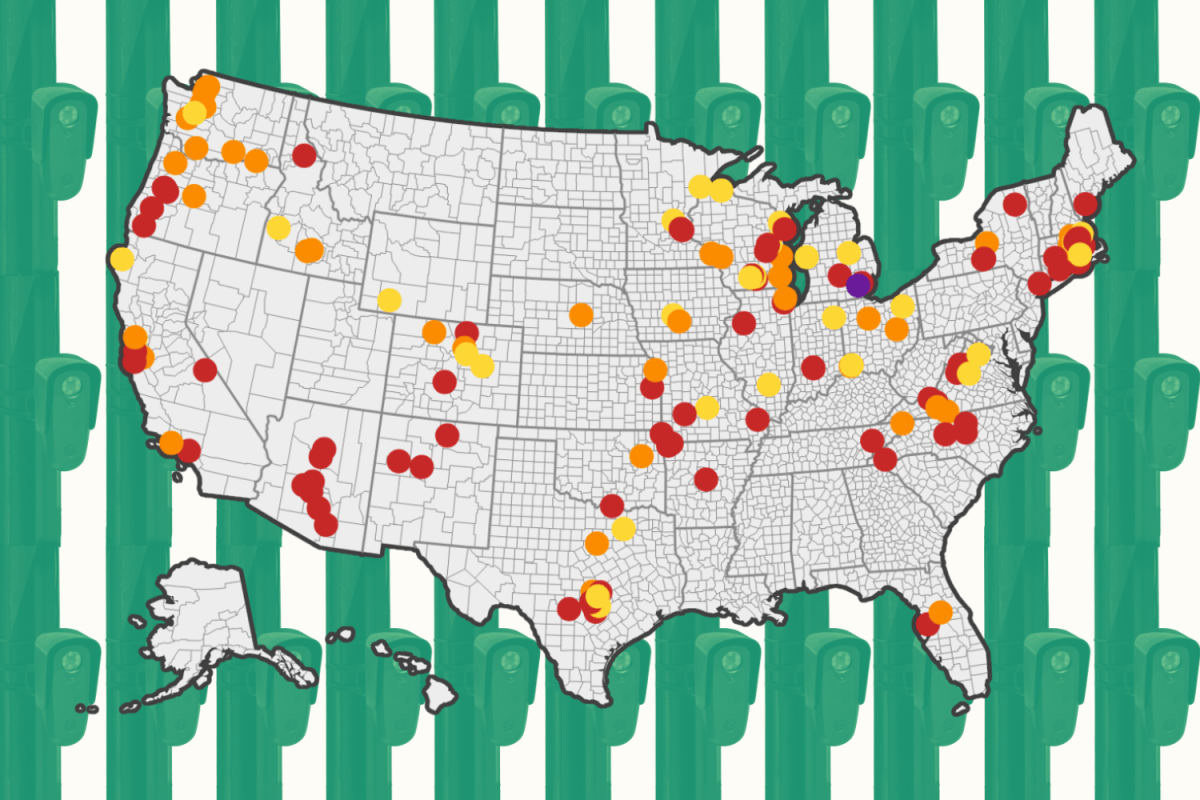
A growing number of communities across the United States are turning away from Flock Safety's automated license plate reader cameras, with Tempe, Arizona, becoming the latest city to permanently shut down its system. A Newsweek map shows the cities, counties and other local government entities that have canceled Flock contracts, rejected proposed deployments or deactivated existing cameras, reflecting a widening debate over privacy, police oversight and the collection of vehicle-location data. While Flock has become one of the country's fastest-growing public safety technology companies, concerns over how the cameras are used, who can access the data they collect and whether the technology complies with constitutional protections have fueled mounting resistance across the political spectrum.
On Wednesday, Tempe, Arizona announced it had permanently deactivated its Flock automated license plate reader system and would not seek a replacement provider. The city said the cameras had helped solve crimes and support investigations but acknowledged growing concerns surrounding automated license plate reader technology in Arizona and nationwide. Officials said they found no evidence that Tempe's own system had been misused.
The city added that previously collected data will generally be deleted after 30 days unless it is tied to an active case or investigation. Tempe's decision follows similar moves elsewhere. In Stow, Massachusetts, police canceled their contract and removed Flock cameras after a department officer was accused of improperly accessing Flock data.
While Police Chief Michael Sallese said the technology had helped "solve crimes and locate missing persons," he added the department needed to evaluate the "safeguards, policies and oversight" required for any future use. Newsweek reached out to Tempe via email for comment. The map includes communities that have canceled contracts, rejected proposed agreements or deactivated existing cameras.
They range from major population centers such as Los Angeles, California, and Lansing, Michigan, to smaller towns and counties in states including Texas, Arizona, Wisconsin, Washington, Massachusetts and Colorado. In several cases, local officials have ended Flock contracts while simultaneously acknowledging that the cameras had produced investigative leads for law enforcement. Flock Safety's automated license plate reader (ALPR) cameras are designed to capture images of vehicles that pass by fixed camera locations.
The cameras record license plates and also collect details such as a vehicle's make, model, color and other distinguishing characteristics. That information is then uploaded to Flock's database, where participating law enforcement agencies can search records as part of criminal investigations, missing-person cases and efforts to recover stolen vehicles. Unlike traditional traffic cameras, Flock cameras are not primarily used to monitor speeding or issue tickets.
Extract — continue reading at the source.