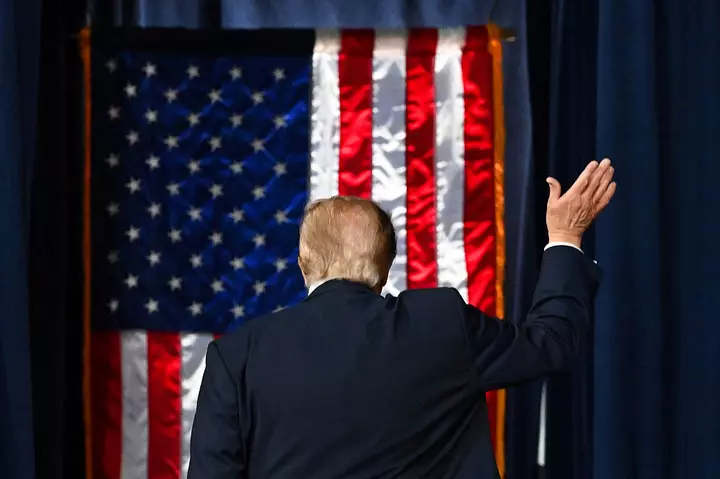
Not content with renaming an international gulf and a cross-border lake, on Oct. 10, U.S. President Donald Trump recently floated the idea of renaming the Atlantic or Pacific Ocean as “Trump Ocean” or the “Ocean of the Americas” at a political rally in Clarksville, Tenn. So, I was thinking of either the Atlantic or the Pacific,” he said to laughter and applause.
According to Trump, Pichai replied, “Please don’t ask us to do that.” “So, I'll probably pass,” Trump said. In our view, it reflects a textbook case of “toponymic narcissism”—the use of place naming to remake the world in one’s own image. Let’s not fool ourselves: Trump knows a thing or two about branding.
In fact, his business career has largely revolved around marketing the Trump brand on hotels, golf courses, and even golden sneakers. We shouldn’t be surprised to find him following the same playbook in his second presidential term. Yet the world map is not a private real estate development.
Nor can place names be reduced to a branding exercise. Place names have a greater civic purpose as shared global symbols that should transcend the personal glorification and political interests of any individual leader. Place names form part of our intangible cultural heritage with cultural significance that will outlive the cartographic whims of President Trump.
They shape our geographical imaginations and the way people perceive and understand the world. Geographical naming also has important consequences for education, international relations, and the types of messages we wish to project to the world. For instance, it is notable that Trump has focused much of his renaming energy on places with Indigenous names, such as Lake Ontario and the Gulf of Mexico.
In the case of the Atlantic Ocean, this could also be seen as an attempt to erase an etymology that points through Greece to North Africa. The name derives from the Greek for “Ocean of Atlas,” referring to the mythology of a giant who lives in the Atlas Mountains of northwestern Africa. As place name scholars, we have spent decades studying the cultural, social, and political aspects of place naming.
Extract — continue reading at the source.