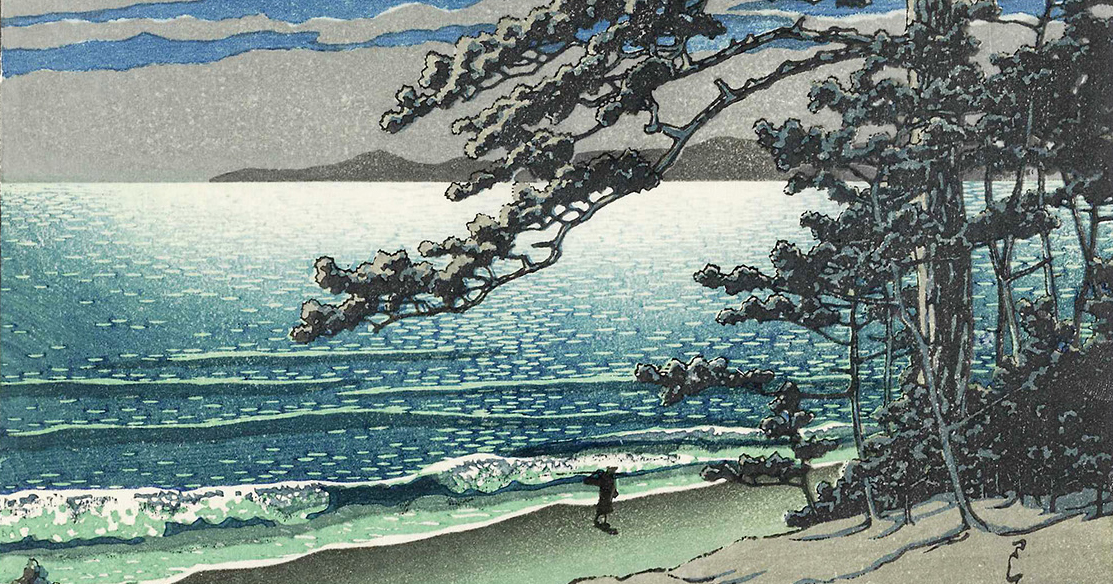
There is a silence at the center of each person — an untrammeled space where the inner voice grows free to speak. That space expands in solitude. To create anything — a poem, a painting, a theorem — is to find the voice in the silence that has something to say to the world.
In solitude, we may begin to hear in the silence the song of our own lives. Rainer Maria Rilke (December 4, 1875–December 29, 1926) was in his late thirties when he began answering the eager letters of the nineteen-year-old Franz Xaver Kappus — an aspiring poet and cadet at the same military academy that had nearly broken Rilke’s own adolescent soul. Shortly after Rilke’s death of leukemia, Kappus published the correspondence.
Letters to a Young Poet came to stand as one of the finest books of the past century. In a wonderful new translation by ecological philosopher, Buddhist scholar, and environmental activist Joanna Macy, and poet and clinical psychologist Anita Barrows, Rilke writes: What (you might ask yourself) would a solitude be that didn’t have some greatness to it? For there is only one solitude, and it is large and not easy to bear.
It comes almost all the time when you’d gladly exchange it for any togetherness, however banal and cheap; exchange it for the appearance of however strong a conformity with the ordinary, with the least worthy. But perhaps that is precisely the time when solitude ripens; its ripening can be painful as the growth of a boy and sad like the beginning of spring… What is needed is only this: solitude, great inner solitude. Going within and meeting no one else for hours — that is what one must learn to attain.
To be solitary as one was as a child. As the grown-ups were moving about, preoccupied with things that seemed big and important because the grown-ups appeared so busy and because you couldn’t understand what they were doing. A lifetime after she composed her stunning ode to solitude as a young poet, after she contemplated solitude as the seedbed of self-discovery upon entering her sixties, May Sarton (May 3, 1912–July 16, 1995) moved to Maine to spend the last chapter of her life living alone in a house with a garden on the edge of the sea.
Friends came to visit, as did strangers who admired her poetry and had found her address in the phone book — those were the days — but she cherished her solitude above even the most welcome company. In a passage from her boundlessly rewarding journal The House by the Sea (public library) — which gave us her meditations on the relationship between gardening and writing, how to cultivate your talent, and the art of living alone — Sarton considers the tilting balance of her life. Reflecting on her approach to visitors, she writes: I try to see them one at a time.
Extract — continue reading at the source.




/https://tf-cmsv2-smithsonianmag-media.s3.amazonaws.com/filer_public/20/a3/20a3b466-d887-458d-8978-319a8b423a47/yersinia_pestis.jpg)