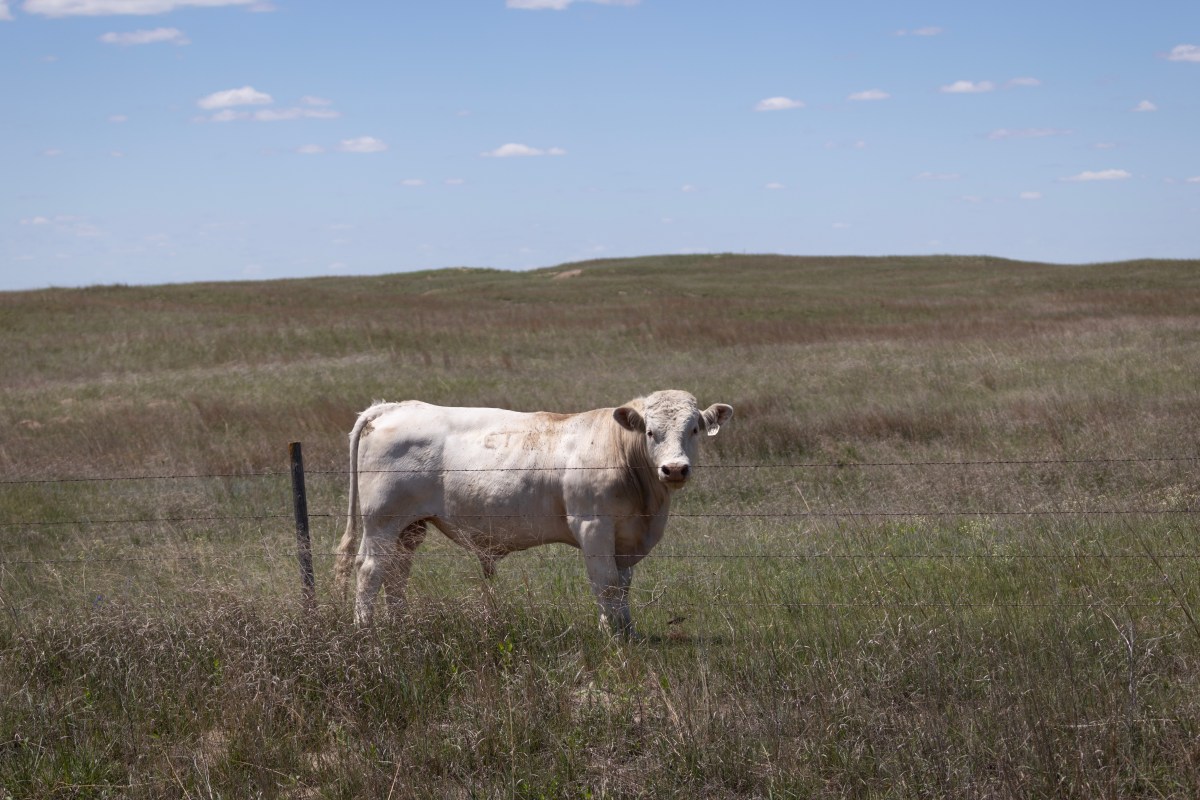
The ongoing supply issues within the American beef industry have pushed prices to record highs and left consumers struggling, but the issue has also spread to ranchers and now appears to be creating difficulties for the U.S. meatpacking sector and those it employs. Last week, Tyson Foods—the largest of America’s "Big Four" meatpackers—announced it would be shutting down a number of facilities amid "one of the most historic cattle shortages the country has ever experienced." The Arkansas-based company said it would be ending operations at its Joslin, Illinois plant and a processing facility in Eagle Mountain, Utah, while also searching for a buyer for a facility in Pasco, Washington. Tyson Foods did not specify how many employees could be affected by the closures.
Official WARN notices indicate that over 2,500 have been laid off in Illinois and more than 700 from the Eagle Mountain plant, though the workers supposedly had no prior knowledge that this would be occurring. "What is especially troubling is the abrupt manner in which workers and our communities learned of this decision," Gregg Johnson, a Democratic state representative in Illinois, said in a statement. "Families deserve more than a notice that their jobs are disappearing." Strauss Borrelli PLLC, a class-action law firm in Chicago, said it is now investigating the case.
It believes the company provided insufficient warning before taking this action, and that its employees "may be entitled to 60 days of severance pay and benefits." Newsweek contacted the company via email for further comment outside of regular working hours on Tuesday and is awaiting a response. The American cattle herd has shrunk to a 75-year low in 2026, according to data from the U.S. Department of Agriculture (USDA), due to yearslong droughts, rising input costs and the weakening incentives for heifer retention that have delayed any meaningful recovery.
And tighter supplies have driven beef prices higher for consumers. According to the latest inflation report from the Department of Labor, the beef and veal index is up 9.4 percent over the 12 months to July. The latest meat price reading from USDA’s Economic Research Service found that Americans are now paying over $13 a pound for beef steaks—and nearly $15 for sirloin—up from $11.88 last July and $10.86 the year prior, with ground beef also soaring 25 percent over this two-year period.
But rising retail prices have not translated into a boom for America’s cattle ranchers. Some who spoke with the BBC recently said they continued to struggle amid rising production costs—feed, fertilizer, equipment—while placing some blame on the heavily concentrated meatpacking industry. Just four companies—Tyson, alongside JBS, Cargill and National Beef—control roughly 85 percent of the market in the U.S.
This fact has seen them face criticism for an alleged role in rising consumer costs, including from the administration. Last year, President Donald Trump accused the companies of "Illicit Collusion, Price Fixing, and Price Manipulation," following which the Justice Department said it would be looking into the "foreign-dominated conglomerates that control America’s meat supply." "For too long, a handful of giant meat packers have squeezed America’s cattle producers, shrunk herds, and jacked up prices at the grocery store," the Justice Department wrote in November. As late as May, the department confirmed that it was still investigating alleged anticompetitive practices by meatpackers.
Extract — continue reading at the source.