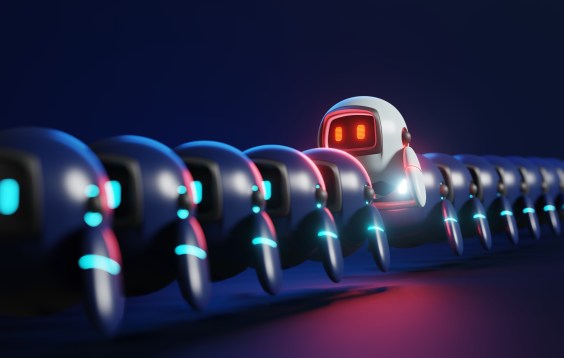
This is today's edition of The Download, our weekday newsletter that provides a daily dose of what's going on in the world of technology. On Wednesday, MIT Technology Review hosted a live Roundtables event that asked the question many seem to be asking right now: could AI really kill us all? But attendees had more questions than we had time to answer, so we asked senior AI editor Will Douglas Heaven and AI reporter Grace Huckins to tackle some of the best ones.
The questions they tried to answer include: am I going to die? Why should AI kill us, if at all? Is AI really dangerous, or is it just tech companies drumming up PR?
And what steps can be taken to make sure AI is controlled, monitored and regulated effectively? One of the ways AI could potentially cause catastrophic harm is by aiding the design and creation of bioweapons. In 2022, researchers found that it was remarkably easy to do this with an AI “molecule generator” built to develop drugs.
In less than six hours, the model generated 40,000 molecules that could serve as chemical warfare agents. Today, AI tools can answer questions on almost every area of science, while advances in gene editing and synthetic biology have made biotech tools more accessible. There are safeguards, but none are ironclad.
However, scientists disagree about how serious the risk is anyway. Find out why it’s easier than ever to design killer pathogens. This story is from The Checkup, our weekly biotech newsletter. .
We go to space for geopolitical prestige, manifest destiny, spiritual fulfillment, scientific curiosity, and, increasingly, business opportunities. In the wake of Artemis II, a slew of new books suggest that these justifications are subsumed by one unifying fact: humans have itchy feet, and we are simply wired to roam. In The Ultraview Effect, space anthropologist Deana L.
Extract — continue reading at the source.



/https://tf-cmsv2-smithsonianmag-media.s3.amazonaws.com/filer_public/a1/be/a1bec4ea-0428-4b24-bd7e-a84a00f9fe79/dsc_4882.jpg)