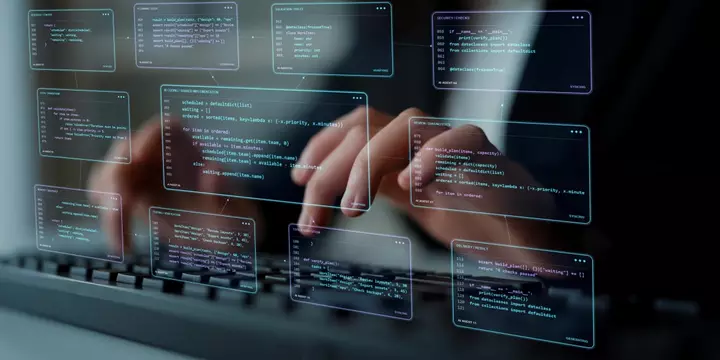
This is today's edition of The Download, our weekday newsletter that provides a daily dose of what's going on in the world of technology. In 2001, a decade after inventing the World Wide Web, Tim Berners-Lee articulated a new vision: an internet navigated by autonomous software agents that address our every need, without requiring us to muck about with browsers and search engines ourselves. At the time, the idea seemed far-fetched.
But a quarter-century on, AI agents are beginning to make it a reality. They can triage your inbox, do your grocery shopping, and even access your bank accounts. This new era is being called the agentic web.
It will inevitably transform the internet—and whether the human web survives this transition is anyone’s guess. Find out how AI agents are transforming the internet, and what we stand to lose in the process. Every year, traffic crashes kill more than 1 million people worldwide.
They’re also the leading cause of death for children and young adults. Cheap, proven ways to make roads safer exist, including tightening intersections with planters and lowering speed limits. But government logjams and red tape can make it difficult to roll out these changes.
Still, some cities are making impressive progress by investing in public transit, extending curbs, and using cameras to spot danger zones in need of a redesign. Here’s how close we are to eradicating traffic deaths. This story is the final part of “Are we there yet?”, our series that takes stock of six technologies that have long promised to change the world—and scores them on a progress meter.
Subscribe to read the other five instalments in our new Impossible issue. I’ve combed the internet to find you today’s most fun/important/scary/fascinating stories about technology. 1 A $1 trillion tech selloff has deepened fears of an AI bubbleBig AI bills and weak earnings have spooked investors. (BBC)+ The Nasdaq 100 had its worst day since June on Friday. (NBC News)+ OpenAI has cut its funding target by $10 billion. (CNBC)+ What even is the AI bubble? (MIT Technology Review) 2 Hackers have hit Ukraine and Russia’s emergency alert appsKyiv residents were warned of “nuclear danger.” (NBC News)+ Russia’s app said nuclear warheads had been launched. (CNN)+ Ukraine has blamed Russia, which hasn’t yet accused anyone. (BI)+ AI will transform cyber warfare. (MIT Technology Review) 3 Binance users withdrew $3.6 billion after the largest ever crypto hackThe funds moved when the exchange reopened on Sunday. (Guardian)+ Binance says it’s covered $6 billion of the stolen $6.3 billion. ( $)+ But the industry’s response has undermined its “decentralized” image. (Gizmodo) 4 An AI agent injected drugs into a live mouse’s brainIt chose the gene therapy and controlled the needle itself. (Wired $)+ We need real-time tracking of AI agents. (MIT Technology Review) 5 Data centres have made utilities a flashpoint in the midtermsAmericans are angry over rising electricity bills. ( $)+ Virtual power plants could help. (MIT Technology Review) 6 Apple has overtaken Nvidia as the world’s most valuable companyInvestors are favouring its restraint on AI spending. (Bloomberg $)+ But critics say it’s entering its “slop era.” (404 Media) 7 Supermarket fridges have overheated in a new wave of cyberattacksStores in Belgium, Sweden, and Luxembourg were hit. (Politico) 8 The first chocolate bars made from lab-grown cocoa are hereStartups are cultivating chocolate to tackle a cocoa shortage. (WSJ $) 9 Hackers hijacked digital billboards in multiple countries to show pornThey also criticized security flaws and Egypt’s government.(Gizmodo) 10 A new 3D map reveals instability in interstellar spaceThe discovery could help explain why stars form so inefficiently. (Quanta) —Kevin Roose, a technology columnist at the New York Times, tells NPR that an AI investment crash would be preferable to the technology permanently upending work and society. Last year, Nvidia CEO Jensen Huang jolted the stock market by saying that practical quantum computing is still 15 to 30 years away.
Extract — continue reading at the source.