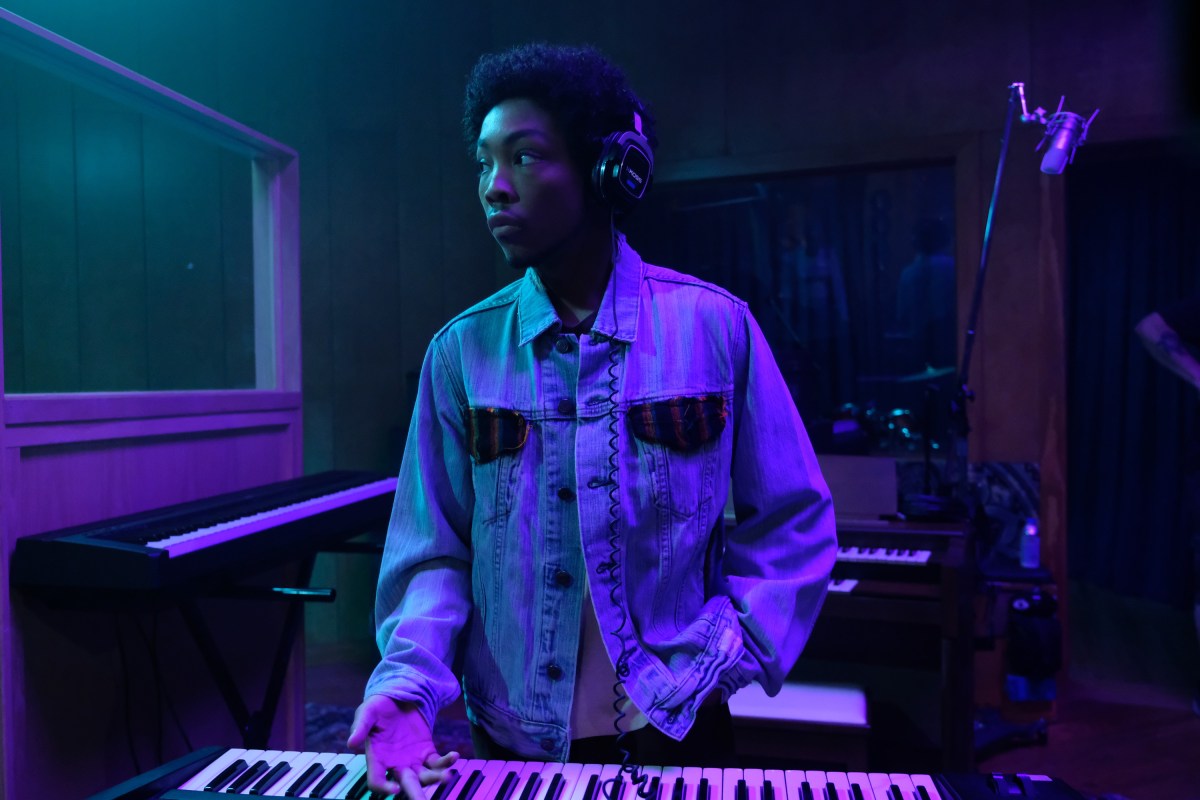
When The Drop: A Snowfall Saga moves Los Angeles from the late 1980s into the early 1990s, the shift arrives through far more than wardrobe, slang or period décor; it lives in the loose swing of a drum pattern, the imperfect heat of a demo mix and the communal nature of street urban culture. In conversation with Newsweek, executive music producer Larrance Dopson, creative consultant Glasses Malone and writer, vocal producer and actor Jason Martin described a production whose authority came from an unending love of Los Angeles, a reverence for the culture in the 90s, and whose ambitions reached beyond recreating an era toward revealing how family, community and music could turn survival into reinvention. For Dopson, known for his work with hip-hop production group 1500 or Nothin', joining the series carried personal weight because he had worked with John Singleton before the filmmaker’s death, and he remembered how deeply invested Singleton had been in his FX series Snowfall.
He said his task was to build on the foundation established by earlier consultants while helping showrunner Malcolm Spellman push further into Singleton’s concerns. The creative team approached the series as both a continuation and an opening chapter. Malone called it “season seven” for the returning performers and “season one” for the new ensemble, a contradiction that demanded emotional specificity.
When actor Isaiah John questioned whether a man from Leon’s world would remain so devoted to his wife through addiction and recovery, Malone answered from experience. Malone recalled advising Peyton Alex Smith to lift his younger brother’s injured face instead of a cursory glance at it, because, as he put it, “There’s a lot of love in being a big brother that you got to make sure people see.” Cultural specificity served character rather than spectacle. JasonMartin, the rapper formerly known as Problem, occupied an unusually fluid position inside the production, malleably maneuvering between consulting on the culture, writing the songs, producing vocals, executive producing the aftershow, all before he eventually stepped in front of the camera donning a period-appropriate Jheri curl.
Because he sat in the writers’ room while the characters were being built, their music emerged from a fully formed biography necessitated by the lived-in world of Snowfall. As a crew filled with Californians, the references to the era were precise, although the finished performances could never feel like replicas. Spellman described one character to Martin as “a cross between Kurupt and 50 Cent,” while Buddy’s role drew from a more unexpected mixture.
Martin translated those ingredients into signature cadences which the performers could inhabit. Compton’s Buddy, who plays Artillery, recorded six songs in a single session without pen or paper, arrived so thoroughly connected to the character that direction became collaboration; Bay Area Rapper Symba brought the same assurance, and Martin’s respect for both artists created room for them to alter lines whenever instinct demanded it. As a show about the evolving music scene of the 1990s, nailing the shifting sound was paramount.
Musically, the early 1990s offered a productive fault line, because the hard breakbeats of the 1980s, P-Funk elasticity, and the first contours of G-funk could coexist without requiring the soundtrack to choose one future. Dopson called the period an “invitation,” since “we got these two eras that I can mix together.” In order to encapsulate the sound of the period, his non-negotiables included knocking drums, claps with P-Funk weight, bass lines tied to the kick and “human time” instead of grid-perfect programming.
Extract — continue reading at the source.