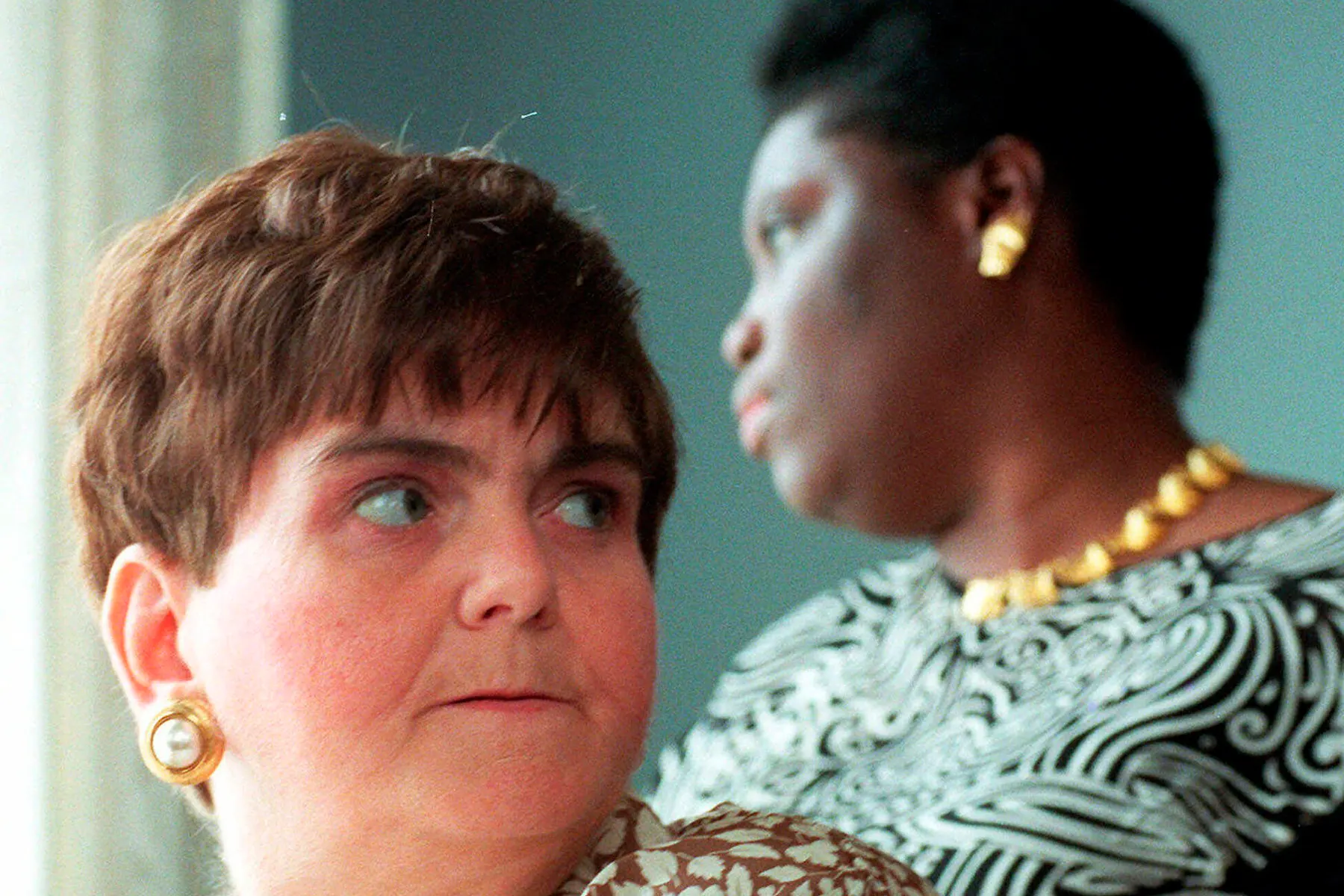
More than 25 years ago, Lois Curtis called a lawyer with the Atlanta Legal Aid Society from a pay phone in a hospital hallway. She had an intellectual disability and wanted help to get out of the state hospitals where she had lived for most of her life. Instead of spending her days heavily sedated and shuffling between the day room and the place where she slept, she wanted to be in her own apartment, to make her own decisions about what to do with her days.
Would you please get me out of here? When am I getting out of here?’” recalled the lawyer, Sue Jamieson, in an oral history for the Atlanta Legal Aid Society. With representation from the legal aid group, Curtis and her co-plaintiff, fellow Georgia resident Elaine Wilson, brought a challenge to the U.S.
Supreme Court, which ruled in their favor in 1999. L.C., which stands for Lois Curtis, the majority held that the 1990 Americans with Disabilities Act guarantees that people with disabilities have a right to live outside the walls of asylums, state hospitals and nursing homes. More than two decades later, that right is under threat.
In June, President Donald Trump’s Department of Justice published a memo stating that the federal government has no obligation to enforce Olmstead. In August, the DOJ began withdrawing from cases where it had previously been defending people with disabilities (and their families) who wanted to receive care in their own homes. Last month, the department settled a case, Texas v.
Kennedy, which invalidated federal regulations defining what it means to live in a community. Family caregivers, mostly women, normally fill the gaps when state-funded care falls short. Recent changes by the Trump administration will affect what home care is available and whether it is available, profoundly reshaping the lives of these women and the people they support.
Here is a closer look at where things stand more than 25 years after the bedrock Supreme Court case and how the rights it affirmed are under threat. In 1967, around 200,000 people with intellectual and developmental disabilities were confined to large institutions like asylums and state hospitals. By 2024, that number fell to 16,000 thanks to the Olmstead decision, DOJ enforcement and decades of expanding home care options through Medicaid and programs like Money Follows the Person.
Extract — continue reading at the source.

/https://tf-cmsv2-smithsonianmag-media.s3.amazonaws.com/filer_public/00/48/004859f6-803c-4e8c-a05f-e3e91071fd36/second-generation-planet-artwork-credit-dr-snehalata-sahu_university-of-warwick.webp)


/https://tf-cmsv2-smithsonianmag-media.s3.amazonaws.com/filer_public/3c/5d/3c5d64ef-fa30-4bc1-89ee-af5a2f0e2667/7d56dae5-d789-46d6-9df7-cb274be80482_1.jpeg)