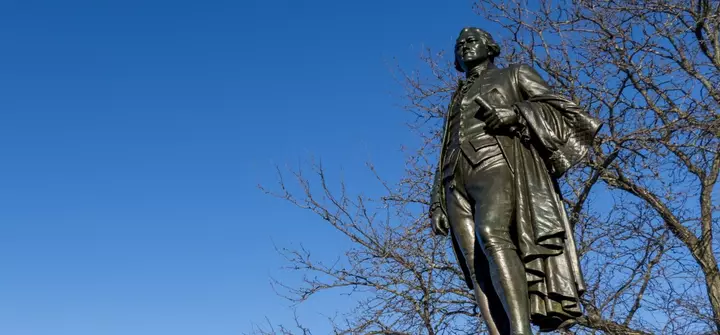
Fifty-six men signed the Declaration of Independence, and many had good reason to doubt one another. They came from colonies that quarreled over borders, trade and slavery. Yet the document ends not with a plea for trust but with a promise: "...we mutually pledge to each other our Lives, our Fortunes and our sacred Honor." A pledge isn't a feeling.
Each signer's survival now depended on everyone else's. I think about that sentence often, because I've spent 25 years watching what happens when money moves without one. Therefore, we should stop waiting for it and build pledges instead.
We need financial structures where every party gains only if the others do. Now, consider how endurance, another key element in this way of thinking, actually works. I use this next example with no interest in its politics.
In April 2025, Senator Cory Booker spoke on the Senate floor for more than 25 hours, the longest speech in the chamber's history. He broke a 1957 record held by Strom Thurmond, who had spoken against the Civil Rights Act. Set aside what you think of either cause and look at the mechanics.
Booker did not do it alone. Dozens of colleagues joined in, some giving him breaks by asking questions, and one said he was returning a favor from nine years earlier. Even the longest solo speech in history was a team sport.
Climate money has a table too, and many of the people who need it are not able to access it. Developing countries receive roughly $26 billion a year in international public adaptation finance. The UN Environment Programme via The Quint estimates the annual gap by 2035 at between $284 billion and $339 billion.
Extract — continue reading at the source.