As prime ministers have come and gone at bewildering speed in recent years, the search for elusive economic growth has become the overriding fixation of the British political class. In the lead-up to the 2024 general election, Sir Keir Starmer declared that “growth must become Labour’s obsession”, given the financial constraints that any new government would be under. The scale of Labour’s progressive offer, it was made clear, would be umbilically linked to its ability to generate a significant uptick in GDP.
The prime minister swept to power partly by running on Greater Manchester’s record as the UK’s fastest-growing city region while he was mayor. Echoing Mr Starmer’s approach, Mr Burnham’s chancellor, John Healey, told the Labour party conference in September: “Without growth, there is no social democracy.” But as the economists Karel Williams and Sukhdev Johal suggest in the latest edition of the Guardian’s new Radical Thinking podcast, that is a flawed and politically unhelpful linkage to make. In a transformed geopolitical environment, they argue, the notion that former levels of growth can be restored is likely to prove a chimera.
Just as importantly – as the contrast between Manchester’s booming city centre and hard-pressed towns such as Oldham and Wigan illustrates – better growth rates would not solve entrenched problems of affordability in places unlikely ever to become hubs for advanced manufacturing or financial services. Yet neither of those assertions mean that an ambitious egalitarian politics must be ruled out. More broadly, shifting resources into the essential building blocks of every local community – transport, utilities, care networks and other social and physical infrastructure – can improve everyday lives by restoring collective control over public goods.
Mr Burnham’s signature move as mayor – the decision to take Greater Manchester’s buses back under public control and cap fares – suggests a shared agenda here. But the prime minister has sent mixed messages when it comes to “Manchesterism” – the place-based economic strategy that he wishes to export to the nation. As the role of the United Arab Emirates in the city’s modern development comes under scrutiny, Mr Burnham’s version of “business-friendly socialism” is a political philosophy in need of greater definition.
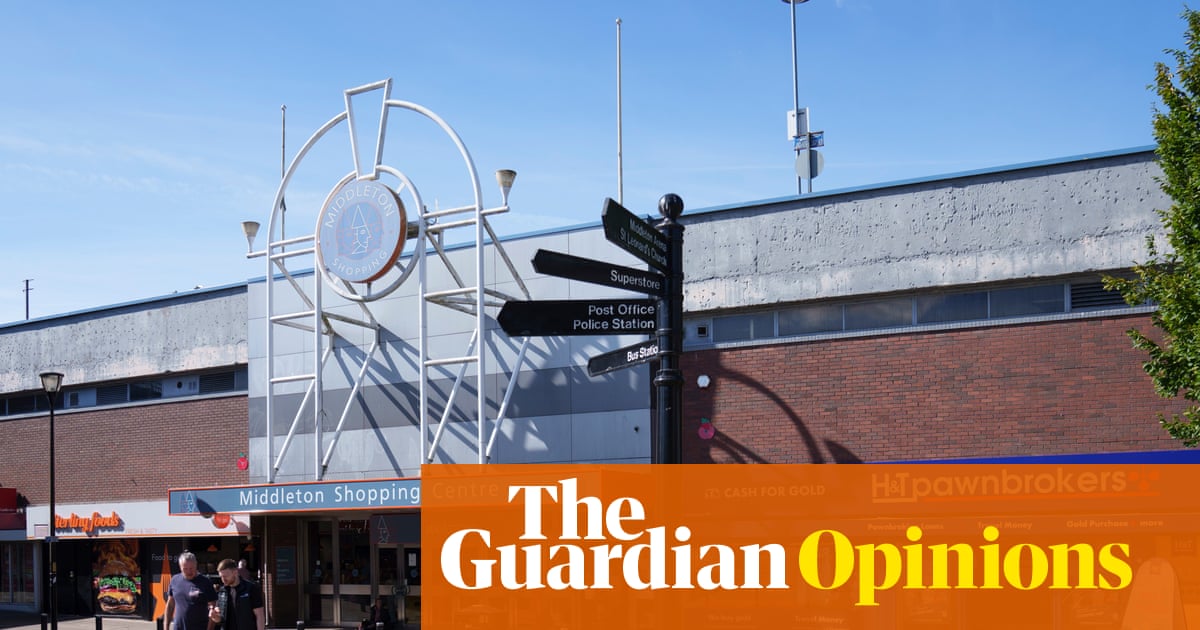
Devolution should involve funnelling local power downwards and outwards, rather than upwards to Abu Dhabi-type investors in the indiscriminate pursuit of growth. A greater focus on the “foundational” economy described by Prof Williams and Prof Johal can help with that project. One of Mr Burnham’s last acts as mayor was to sign off on a mayoral development corporation for the town of Middleton, near Manchester.
Its agenda is being shaped by residents and local business owners, with the aspiration that local economic networks can be “rewired” and the provision of everyday essentials be reconfigured and improved. Given proper backing from Westminster, social democrats do not need to wait for growth before they can begin improving lives. Do you have an opinion on the issues raised in this article?
Extract — continue reading at the source.