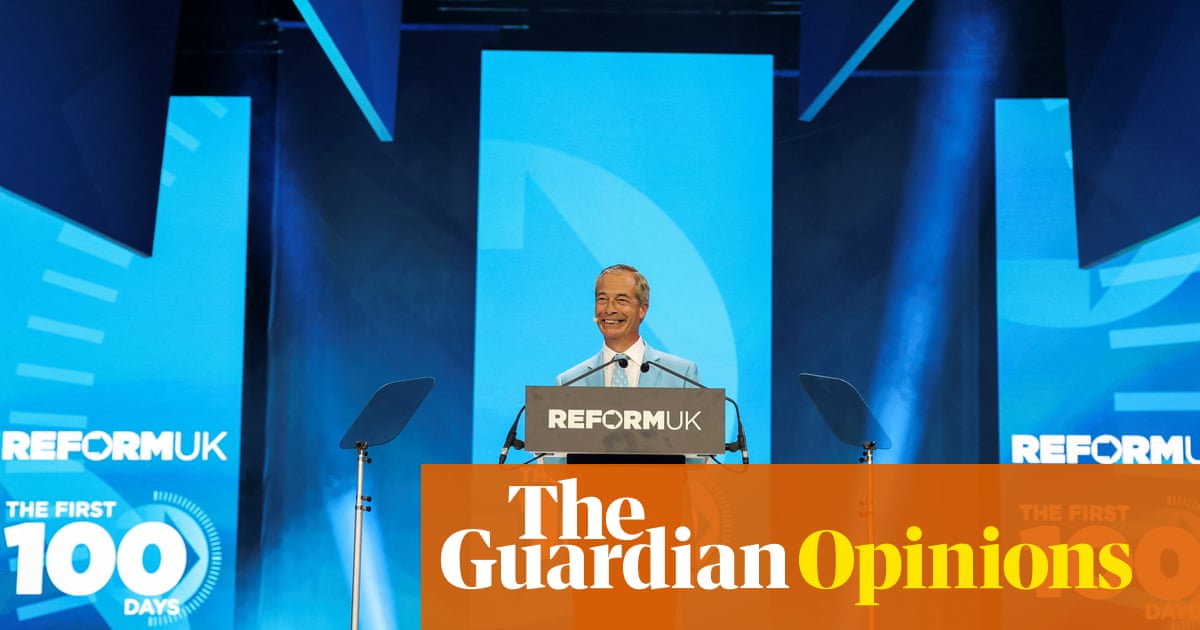
Modesty is not a trait commonly associated with Nigel Farage. Something else must explain the Reform UK leader’s reluctance to talk about what is undoubtedly his biggest achievement. Few individuals can boast of having influenced British politics as drastically as Mr Farage, with his record of campaigning for Brexit before that word was even coined.
He will for ever be associated with the demand for emancipation from Brussels, but is rarely heard celebrating its completion. It barely earned a mention in speeches at his party’s annual conference last week. The simple reason is that none of the promises made about the benefits of life outside the EU have been fulfilled.
Leaving made the country poorer, and voters know it. Opinion polls routinely show that a majority are dissatisfied with the way Brexit has turned out. In a survey published this week by the thinktank British Future, 57% of respondents judged it to be “more a failure than a success”.
Only 21% took the opposite view. There were also clear majorities in favour of closer ties when it comes to trade, defence and even health policy; 57% support a youth-mobility scheme for 18- to 30-year-olds, restoring some of the opportunities to live and work abroad that were curtailed by departure from the EU. Those attitudes should not be confused with appetite for a complete reversal, still less a referendum to make it happen.
Memories of a divisive campaign and exit process are a powerful deterrent against relitigating the question all over again. But the balance of public opinion is skewed against the enterprise that defined Mr Farage’s political ascent and was enacted with fervour by the Conservative party. The ideological parents of Brexit are understandably embarrassed by their progeny.
That presents Andy Burnham with an opportunity. The prime minister has said he wants to be “bolder” in pursuing a closer EU relationship. He has permission from the electorate to do just that.
Extract — continue reading at the source.