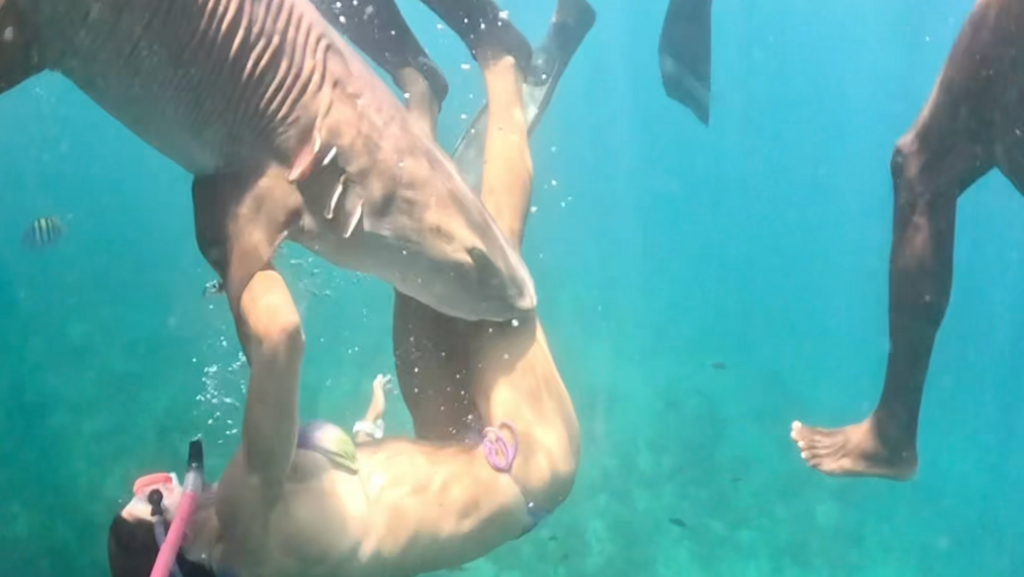
"I knew something was different because the sharks were on the surface," says Tayane Dalazen, a 37-year old Brazilian lawyer and social media personality. "There were a lot of them," she says. "Later, I discovered [the tour organisers] were feeding the sharks so that they would interact with the tourists." Dalazen, from Sao Paulo, was on a shark-diving trip on the Brazilian coast in April when she suddenly felt "strong pressure" on her leg.
"When the shark bit me, the pain was very strong," she says. "I stayed calm because I knew I couldn't fight the animal." A nurse shark, more than seven feet (two metres) long, had clamped its jaws around her thigh. After holding her underwater for several seconds, the shark released her and she was able to escape.
But Dalazen says the experience, which left her with lacerations to her thigh, was "very frightening". Dalazen posted footage of the shark bite online, where it's since been viewed tens of millions of times. Although she says she "wasn't there for social media" and didn't touch or provoke the shark, she admits she was too close to the animals.
Incidents of sharks biting humans are incredibly rare, but at least three influencers have been bitten by the animals in less than a year. Scientists say they're increasingly concerned about the rise in social media videos showing people swimming too close to sharks, touching or even riding them. "I'm seeing these videos every single week now and it's way more than it ever used to be," says shark scientist Kristian Parton, who also hosts the 'Shark Bytes' YouTube channel.
"We're going to see people ending up in really serious incidents with sharks." In July, a fishing influencer almost lost his leg after being attacked by a reef shark whilst spearfishing. In December, a Chinese content creator was bitten in the Maldives. Both incidents were caught on camera.
Researchers at the International Shark Attack File, which tracks human-shark interactions worldwide, have also told the BBC they've seen a marked increase in the past three years of people being bitten while trying to take footage with sharks. A recent study of "swim with wildlife" expeditions, external found influencers and photographers were the most likely to ignore safety instructions. In February last year, a tourist in the Caribbean had both hands bitten off while trying to get a photograph of a bull shark from the shallows, according to local authorities.
Extract — continue reading at the source.


