When Wollstonecraft’s publisher invited her to a dinner celebrating one of those important men — Thomas Paine, whose landmark insistence on the right of the people to overthrow their rulers had inspired Wollstonecraft’s treatise — another of the publisher’s most successful and controversial authors was also there: the radical political philosopher William Godwin. Both Wollstonecraft and Godwin, who had never before met, had made their reputations on the bold denunciation of institutions, including the institution of marriage: Wollstonecraft in her Vindication and Godwin in An Enquiry Concerning the Nature of Political Justice, which issued a rigorously reasoned eight-book call for a society of equals, indicting government, religion, and marriage as oppressive forces that limit individual freedom and gape the abyss of inequality. Government and religion, Godwin argued, would be rendered obsolete with sufficient advancement of human knowledge and morality.
So long as two human beings are forbidden, by positive institution, to follow the dictates of their own mind, prejudice will be alive and vigorous.” Wollstonecraft inveighed against marriage as the only means for women to “rise in the world,” which in turn reduced their aspirations to those of “mere animals” and made them act as children once they did enter this institution of wholesale dependency. What she called for instead — equal access to education and an emphasis on the intellectual and moral development of girls, rather than their looks, dress, and manners — seems banal by our present standards, almost embarrassing. The luxury of being embarrassed by it — in just five human lifetimes, in a species 7,500 generations old — is the measure of our progress.
She had seen firsthand the moral, emotional, and bodily tyranny of an institution that considered the wife property of the husband, a creature owed as much sympathy and tenderness as a boot. As a child growing up in a house shaken by the cries of her own mother, regularly raped and beaten by her alcoholic husband, Wollstonecraft had stood sentinel before her mother’s door to keep her father from entering, which only aggravated his brutality. In a culture where just four women successfully obtained a divorce in the whole of a century, she came to see that to salvage the family, one had to revise the entire political foundations of society.
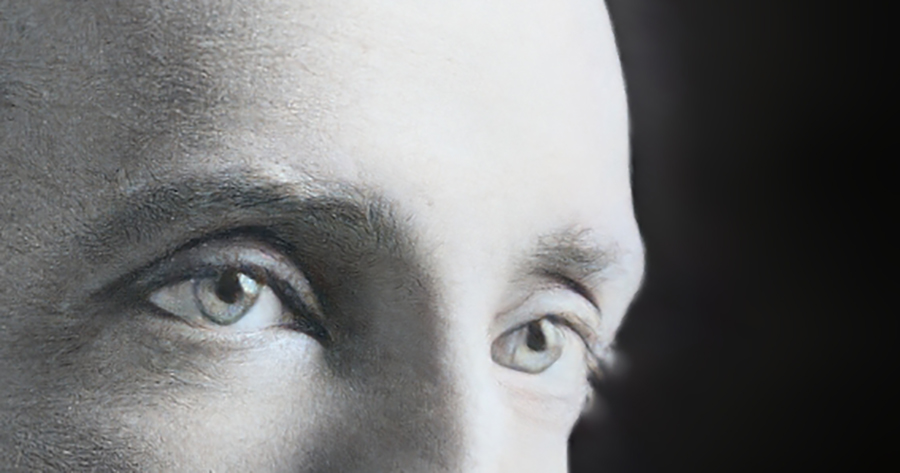
When the two philosophers met at their publishers’ dinner, the balding and reserved Godwin — a man so afraid of emotion that he never cared for music — found Wollstonecraft — a woman of symphonic intellect and unselfconscious passions — too eager to dominate the conversation with Paine. The middle child in a brood of thirteen, Godwin had always been introverted, awkward, and greatly challenged at attuning to the emotional states and needs of others. He regarded his peculiarity with both self-awareness and genuine bafflement: I have a singular want of foresight on some occasions as to the effect what I shall say will have on the person to whom it is addressed.
I therefore often appear rude, though no man can be freer from rudeness of intention and often get a character for harshness that my heart disowns. Wollstonecraft was extroverted, her quick mind coupled with a kind of social magnetism, but the very capacity for large thought and feeling that made her so magnetic also made her capable of despair so fathomless that she came to regard herself as “a strange compound of weakness and resolution,” marked by a great “defect” of mind and a “wayward heart” that creates its own misery. For the two philosophers, love did not barge through the barn door of animal passion — it entered slowly, quietly, through the sun porch of shared ideals and mutual respect.
Respect begot friendship begot love. Wollstonecraft came to see the “tender affectionate creature” from which Godwin’s coolly reasoned idealism sprang — his pursuit of political justice was at bottom a philosophy of universal sympathies and unconditional kindness, impulses of which his own nature was woven. Godwin discovered above the gratifications of being admired the gladness of being seen: After all one’s philosophy it must be confessed that the knowledge that there is some one that takes an interest in one’s happiness, something like that which each man feels for his own, is extremely gratifying.
Extract — continue reading at the source.