Across the world, access to affordable, stable, dignified housing has become one of the defining challenges of our time, in wealthy capitals and struggling peripheries alike. According to UN-Habitat, more than 2.8 billion people – roughly 35 per cent of the global population – lack access to adequate housing. Rents rise faster than wages; ownership recedes as an aspiration for younger generations; entire neighbourhoods are reshaped by speculation and displacement.
The question of who gets to live where, and on what terms, sits at the heart of contemporary urban life. This is not a new problem. In The Housing Question (1872), Friedrich Engels identified it as a structural consequence of industrial capitalism: as workers flooded into cities, the market and the state proved incapable of providing, or unwilling to provide, shelter for all.
From that moment, housing became a political question. Over the following century, governments across the developed world came to assume that the solution lay in their hands: through public construction, regulation, subsidy, and the organised machinery of mortgage markets and mass homeownership. Housing was a problem to be solved – technically, bureaucratically and financially.
Today, that problem has only deepened: a global crisis of affordability and tenure grips cities across the world, and housing is drawn ever further into the circuits of finance and speculation. Yet across much of the 20th century, in the rapidly urbanising cities of Latin America, Africa and Asia, the state-led housing paradigm never fully took hold. Cities grew faster than any state or real-estate market could manage.
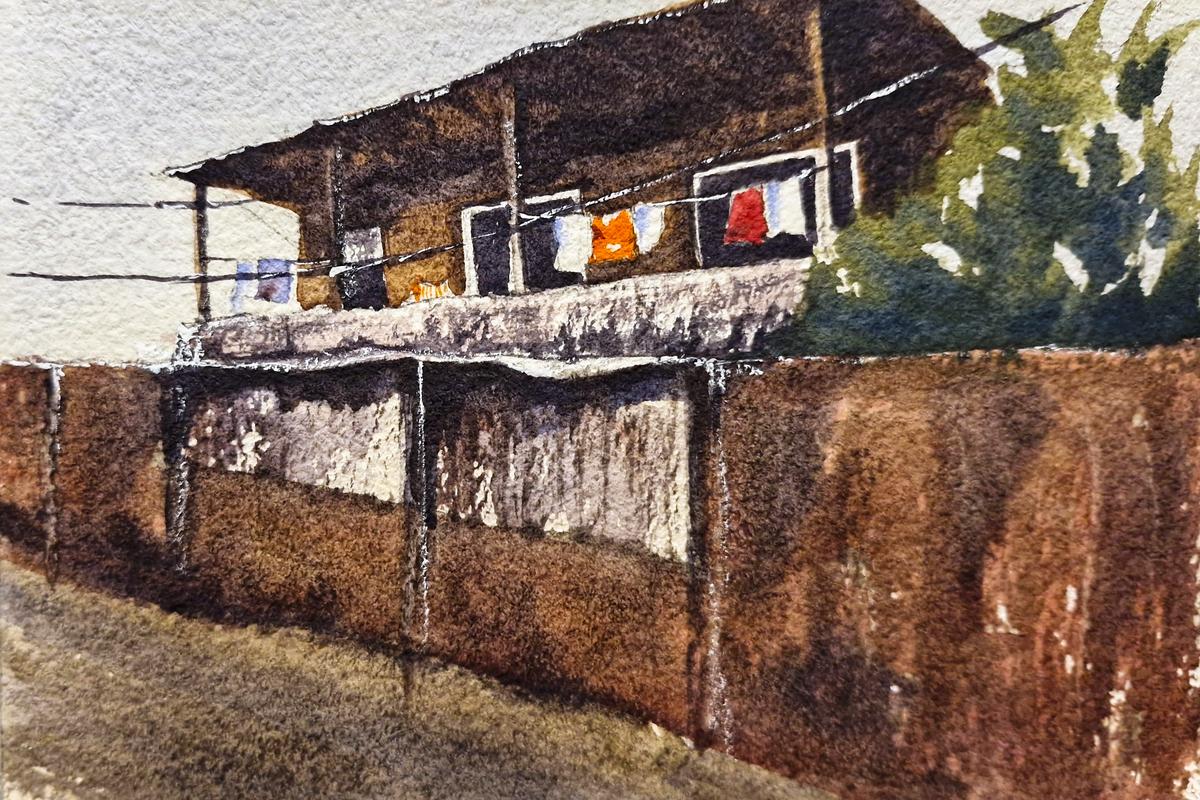
Millions gained access to housing – and to the city itself – not through the formal mechanisms of policy and planning, but by occupying land, building by hand and gradually, generation by generation, turning bare earth into home, in ways that the state variously resisted, tolerated, regularised or actively supported. In countless such cities, self-built houses and neighbourhoods were not an exception to the urban order; they were intrinsic to how the city was made. The precariousness, informality and lack of top-down planning that characterise access to shelter in the cities of the Global South may well justify seeing them as a failure – a sign of governments’ and societies’ inability to adequately resolve the housing question.
And yet, somewhat paradoxically, it is precisely among self-built environments that housing can be seen from an angle rarely present in mainstream debate, and nonetheless fundamental: that any serious attempt to understand how societies provide a place to live must first ask what it means to live somewhere at all, and what role the house itself plays in that. In simple words, that behind every housing problem lies a dwelling problem. Behind the pervasive technical illusion of the house as object, commodity and asset, the building-dwelling bond tends to disappear.
Extract — continue reading at the source.