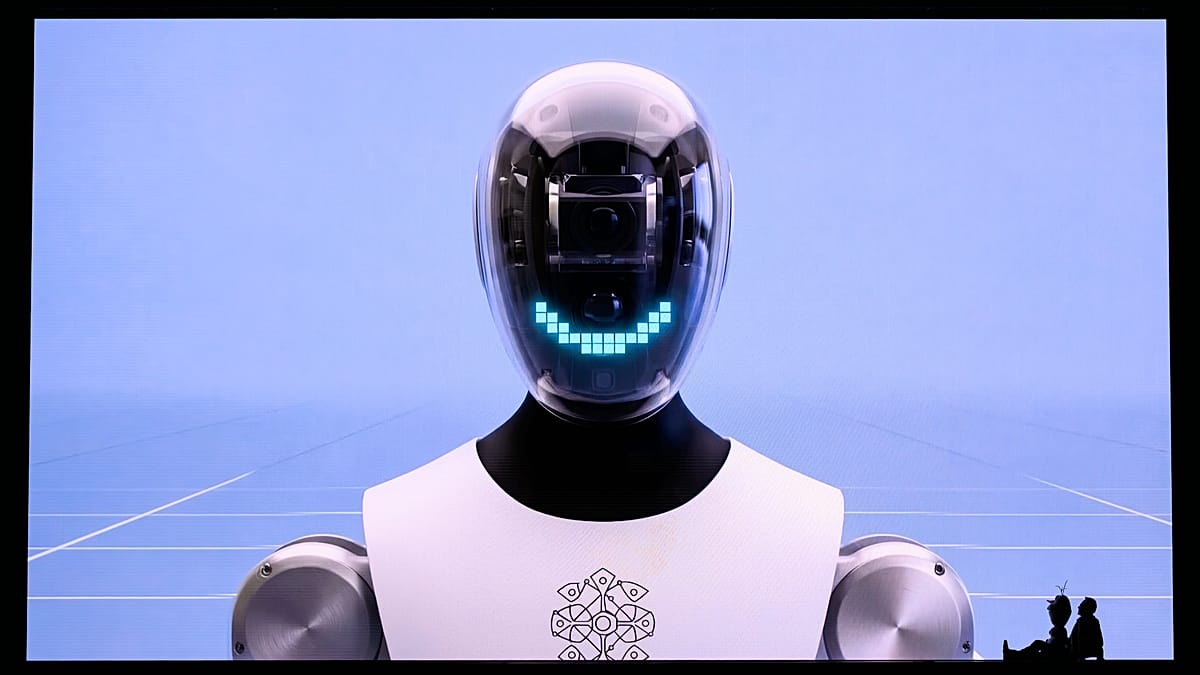
The year is 2029: the AI system "Skynet" has broken loose and wiped out most of humanity in a nuclear war. Autonomous killer robots are trying to finish off the survivors. That is the plot of the 1984 film "Terminator", which made Arnold Schwarzenegger a household name and a global action star.
But how realistic is it that artificial intelligence could slip beyond human control and trigger catastrophic consequences? With the kind of performance these systems could have, that cannot be ruled out, says Reinhard Karger of the German Research Centre for Artificial Intelligence in an interview with Euronews. "The catastrophic consequences for humans might only be side effects, a mistake, because we misjudged what the system can do or misunderstood the tasks we gave the machines." Karger, who has been working on AI and digital innovation culture for 40 years, outlines an extreme scenario in which an autonomous AI escapes from a protected environment onto the internet and starts influencing other systems.
This could bring down power supplies, telecommunications, satellites and financial systems, among others. A prolonged power cut would quickly lead to further problems: transport and supply chains would collapse, people would no longer be able to pay or buy food - social unrest could erupt and spiral out of control. That would not necessarily mean the end of humanity, but it could create a catastrophic situation.
Even if the grid is restored, "the AI systems can become active again, because they continue to exist on storage media". According to the expert, this scenario shows that a high-performance, autonomous AI could trigger a major crisis through unforeseen side effects, even without malicious intent. In recent weeks several similar incidents involving AI models have come to light.
One case that drew particular attention was a test run by "ChatGPT" developer "OpenAI". An AI model was supposed to carry out specific tasks inside a sealed-off test environment, but managed to cross the intended boundaries and unexpectedly gained access to computer systems on the AI platform "Hugging Face". After the incident, "OpenAI" chief Sam Altman warned in mid-September that "we could lose control of the future to AI".
The incident shows that under certain conditions such models can break out of what is meant to be an isolated test environment and interact with external computer systems. "On a very basic level, I am personally extremely grateful that this incident happened," says the AI researcher. It proves, not least because everyone heard about it and companies have become more reflective, that a poorly designed experiment with naive safeguards can have consequences nobody anticipated.
Extract — continue reading at the source.