The family was caught in the crossfire, and three men were killed. Nearly 10 years after the shattering incident, the two women who survived the attack, having immigrated to the U.S. and settled in Glendale, Calif., sat down with one of the Marines who opened fire on them. Journalist Dexter Filkins told the story of this encounter in the 2012 New Yorker article “Atonement After Iraq.” The piece details the efforts of U.S.
Marine Lu Lobello to speak to Margaret and her daughter Nora Kachadoorian and seek their forgiveness for the attack that killed Margaret’s husband James and their sons Nicolas and Edmund and left Nora with a wound to the shoulder. Lobello reached out to Filkins to help facilitate the meeting. Lobello’s time with the Kachadoorians informs the climax of Atonement, written and directed by Reed Van Dyk and now in theaters.
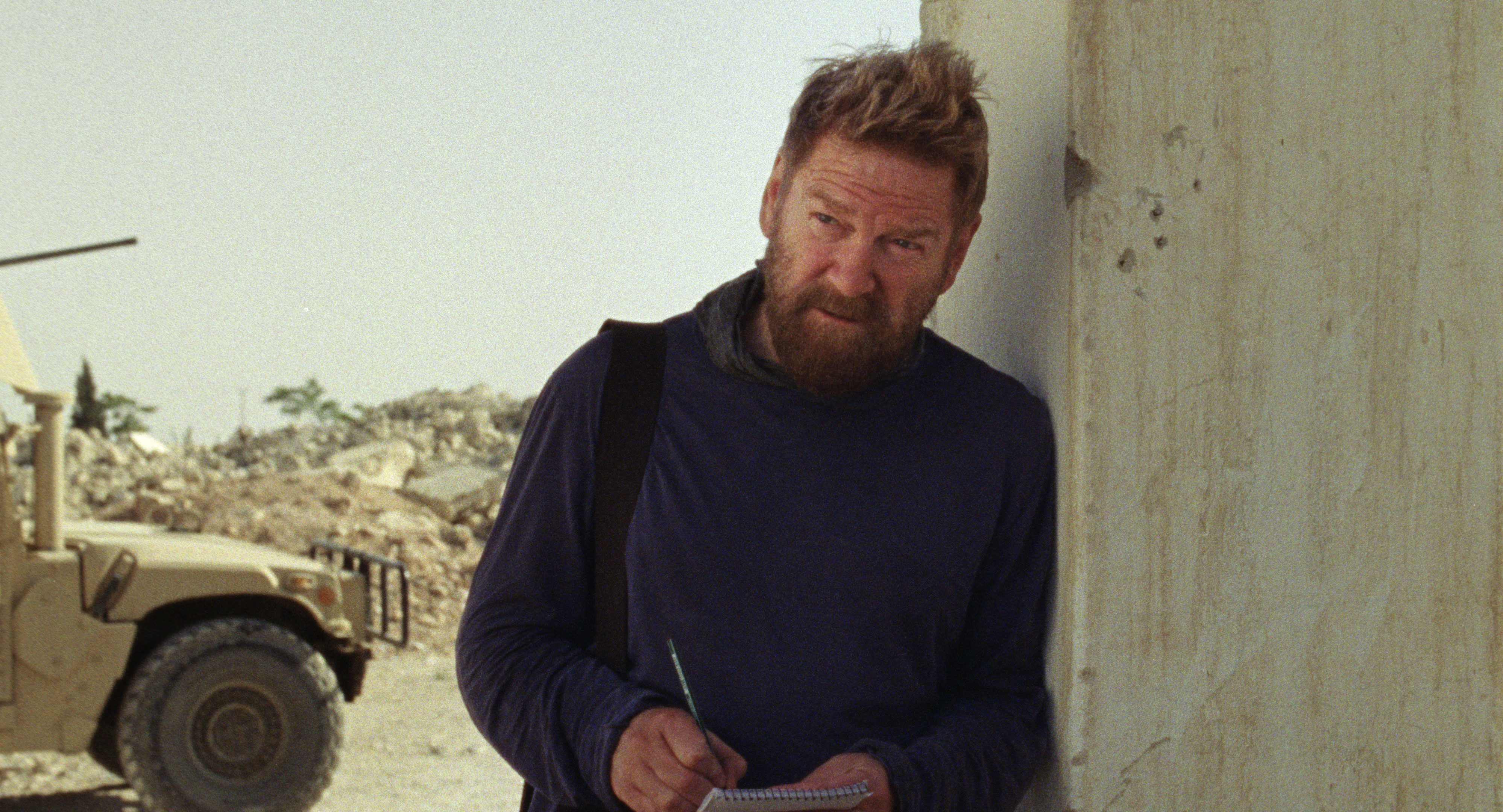
Their real names have been changed for the film: Filkins becomes Michael Reid (Kenneth Branagh), Margaret is Mariam Khachaturian (Hiam Abbass), and Lobello is Lou D’Alessandro (Boyd Holbrook). He first read the New Yorker piece the year it was published. Six years later, he won an Oscar for Best Live Action Short Film for DeKalb Elementary, inspired by a school-shooting incident in Atlanta.
That brought attention his way, allowing his feature-film ambitions to begin to materialize. That's where my job comes in. There were three people that the story is centered around, two of whom come to life in Dexter’s article.
He’s not much of a character in his own piece, so I had to flesh out this character that Branagh plays.” It’s a unique story that requires a unique take on a film about war. For one thing, there are hardly any actual scenes of war depicted on screen. Van Dyk’s film uses a single event from the Iraq War as an opportunity to explore the humanity in, and aftermath of, conflict.
War movies often seek to enforce the lines of division, but Atonement is more interested in the unexpected ways in which people come together. Van Dyk was keen to explore the humanity in the story, not only from the American perspective, as we so often see in Hollywood films, but from the Iraqi one, too. That wasn’t something I was interested in,” he says.
Extract — continue reading at the source.