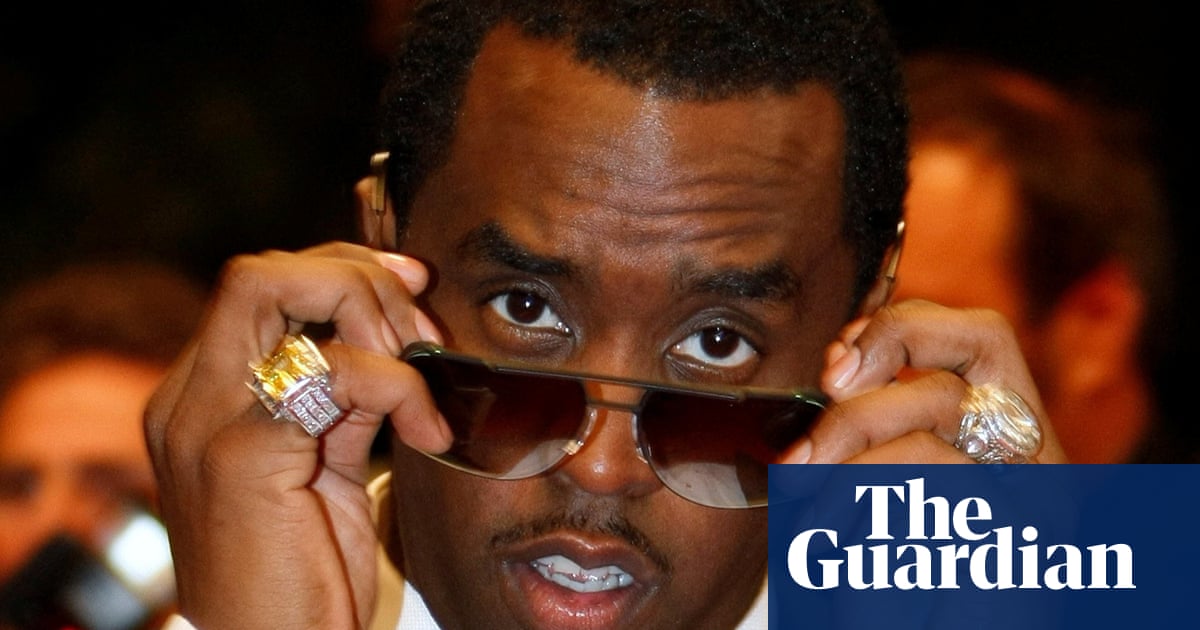
For Cheyenne Roundtree, an investigative reporter at Rolling Stone, the civil lawsuit that dropped on Sean “Diddy” Combs in November 2023 seemed to come from nowhere. Filed by his ex-partner, the singer Cassie Ventura, it alleged that Combs had beaten and raped her, plied her with drugs and forced her into sexual encounters with male sex workers throughout their decade-long relationship. Roundtree, along with much of the world’s media, was shocked.
Diddy was this mogul – I knew him for the music – and she was this style inspiration, this beautiful, talented woman living an amazing life.” At first, Combs and his legal team issued blanket denials. The lawsuit, they said, had followed an attempt by Ventura to blackmail Combs, and was “riddled with baseless and outrageous lies”. Despite this, they settled it immediately with a $20m sum, but within days more women came forward.
A second lawsuit was filed one week after Ventura’s, by Joi Dickerson-Neal, which alleged that, as a student in 1991, she had been drugged and raped by Combs, who had filmed the alleged assault and shared it with other men. In this, Anna Kane alleged that Combs and two others had gang-raped her in 2003 when she was 17. As the cases piled up, Combs’s team continued the denials – describing the lawsuits as “money grabs”.
Then a leaked video forced them to change tack. Security footage from a Los Angeles hotel taken in March 2016 showed Cassie Ventura creeping from a room, pursued by Combs, who is wrapped in just a towel. He beats her, kicks her and drags her back.
He has become Love since then. [Combs had declared in November 2017 that he was renaming himself Love, or Brother Love.] He’s a new person, a father figure.’ But all these other lawsuits were telling a completely different story.” Ventura started digging through the archives, finding stories, interviews and police reports lost to time, often because they weren’t online. Over the next three years, she spoke to people who had known Combs at every stage of his life – as a boy, a teenage intern, a genius producer and the founder of Bad Boy Records, a Grammy-winning artist, a business mogul – and finally as an inmate in a New Jersey prison. The lawsuits led to a federal investigation and, eventually, Combs’s indictment.
Now 56, he is serving a 50-month sentence for transporting people across state lines for prostitution. Later, he wanted the world to call him Love and now, in this legal sense, he has become Sean Combs. He lives in these different versions for different people, but who is he?” Her book, Bad Boy for Life, attempts to answer this by picking out the patterns and repeat behaviours, the rumours and run-ins that have threaded through every reinvention.
Extract — continue reading at the source.