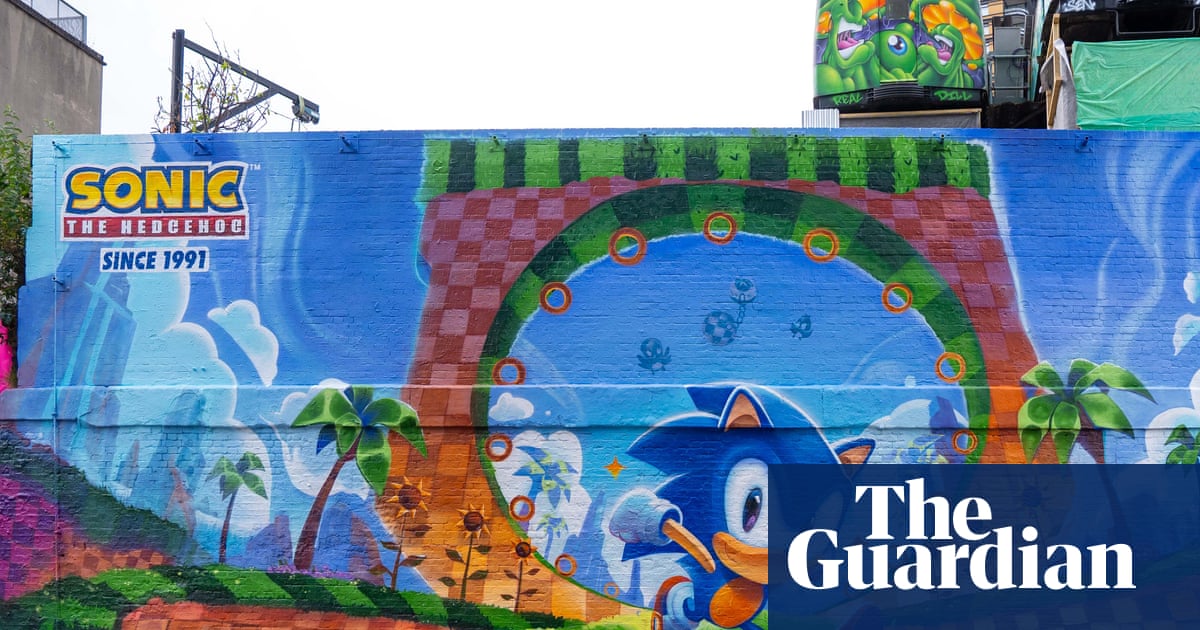
One day in the early 1990s, I came home from university for the weekend and discovered that my dad had bought himself a Sega Mega Drive, bundled with a copy of Sonic the Hedgehog 2. I knew about Sega’s mascot of course. The launch of the original Sonic the Hedgehog game in 1991 was a landmark moment for the company, massively boosting the sales of its 16bit console in the west, ripping market share from the dominant Super Nintendo.
While Mario was the family favourite, Sonic with his speed, attitude and brash visual energy encapsulated the edgy spirit of the early 1990s MTV culture. That weekend, Dad and I did little else but team up for daylong Sonic sessions, the game’s two-player mode letting us play cooperatively as we zoomed through those dense, beautiful play zones. Thirty-five years later, I am still a Sonic fan.
There have been plenty of rough times (Sonic 06, Sonic and the Secret Rings, Sonic Free Riders – sorry, I can’t go on), but there have been plenty of good ones too. (Rush, Mania and Colors, and I have a soft spot for Sonic R, a racer developed by Traveller’s Tales, which went on to make the Lego games). Few people know this rollercoaster better than Takashi Iizuka, who worked on Sonic 3 as a designer and has been series producer for almost 20 years. When he joined Sega in 1992 he wanted to work for the company’s arcade division, but after playing the original Sonic – especially Sonic 2 – he was seduced.
It was a challenge, because the development time for Sonic 2 was very tight; but Sega is always willing to try something new and take a risk, and it really paid off.” In 1993, Iizuka transferred to the Sega Technical Institute in California, the studio set up by industry veteran Mark Cerny (who would go on to design the PlayStation 4 and 5). Here he would begin the next phase of Sonic’s lifespan, working first on Sonic 3. At the time, the TV animated series was airing, comic books were being published and the franchise was regularly covered in newspaper articles.
It was in that moment that I truly grasped the reality that a game created in Japan had captured the hearts of players around the world.” Ivo Gerscovich, chief business and brand officer for Sonic the Hedgehog, sees this transmedia presence as vitally important. I took the opportunity to set up my dad’s Mega Drive so they could play Sonic 2 together. The fact that this happened 10 years after my dad’s death added a strange, sad poetry to the moment.
It was my first real understanding of the fact that we pass our heroes down to our children, sometimes inadvertently, sometimes with forceful intention. It’s difficult now to convey what an impact Sonic had on the industry in the 90s. The game’s idiosyncratic design, powered by Naoto Ohshima, Hirokazu Yasuhara and programming genius Yuji Naka, emphasised speed and impatience; Sonic was a semi-antagonistic presence who would fold his arms and tap his feet when the player wasn’t moving fast enough.
Extract — continue reading at the source.