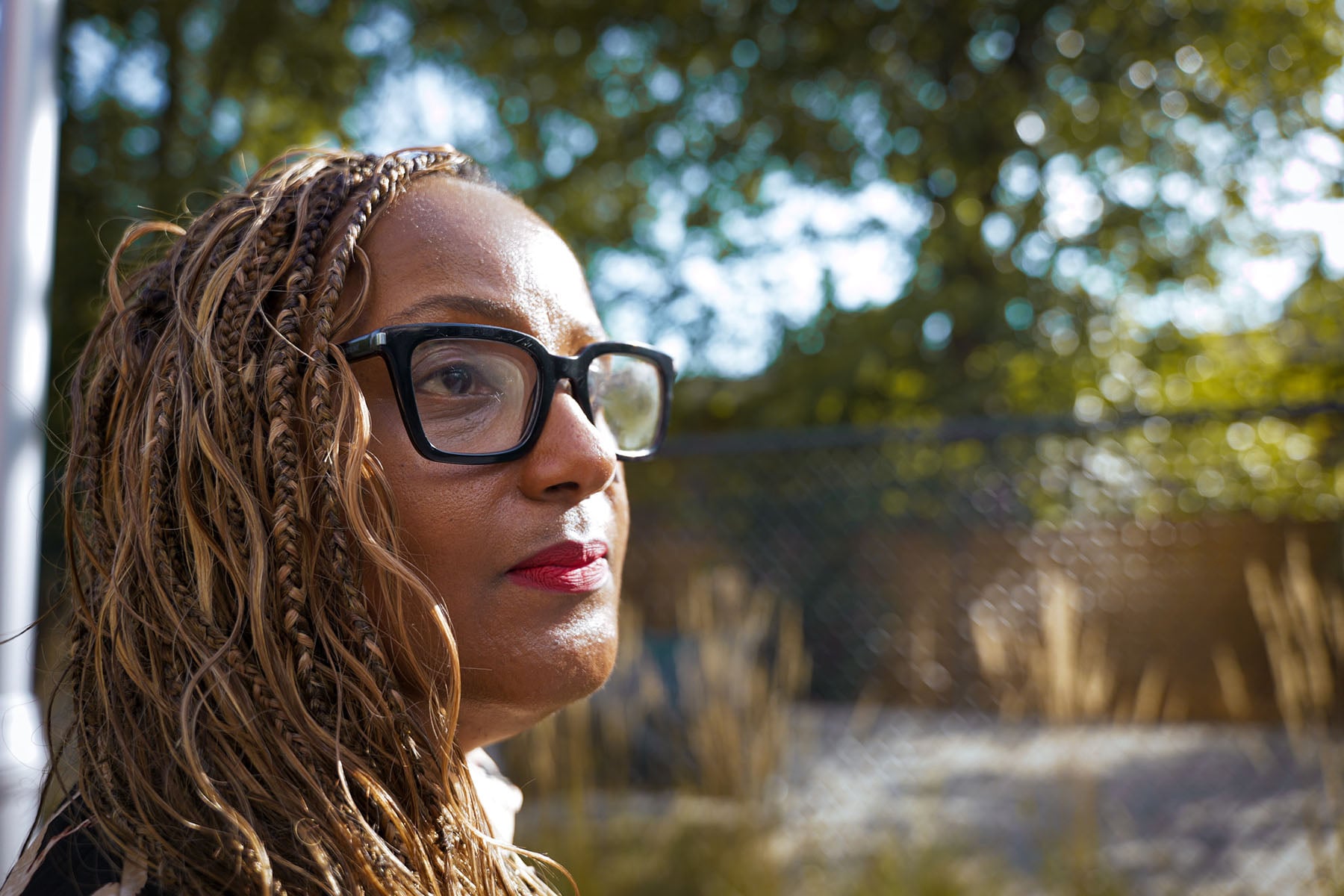
This story is a collaboration between MindSite News, Capital B, The 19th and The Nation and was edited by MindSite News. Darnese Foster remembers the day she learned she was fired from her federal government job. Then that Monday was the holiday,” said Foster.
She called the help desk to submit her request. Then someone from the IT department called her back. He said, ‘Well, let me call you back.
Let me talk to (the IT) supervisor to see what’s going on.’” Later that day, they both called back to tell her that she was on a list of employees on probation that were being terminated during the mass firing. Foster’s initial reaction was numbness, then panic and dread. She had a child in private school and rent and a car note to pay.
Now, more than a year after being fired from her position as a grant management specialist in the Department of Health and Human Services, Foster is struggling, not just financially, but to cope: struggling to stay strong, struggling to keep the faith. The constant strain, she says, has taken a toll on her mental health. But the job cuts did more than just dismantle a longtime pipeline that helped lift D.C.’s majority-Black community into the middle class; it also gutted the well-being of the Black women who hold up that community.
A recent study by University of Maryland labor economist Brandon Enriquez found that DOGE cuts “disproportionately affected” the federal employment of Black women compared with other demographic groups. The study estimated that while DOGE “did not have statistically significant effects for any other race, gender, education, or age group,” it reduced Black women’s federal employment by 25 percent. Given the overrepresentation of Black workers in the federal government, Enriquez concluded that the layoffs increased racial inequality.
In many of the agencies that were targeted for massive staff reductions, women and people of color made up the majority of the workforce, according to a 2025 report by Sarah Javaid for the National Women’s Law Center. Javaid wrote that “while women made up 46 percent of the total federal workforce in September 2024, they represented the majority of the workforce” in the departments of Veterans Affairs, Education, Health and Human Services, Treasury, and Housing and Urban Development. People of color — including Darnese Foster — made up 46 percent of probationary workers, according to the report, including 65 percent of those at the Department of the Treasury, 55 percent at Housing and Urban Development and at Homeland Security, and 53 percent at Health and Human Services.
Extract — continue reading at the source.
/https://tf-cmsv2-smithsonianmag-media.s3.amazonaws.com/filer_public/55/9c/559c3e43-f760-48c8-978b-1faec1bf964e/nobel-chem.jpg)



/https://tf-cmsv2-smithsonianmag-media.s3.amazonaws.com/filer_public/4d/d6/4dd61fd0-fca5-414c-b445-37844963147d/gettyimages-162734047.jpg)
/https://tf-cmsv2-smithsonianmag-media.s3.amazonaws.com/filer_public/64/fa/64faf4cf-cac2-4a8e-869a-c7249f6ce5db/gettyimages-1527433807.jpg)