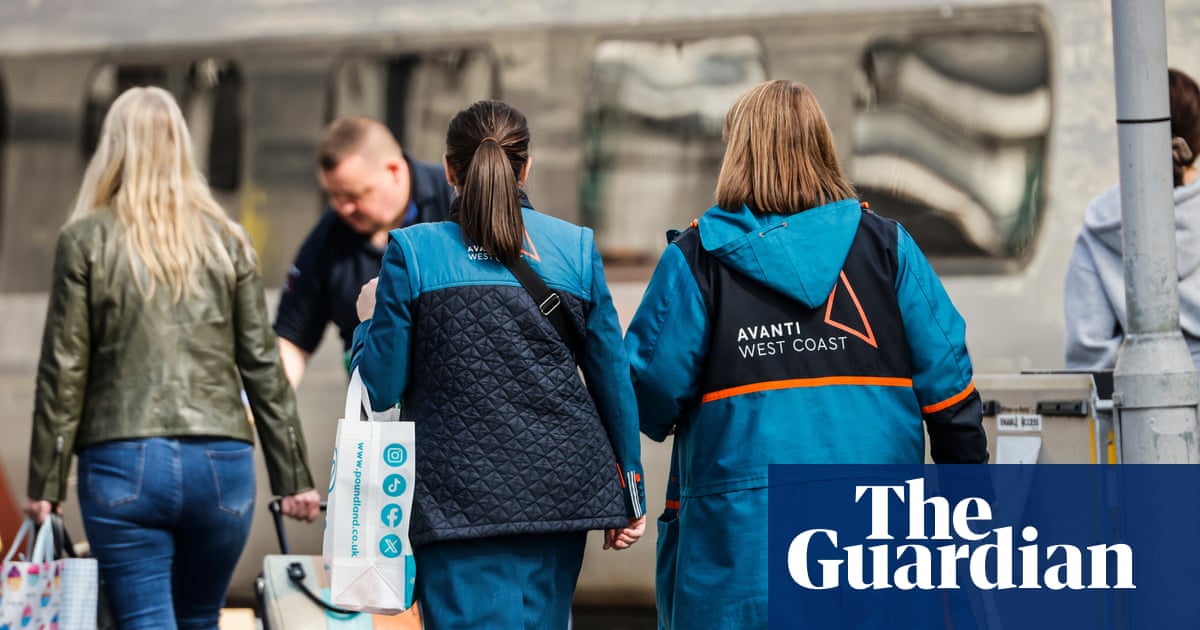
When a train was halted outside Exeter St Davids station on Monday, rail staff leapt to one conclusion: there had been a violent incident on board. My boss got head-butted recently.” On this occasion, they were wrong – but their assumption told a tale. Figures released late last month showed the number of reported assaults on Great Britain’s railways had risen by a fifth, to a record high of almost 25,000 incidents in a year.
Staff in particular have felt increasingly under threat. While the total numbers reported by the Office of Rail and Road in 2025-26 covered threats, verbal abuse, and contact that might not have resulted in any injury, they included nearly 2,500 physical assaults on workers – an average of about seven every day. Their unions said the numbers were horrendous, but unsurprising: the RMT and TSSA unions have campaigned for more staffed stations and policing, after the number of British Transport Police (BTP) officers fell by more than 10% between 2024 and 2026.
Many rail staff wear body cams to record and log incidents of violence. However, after 20 years in the job, he said: “The threats, the abuse, the violence we see is off the scale.” Drink and drugs play a part, he added. If you’re out on the street you can steer clear, but if you’re on a train or a platform you can’t.
Our workplaces are becoming more and more dangerous.” Steve, a guard based in the north of England, was punched in the head by a passenger: “It was my last train of the night. I’ve had to look away to see the door controls and the next thing I know, I’m waking up on the platform.” Every guard gets verbally abused on a daily basis, he said, with behaviour worsening since the pandemic: “Now it’s mostly bad days, and you’re searching for good days, where nothing’s said, or nothing happens. The amount of times we’re getting threatened now with physical attacks, even when you walk through the train and say, ‘Tickets, please.’” Even those working on the infrastructure can be on the receiving end.
One rail contractor, Liam, based in Somerset, said: “We’re there working on the tracks and we sometimes get sworn at and even spat at. It’s just a minority, but somehow they think we’re responsible for slow journey times, cancelled trains. We’re in bright orange so we’re easy targets.” The railway is by no means unique: bus drivers have faced repeated abuse and threats, as the Unite union has highlighted.
Transport for London staff working on roads are issued with “spit kits”, or forensic saliva collection tubes, so common is that form of assault. Violence against women and girls is of particular concern; at the Labour conference this week, the minister for buses and local transport, Simon Lightwood, described it as a “national emergency”. Speaking alongside him, the mayor for the north-east, Kim McGuinness, said that as well as measures such as more staffing, lighting and CCTV, a crucial point for women was “knowing that if you raise an alarm something is going to be done.
Extract — continue reading at the source.