Activists in Colorado thought they would be celebrating a victory against mass surveillance in December when the Longmont city council decided to let a contract with Flock Safety lapse. But that excitement was cut short only months later when lawmakers voted to approve a new vendor to install automated license plate readers (ALPRs) on the city’s streets. He and like-minded neighbors had been riding the momentum of a nationwide backlash against these cameras and their ability to track cars.
Flock Safety has more than 120,000 cameras set up on roads across the US that scan license plates billions of times every month. Local law-enforcement agencies say they rely on ALPRs to solve crimes. Officers can search this data, even outside their state, to help find stolen vehicles and missing people.
Privacy advocates say Flock has created a dragnet, as these queries don’t require a warrant, and the cameras routinely capture details about cars driven by people who are not suspected of crimes. They also worry about police officers who used the tech to try to stalk their romantic interests, as well as ways this data ends up in the hands of federal immigration enforcement. At least 56 municipalities have deactivated, canceled or rejected contracts with Flock this year, according to national advocacy organization DeFlock.
The company is feeling the heat, and last week announced changes aimed at addressing concerns about privacy and misuse. Flock introduced updated policies around auditing, as well as data retention and sharing – although many critics calling for change consider them inadequate. Even in cities that have officially gotten rid of Flock, though, surveillance persists: a new camera company steps in or private companies with cameras on their premises, unbothered by changes in municipal contracts, leave the devices up.
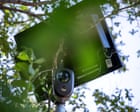
Sometimes Flock itself fails to remove the cameras in a timely manner. Several cities have resorted to hooding cameras with trash bags. Flock did not offer comment by press time.
Most negative publicity about ALPRs has centered on Flock, which by far owns and operates the greatest number of them across the US. But critics of these cameras fear that cities are swapping out one vendor for another without addressing underlying concerns about data privacy and surveillance. In Longmont, Palmer was in disbelief at how quickly the city moved to replace Flock’s license plate readers with ones made by Axon, an even larger police tech company that also produces Tasers.
Extract — continue reading at the source.