A few years ago, Rose Tremain was asked to name her biggest disappointment. The film of her novel Restoration. Despite a Hollywood budget, Robert Downey Jr and Ian McKellen in the cast and a couple of Oscars, it was “a dog’s dinner”.
Speaking on the phone from her home in Norfolk, Tremain is far more complimentary about a new British adaptation of her semi-autobiographical short story Extra Geography, set in a boarding school in the 1950s and first published in 2007. Tremain adores the script, adapted from her elegant five-page story by playwright and Succession scriptwriter Miriam Battye. At their first meeting, Battye told her it would easily transfer to the modern day: “I felt really pleased about that,” says Tremain.
It has relevance now.” She is equally delighted with the finished film: “To make a 90-minute movie, Miriam had to do a lot of inventing. And I think all the inventing that she’s done is very, very right for the story. She completely understood it and yet made it her own, which, honestly …” Tremain pauses.
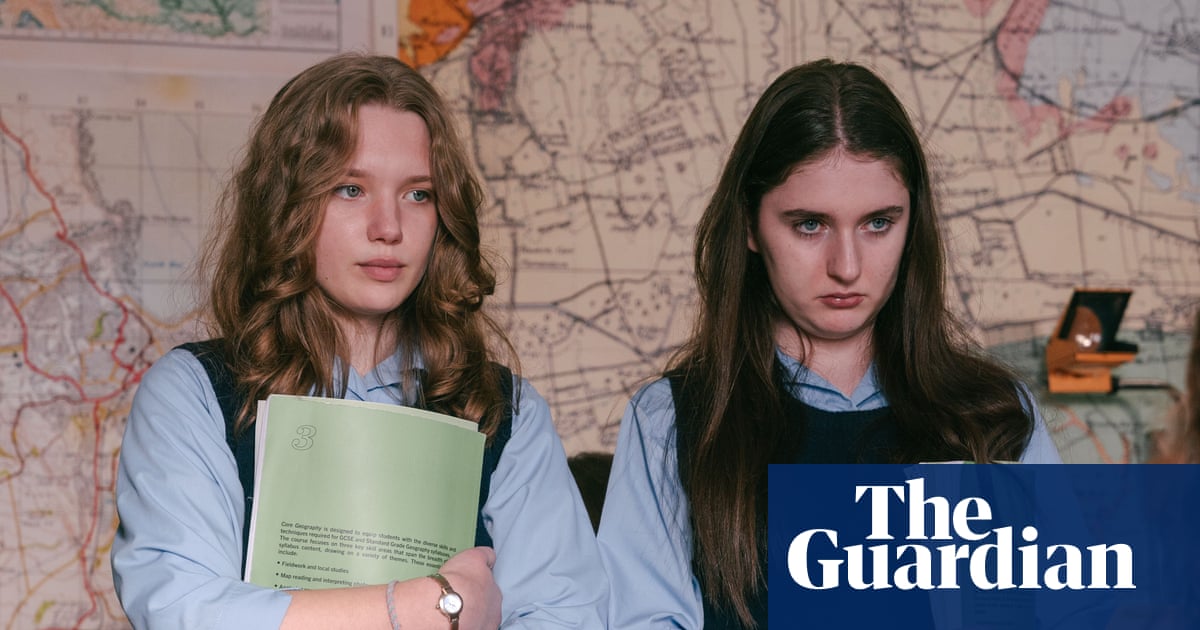
Usually when somebody says they’re going to write your thing, they take it in a direction which you can’t recognise at all.” The film is set in a boarding school in the north of England in the early 2000s, where Year 10s Minna and Flic rule the school, queens of the common room. Minna is posh and fast becoming a beauty (a dewy faced English rose, think teenage Kate Winslet). Flic is a “scholarship girl”, brainy, but lacking her friend’s effortless confidence.
They are gloriously extra. One long afternoon, Minna and Flic decide to make themselves more interesting by falling in love. Borrowing the idea from A Midsummer Night’s Dream (a “rubbish” play, declares Flic) they agree to fall in love with the first person they see.
Who happens to be their geography teacher Miss Delavigne, a woman with sturdy ankles and frumpy skirts, played in the film by Alice Englert. But Extra Geography is not about love, rather friendship, which is a recurring theme in her work, says Tremain. But I think friendship, which is a kind of poor relation of that, is so interesting.” I call Battye, who explains that she instantly wanted to adapt the story into a film: “It felt very familiar to me, like it was something I’ve gone through.
Extract — continue reading at the source.