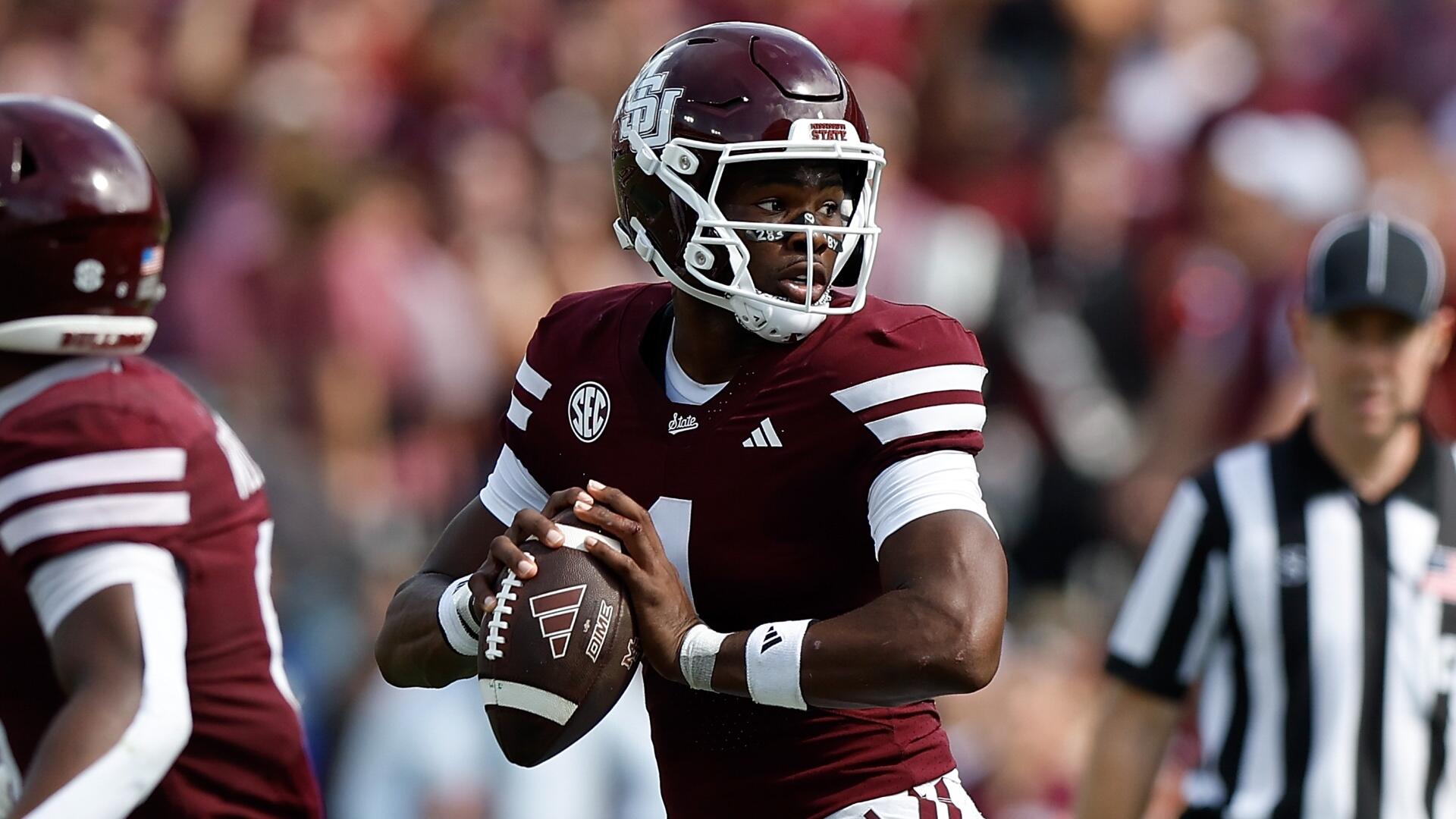
It's too early to draw any conclusions about Kade Anderson's MLB future. Even his very immediate future. Two underwhelming starts are, from an analytical perspective, almost nothing, and it's not like the two starts Anderson has made so far have been identical.
We're dealing with small sample sizes all the way down here! For example: The fastball issues that looked so worrisome in Anderson's first start were largely fixed in start No. 2. His fastball shape wasn't exactly what it looked like down at Double-A, and pitching at a closed-roof stadium could have helped, but still: His velocity was up and he had a couple more inches of induced vertical break.
But it wasn't all good news, obviously, as he made it through just 4.1 innings while walking as many as he struck out (three, neither a good mark). If the stuff played better in Anderson's second start, it seemed to come at the expense of his command. He struggled to put hitters away (he threw 10 sliders in two-strike counts and didn't get a single strikeout that way), hence the ugly strikeout and walk numbers.
Command is supposed to be the biggest strength of Anderson's game, so you could assume he'll improve moving forward, and that seems like a safe-ish assumption. However, right now, Anderson looks like more of a work-in-progress than he looked like down at Double-A. Maybe that shouldn't come as a huge surprise given that he just turned 22 and skipped Triple-A, but nobody was stashing Anderson because they thought he needed more finishing; we were stashing him for the potential that he would be an immediate difference-maker as a big-leaguer.
The talent is there, and it might take just a few starts and a few weeks of big-league coaching to get him there. Anderson has the talent, and even if the raw stuff isn't quite on the level of some other big-name prospects, his polish and command should win out in the end. But there is one other trend worth taking note of here, and it's one we couldn't necessarily know before he got the call: He's been kept on a pretty strict workload so far.
He has thrown just 81 and 85 pitches in his first two MLB starts and he was pulled in the middle of an inning in both. That suggests there is a pretty hard pitch count at the plate here, and when you look at his time in the minors, that's not an outlier, as the first two games where he threw more than 80 pitches came in his two MLB starts. That might not be a problem for long – getting to 90-plus pitches from 85 isn't asking too much – but the early hook can't be ignored for a young pitcher.
Extract — continue reading at the source.