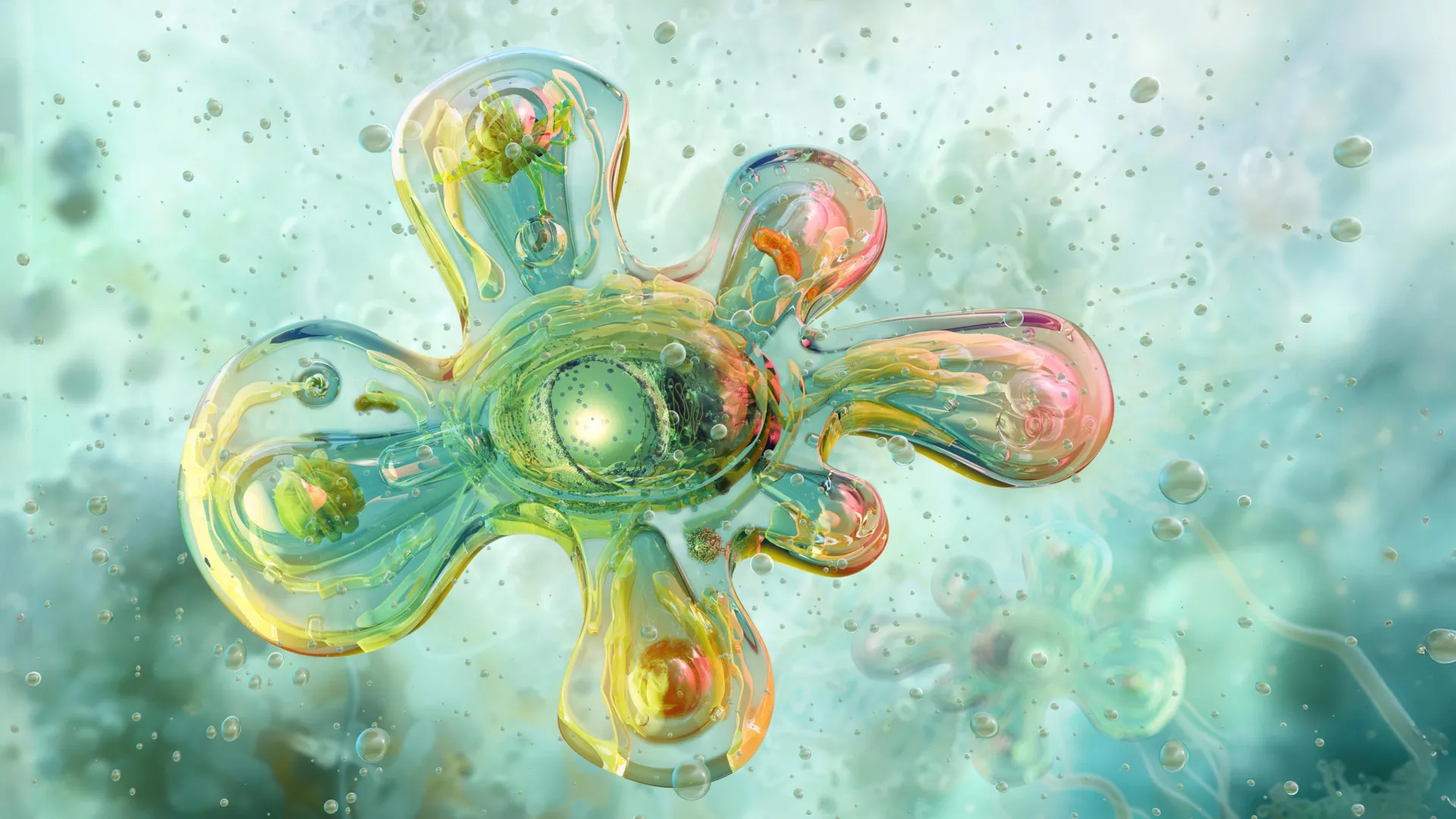
The search for life on Mars or on icy moons such as Europa and Enceladus may capture more attention, but another major astrobiology mystery is much closer to home. Scientists are still trying to understand when the first eukaryotes appeared on Earth and how those organisms helped set the stage for complex life. That question matters because microbial organisms dominated Earth for roughly 90 percent of the planet's history.
Reconstructing the transition from a world populated almost entirely by microbes to one filled with plants, animals, and fungi could also help scientists understand whether complex life might develop elsewhere in the universe. Life originated on Earth more than 3.5 billion years ago, according to Ross Anderson, a paleontologist at the University of Oxford in the U.K. Cyanobacteria and oxygen-producing photosynthesis were present by at least 2.3 billion years ago, while eukaryotes had appeared by at least 1.7 billion years ago.
Algae followed at least one billion years ago and probably emerged even earlier. Animals appeared at least 570 million years ago, and possibly somewhat before that. To reach the common ancestor shared by the plant and animal kingdoms, Anderson says researchers must look back to around 1.6 billion years ago.
Crown eukaryotes, which are among the earliest eukaryotic forms scientists are trying to trace, played a crucial role in the emergence of complex life on Earth. Anderson considers eukaryotes to represent the planet's first complex life. Eukaryotic cells contain a nucleus that encloses their DNA.
They also contain organelles, which are specialized structures inside the cell. One example is the mitochondrion, which helps provide the energy needed to support more demanding forms of life. Eukaryotes ultimately gave rise to complex multicellular organisms and large visible life forms.
Every animal, plant, and fungus around us today is eukaryotic. Finding their earliest ancestors, however, is extremely difficult. Organisms older than 500 million years did not yet possess shells or skeletons.
Extract — continue reading at the source.