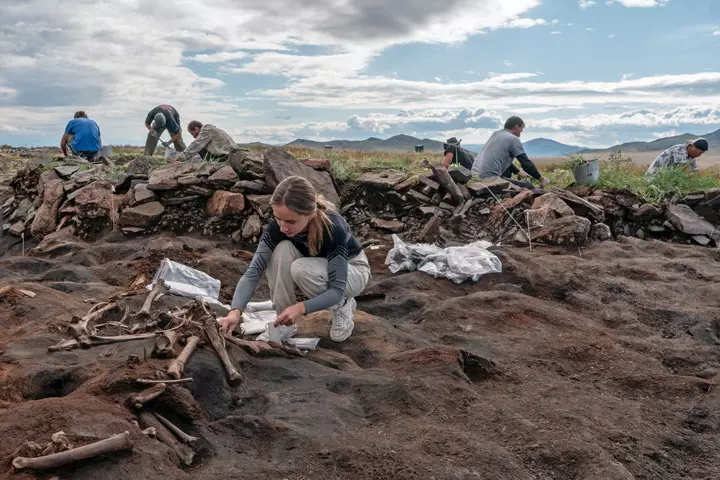
Researchers excavate a burial mound containing horse and human bones along with cannabis seeds A hair found in a 2800-year-old tomb in Siberia has yielded the earliest definitive evidence of cannabis being used as a psychoactive drug. But the history of such use is likely to go back much further. Genomic studies suggest that the domestication of cannabis plants (_Cannabis sativa_) was happening in China about 12,000 years ago, with people potentially exploiting it for oil and hemp fibre.
Archaeological sites with artefacts made from hemp dating to 7500 years ago have been found in China and Japan. The earliest firm evidence of the plant’s use as a drug had been chemical traces on wooden braziers in China that implied humans were “smoking” cannabis 2500 years ago as part of funeral rites. Now, Gino Caspari at the University of Bern in Switzerland and his colleagues have pushed the date back another 300 years with a find at the Tunnug 1 burial mound in the Uyuk Valley of southern Siberia.
The royal burial mound dates to the time of the Scythians, nomads renowned for their military skills and horseback archery who spread across a huge swathe of Eurasia. In an excavation trench at the centre of the mound, Caspari and his colleagues recovered almost 1000 whole cannabis seeds. Radiocarbon dating indicated that they were deposited around the start of the 8th century BC, some 2800 years ago.
They also found a preserved human hair dating to the same time, and chemical analysis of it detected cannabinol, a compound produced when THC, the psychoactive compound found in cannabis, oxidises, alongside chemical signatures of THC itself, so the person is likely to have felt psychoactive effects. He says we can’t say how the person consumed the drug – it might have been smoked or the seeds could have just been ingested. Given its presence in the burial mound, Caspari says the use of cannabis was probably related to a ritual funerary process.
That could have been for a religious high, but he suggests there might have been a more sinister use. The burial mound also contains the remains of dozens of sacrificed horses and some scattered human bones, which could be indications of human sacrifice. And cannabis could be used to sedate people quite heavily,” says Caspari.
There is also evidence that people chewed coca leaves in Peru 8000 years ago, and brewed beer in Israel 13,000 years ago. The use of cannabis as a drug may extend much further back into prehistory than the archaeological record currently allows us to document, says Brumm. Long before people deliberately cultivated cannabis, the plants may have been familiar “camp followers” thriving in the disturbed, nutrient-rich soils around human settlements, giving people ample opportunities to experiment with their properties, he says.
Extract — continue reading at the source.


