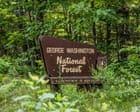
The Trump administration said on Tuesday it plans to rescind the “roadless rule” that has protected old-growth forests in the US for 25 years, potentially opening up almost 45m acres of national forests to road construction, drilling and logging. Conservationists had feared the announcement was coming since last summer after Brooke Rollins, Trump’s secretary of agriculture, targeted a rule brought in by Bill Clinton’s administration, describing it as “overly restrictive” and an “absurd obstacle” to development. On Tuesday the US Forest Service, an agency inside the Department of Agriculture, formally announced it had filed the proposal to rescind in its entirety the 2001 Roadless Area Conservation Rule.
Environmental groups immediately criticized the plan for rollbacks of protections to forests from Alaska to Oregon to North Carolina. These forests offer critical habitat for wildlife, provide clean, fresh air and water for millions and contain vast swathes of the last remaining old-growth forests in the country,” said Alex Craven, forest campaign manager for the Sierra Club. The Natural Resources Defense Council (NRDC) appealed for submissions for the public comment period to “defend our forests from the administration’s chopping block”.
The Trump administration said the move would remove obstacles to managing forests and fighting wildfires. Rollins said: “For too long, outdated restrictions have kept tens of millions of forested acres off-limits to the very treatments that improve forest health and reduce wildfire risk to our communities. It’s essential,” said Tom Schultz, the forest service chief.
And only 5% of those areas have received hazardous fuels reduction treatments since 2014.” But Craven of the Sierra Club said: “The administration’s attempt to blame the roadless rule for worsening wildfire risk ignores both the facts and the rule itself. Roads generally lead to more ignitions and result in more wildfires – not fewer. What it does not allow is using wildfire as an excuse to open some of America’s most intact public forests to industrial exploitation and new road construction.” Clinton had championed the roadless rule late in his second term as president after concerns grew around unsustainable logging of national forests.
The biggest roadless area is the Tongass national forest in Alaska, which stores huge amounts of carbon and is home to brown and black bears, wolves and bald eagles. The public has until 21 September to comment on the plan.
Extract — continue reading at the source.