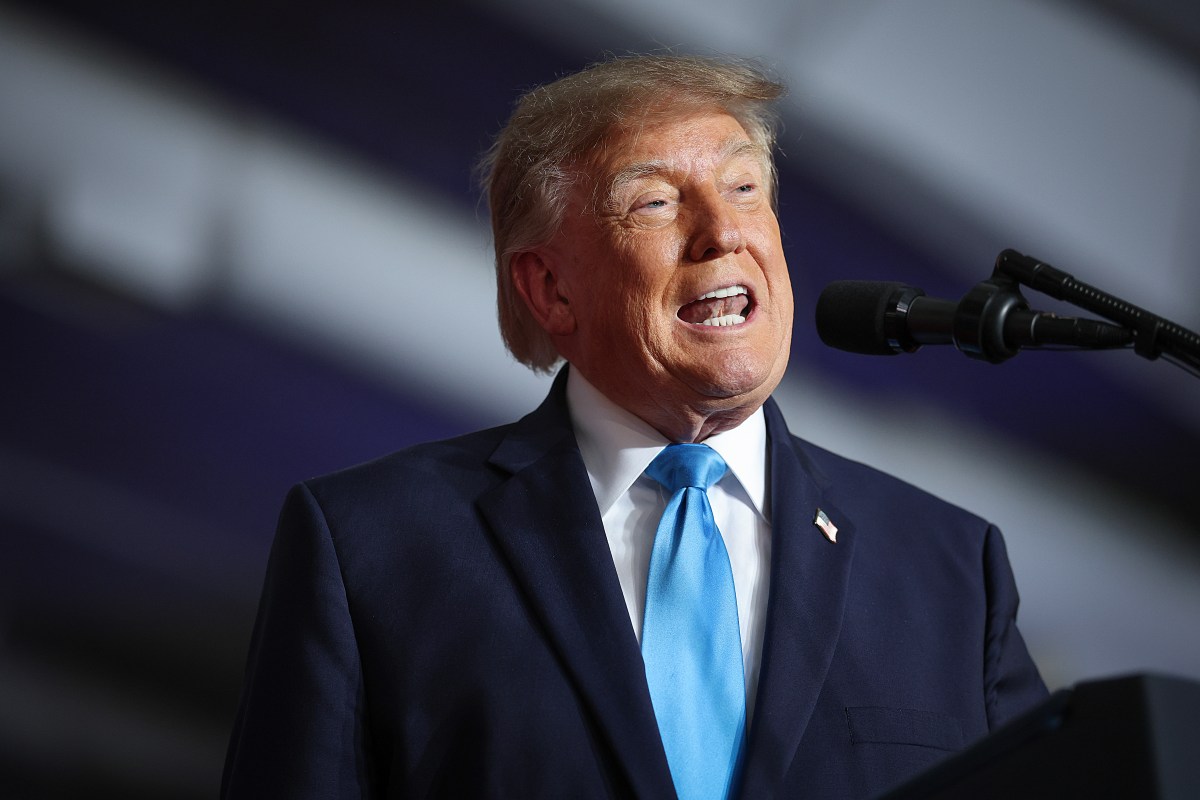
REYKJAVÍK — Pro-EU campaigners have a handy boogeyman to win over Icelandic voters ahead of a crunch referendum on Saturday: U.S. Trump’s threats to annex Greenland — Iceland’s closest neighbor — have added a strong geopolitical dimension to a referendum on resuming membership talks with the EU, which might otherwise have focused on long-standing gripes with Brussels, such as mackerel quotas. And Trump is not the only security risk in the North Atlantic.
With Russia and China both pushing to secure Arctic resources, questions about global alliances are becoming increasingly vital to the 270,000 Icelandic voters heading to the ballot boxes across the weather-beaten volcanic island. Reykjavík’s former mayor, Dagur Eggertsson, a prominent figure in the pro-EU “Yes” campaign, said that Trump’s threats to Greenland were weighing on voters’ minds and sparking debate about Iceland’s strategic position. This is something that people on the streets think about.” While Trump has rowed back on some of his more bellicose posturing to seize Greenland at the beginning of the year, he still insisted at a NATO summit in Ankara in July that the territory “should be controlled by the United States, not by Denmark.” Facing that kind of regional tension, Eggertsson, who also chairs Iceland’s delegation to the NATO Parliamentary Assembly, echoed Canadian Prime Minister Mark Carney in mapping out the stakes: “Small and middle powers need to stick together.” In the case of Iceland, he insisted this meant closer ties to Europe.
The key theme looming over the Icelandic referendum is sovereignty. But it’s an issue that cuts two ways, and polls suggest the referendum is on a knife-edge. A Gallup poll in mid-August gave the “Yes” camp a wafer-thin advantage, with 51.5 percent support.
While “Yes” campaigners like Eggertsson stress the regional implications of threats to Greenland’s sovereignty, the “No” camp argues the EU could impinge on Icelandic sovereignty, particularly within the politically crucial spheres of fisheries and farming policy. Indeed, it was fisheries quotas that were key to scuppering Iceland’s previous bid to join the EU, which was definitively halted in 2015. Eiríkur Bergmann, a professor of politics at Bifröst University, explained that national sovereignty has been the core issue animating political debate in Iceland since its independence from Denmark in 1944.
Another camp, equally vocal, is cautioning against EU membership on the exact same grounds, arguing that it threatens Iceland’s sovereignty.” Those sentiments on national independence and identity have a long pedigree. Iceland’s parliament, the Althing, is one of the oldest electoral assemblies in the world, dating back more than a millennium. Strategically, the island is a NATO member and has a bilateral defense agreement with the U.S. dating back to 1951.
At the same time, Iceland is a member of the European Economic Area, and it’s estimated that it already adopts about three-quarters of the EU’s rules through this. It’s also part of the Schengen Area, allowing for passport-free travel with most EU countries. The core consideration, then, for the referendum is whether it is worth moving beyond that EEA relationship.
Extract — continue reading at the source.