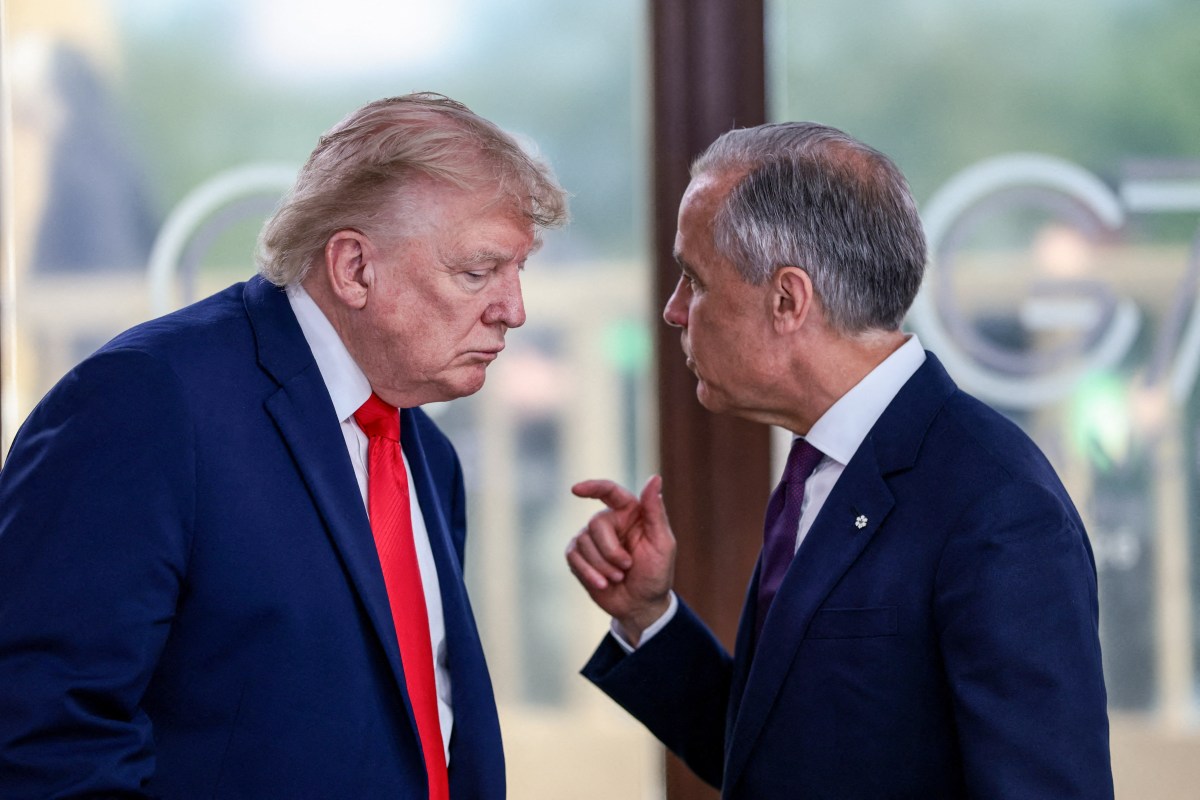
Mark Carney is drawing a very different lesson: that it has become dangerous to depend too heavily on America. That is what makes the collapse of U.S.-Canada trade negotiations much more consequential than another Trumpy tariff drama. Carney's response is not simply to retaliate against Trump's tariffs, although Canada will do that.
He is attempting something much more ambitious: to make Canada less vulnerable to American economic pressure in the first place. Canada intends to double its non-U.S. exports over the coming decade. It is seeking deeper economic relationships with Europe and Asia and pursuing agreements with India, in south east Asia, South America and elsewhere.
And it is investing in the ports, transportation corridors, energy infrastructure and critical-mineral projects needed to get Canadian products to those alternative markets. In other words, Trump looks at Canada's dependence on the American market and sees leverage. Carney looks at Trump's willingness to exploit that dependence and sees a vulnerability that must be reduced.
And others are moving in the same direction. The EU has been pursuing major trade agreements with India and the South American trading bloc Mercosur, potentially giving European companies far greater access to two enormous markets outside the United States. These negotiations long predate Trump's latest tariff wars, so it would be wrong to claim that he caused them.
But their strategic significance looks rather different in a world in which Washington is increasingly willing to use access to the American market as a political weapon. This isn't decoupling from America. It isn't necessarily even anti-American.
It is hedging against America—and it was caused by Trump—who appears to fundamentally misunderstand the source of his own country's power. America has profited mightily from the fact that much of the world voluntarily organized itself around the United States. Countries wanted access to American markets.
Extract — continue reading at the source.