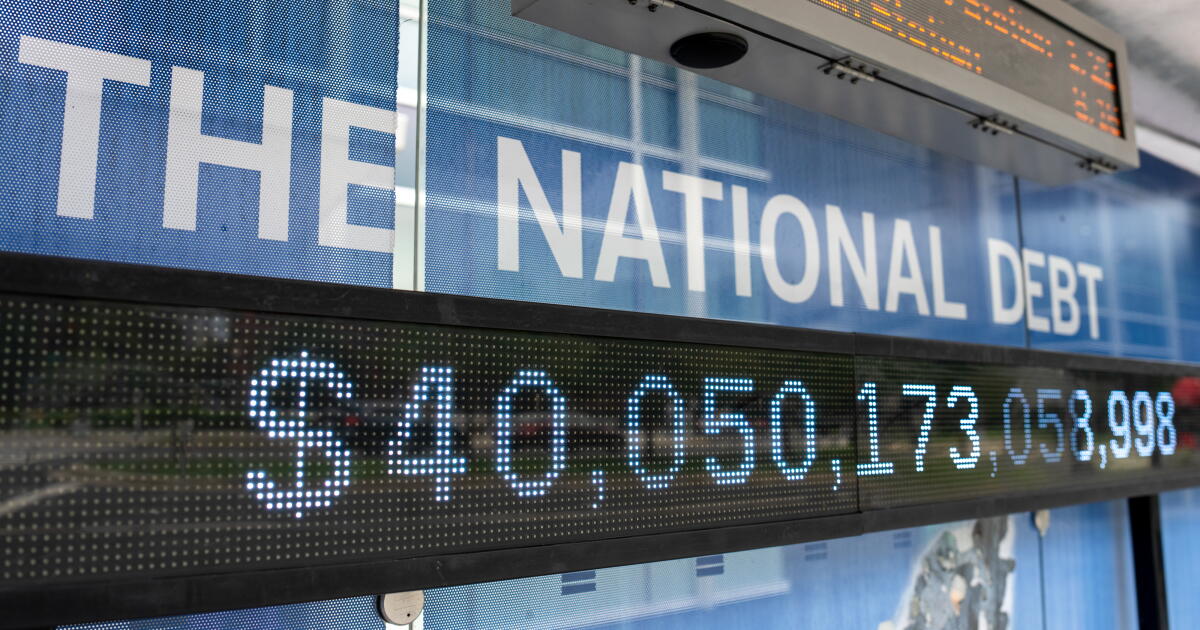
WASHINGTON — A sporadic global trade war led by President Trump is fueling inflation across the U.S. economy, elevating prices on everyday goods, as the war with Iran sends the price of gas on a roller coaster. Aggressive tax cuts have pushed the national debt past $40 trillion, driving a growing crisis in the bond market. And an unprecedented immigration crackdown is disrupting the labor supply in agriculture, construction, hospitality and food processing, raising prices even further.
Approaching the halfway point of Trump’s second term, a president who won reelection based on a promise to turn the economy around now faces a reckoning in the midterm elections centered largely on his economic record. Trump’s economic agenda has emerged as an increasingly awkward liability for Republicans heading into the November elections, leaving lawmakers to defend policies that have delivered political pain at home, even as the White House argues they will pay off in the long run. Polling on Trump’s handling of the economy has remained in precariously low territory throughout the summer, entering Labor Day weekend with less than a third of Americans supporting his job performance on their most pressing concerns.
One recent poll, from the University of Massachusetts Amherst, found that only 22% perceive the economy in a good or fair state. And Americans’ confidence in the economy is unlikely to improve much ahead of election day, Nov. 3, in part because bad economic news has shown to sink confidence fast. Good news takes much longer to win people back, experts said.
And fresh polling found that more than 90% of Americans believe corruption is rampant in Trump’s government, even as the president spends hundreds of millions of dollars on vanity projects across the capital. Susan Collins, the incumbent Republican senator from Maine seeking another term in a strategically critical race, chastised the Trump administration for its latest trade spat with Ottawa as “making the job harder” of securing reelection. Trump has pushed back on criticisms of his record, declaring the country has “the greatest economy we’ve ever had” and touting what he calls a manufacturing boom, all while distancing himself from potential midterm losses.
But my party’s running, and I’m going to help my party.” But Rep. Mike Johnson, a Louisiana Republican and speaker of the House, said last week that the midterms would serve as a referendum on Trump’s presidency. His administration is.” Several embattled incumbents fear that’s the case and are distancing themselves from the president.
Several Republican lawmakers — including Reps. Tom Barrett of Michigan and Zach Nunn of Iowa — plan on skipping a midterm GOP convention called by Trump for this week in Texas. Joanne Hsu, director of the University of Michigan’s Survey of Consumers, said that gas prices were a chief frustration among Americans, and found that consumer sentiment soured rapidly once it became clear the conflict in Iran would not be short-lived.
Extract — continue reading at the source.