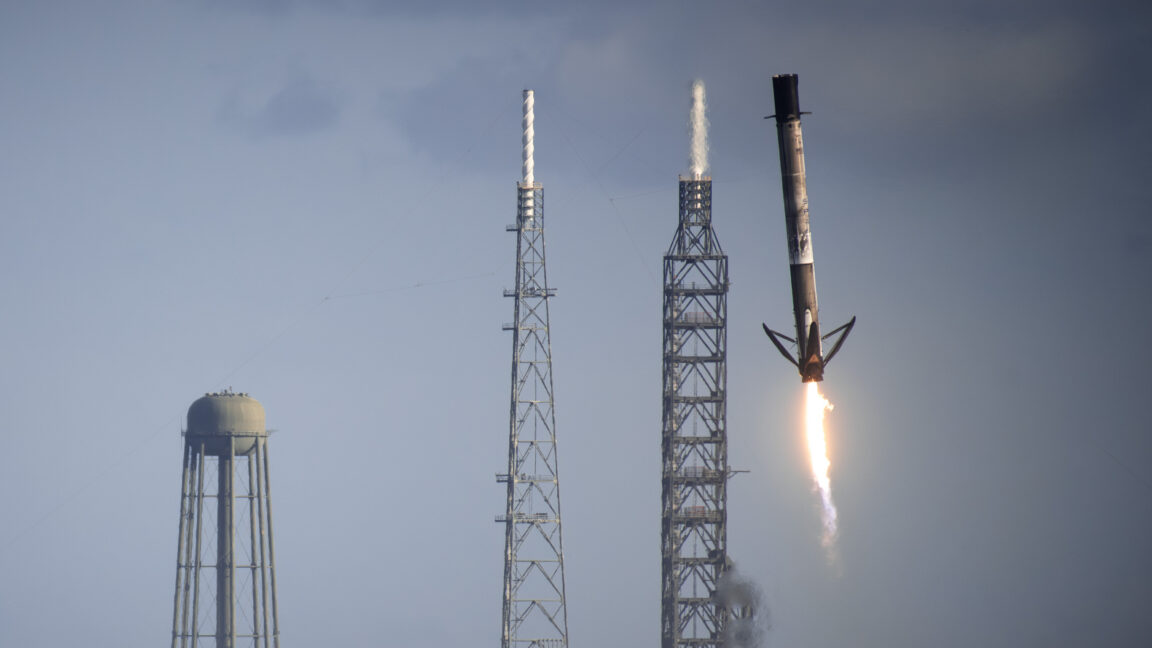
A new national space transportation policy signed by President Donald Trump on Thursday calls for the development of more spaceports to support more than 1,000 launches and reentries per year by 2030. The presidential memorandum replaces a 2013 policy signed by former President Barack Obama. Both policies share an emphasis on supporting the commercial space industry and underscore the importance of assured access to space.
But the launch sector has changed immensely since then. There were 176 orbital launch attempts from US soil last year, nearly 10 times the number in 2013. SpaceX led the pack last year with 165 orbital launches of its Falcon 9 rocket, plus five suborbital test flights of the much larger Starship.
The most notable updates to the national space transportation policy focus on increasing the country’s ability to enable those lofty forecasts. The Trump administration calls on the Pentagon and NASA to “prioritize and coordinate on infrastructure investments” to boost launch and reentry capacity and flexibility at federal launch and reentry ranges. These federal spaceports include Cape Canaveral Space Force Station and NASA’s Kennedy Space Center, which sit on adjoining property in Florida.
The others are Vandenberg Space Force Base, California, and NASA’s Wallops Flight Facility in Virginia. Only the Florida and California spaceports are currently outfitted for heavy-lift launches. The policy document supports more efficient range scheduling criteria at federally owned spaceports, balancing the needs of commercial users and US government missions.
It also directs the military and NASA to “regularly publish range schedules to ensure transparent allocation of resources and optimize launch capacity.” Today, the schedules for most rocket launches are not public until a few days or weeks in advance.
Extract — continue reading at the source.


%20102026%20top%20art%20SOURCE%20Amazon.jpg)