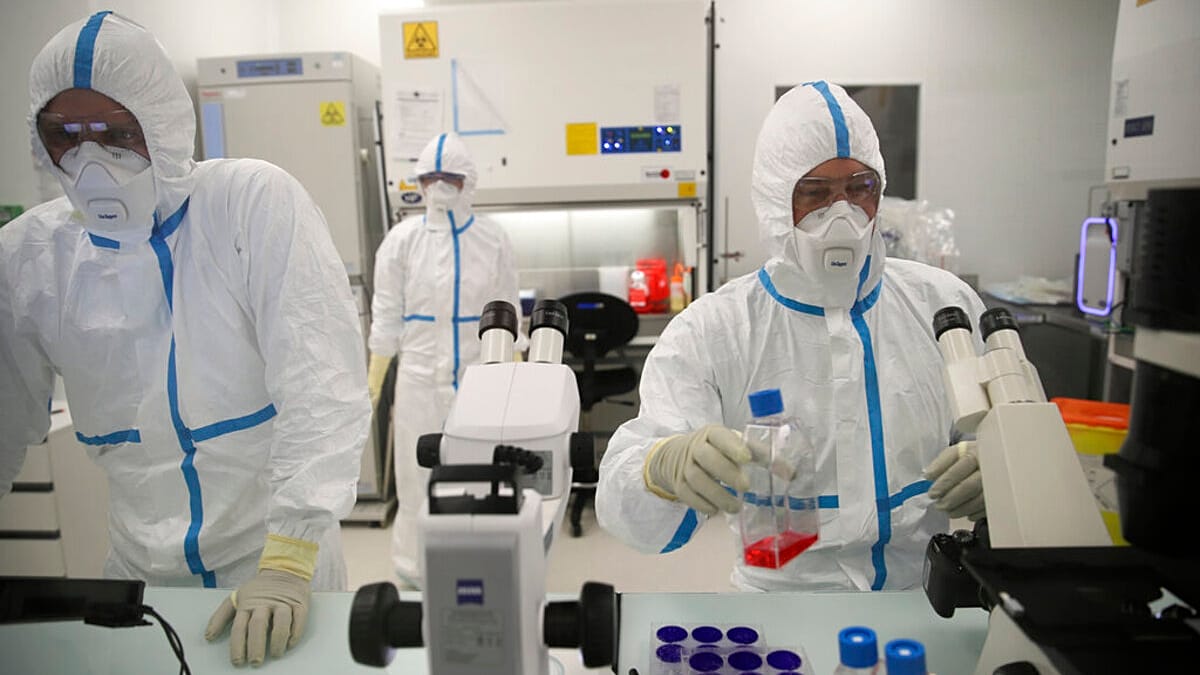
US President Donald Trump said Tuesday that he had scheduled a call with his Russian counterpart Vladimir Putin to discuss a suspected plague case at a Siberian research institute that has drawn international scrutiny, offering US help while Russian regional officials said they would handle the situation themselves. Trump told reporters at the White House that the call with Putin was scheduled for "very soon" and said "very deep discussions" were under way in Washington on the case. On Monday he had told reporters the US was ready to help, calling plague "a rough disease".
"That's a disease we used to be able to control," he said. "We'll help." Kremlin spokesman Dmitry Peskov said Russia welcomed the offer of assistance. Yet Rospotrebnadzor, Russia's health watchdog, shot back at the US, stating Russia was "ready to assist the United States in tackling outbreaks of infectious diseases," citing measles outbreaks in three US states.
Local authorities also rejected outside help, claiming that there is no threat of a plague outbreak in Siberia. "We will manage on our own. The situation is under full control.
The dangerous diagnosis is not being confirmed, but we are still following all protocol measures," deputy mayor of Shelekhov district Elena Sofina said in a statement, adding that 60% of those placed in quarantine had been released. Darya Shipilova, 28, a researcher at the Irkutsk Anti-Plague Research Institute of Siberia and the Far East, died in hospital on 2 October. Unconfirmed reports claimed she broke a vial containing a plague pathogen.
Official Russian records list the cause of death as "pneumonia of unknown aetiology." Despite negative test results among contacts, authorities quarantined nearly 200 people and placed several hospitals under restrictions, measures inconsistent with ordinary pneumonia. The World Health Organization said on Tuesday it assessed the risk outside Russia as "very low" and saw no signs the disease was spreading. Spokesman Christian Lindmeier said the cause of death had not been officially confirmed and laboratory tests were ongoing.
WHO Director-General Tedros Adhanom Ghebreyesus said the organisation had asked Russia for "additional information to determine the cause of the severe pneumonia" and to verify media reports of a second staff member with pneumonia of unknown cause. "Timely, complete and transparent information-sharing in line with the International Health Regulations is critical," he said. The US Centers for Disease Control and Prevention said it was closely monitoring the situation and that "at this time there are no signs of a broader threat to the United States." The US Embassy in Moscow noted it was following the situation and reminded US citizens that the State Department's Level 4 "do not travel" advisory for Russia remains in force.
Extract — continue reading at the source.