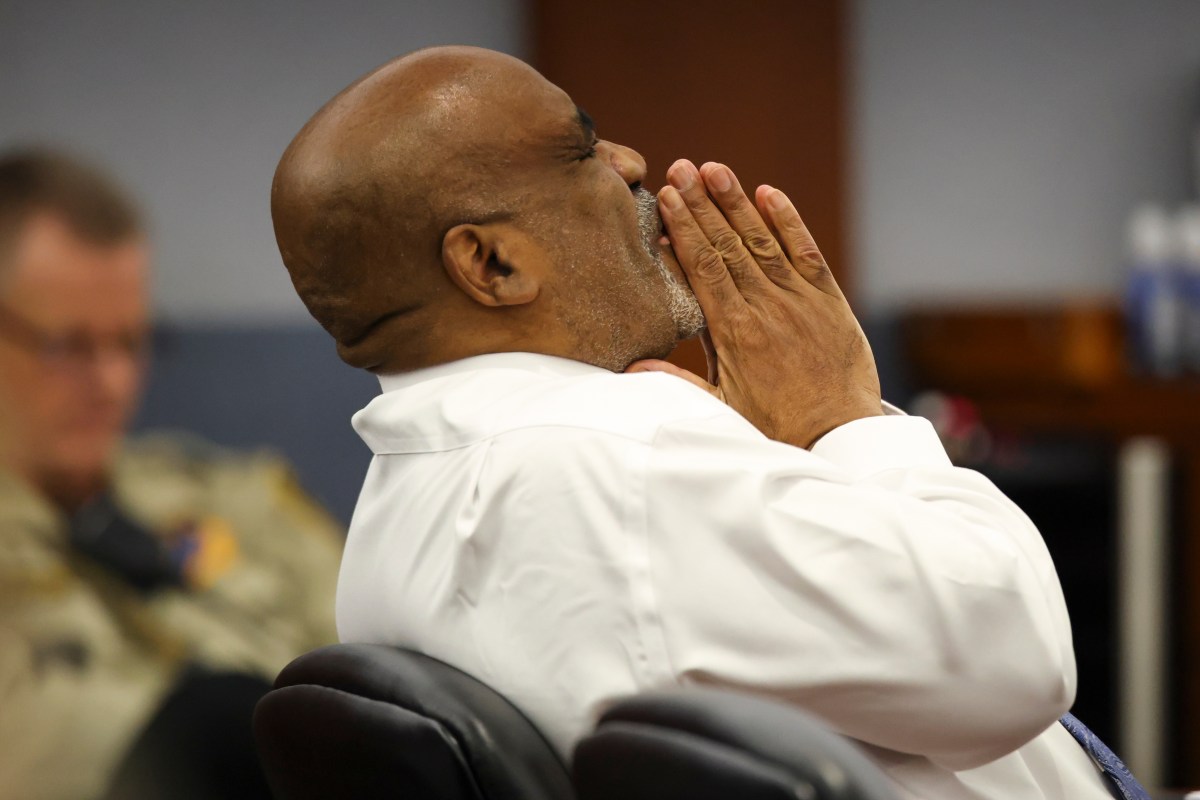
The long-awaited murder trial of Duane "Keffe D" Davis opened Monday with prosecutors laying out a detailed account of what they say led to the fatal 1996 shooting of rap icon Tupac Shakur, arguing that Davis orchestrated a retaliatory attack after Shakur and members of his entourage assaulted Davis' nephew, Orlando Anderson, hours earlier on the Las Vegas Strip. Davis entered the courtroom wearing a blue suit and tie and was not shackled. Throughout much of the proceedings, he sat with an expressionless look on his face as prosecutors outlined what they described as a chain of events that escalated from a gang rivalry into one of the most infamous unsolved killings in American history.
While prosecutors acknowledged Davis did not personally pull the trigger, they argued he played a central role in planning the retaliation and supplying the weapon used in the shooting. Davis' attorney Michael Sanft responded to the allegations made by the prosecutor in his opening statement, questioning the validity of the claims made and stating, "There's no facts." Prosecutor Marc Wall told jurors that the events leading to Shakur's death began long before the rapper was gunned down at a Las Vegas intersection. According to the prosecution, tensions had been building between members of the Mob Piru gang, which was associated with Death Row Records, and the South Side Compton Crips led by Davis.
Jurors heard about an earlier confrontation at Lakewood Mall in California, where Mob Piru member Trevon Lane allegedly had a chain ripped from his neck during a dispute involving members of the South Side Crips, further escalating the rivalry. The conflict came to a head on September 7, 1996, when Shakur and members of his entourage attacked Orlando Anderson in the MGM Grand casino following a Mike Tyson fight. The beating was captured on surveillance video and has long been viewed as a pivotal moment in the case.
"There was no question that a response was required," prosecutors said, describing Davis' alleged reaction after seeing his nephew attacked. Wall emphasized that Shakur "was not a gangster" but "an artist," while arguing that his association with Mob Piru members nonetheless placed him in the center of the gang dispute that night. Prosecutors said Davis became enraged over the attack on Anderson and decided retaliation needed to happen.
A major part of the state's case centers on statements Davis allegedly made years after Shakur's killing while he was facing unrelated federal drug charges. According to prosecutors, a federal task force approached Davis and his attorney after an undercover narcotics investigation led to charges against him. Seeking information about a principal target of their investigation, authorities met with Davis, who reportedly told them he had no information about that individual but could provide details about Tupac Shakur's murder instead.
Jurors heard that Davis then gave a detailed account of the shooting during a secret proffer session with federal investigators. Prosecutors said the conversation was secretly recorded and later became public in 2009. In that interview, Davis allegedly described his involvement in the events leading up to the shooting and identified key figures who were with him that night.
Extract — continue reading at the source.