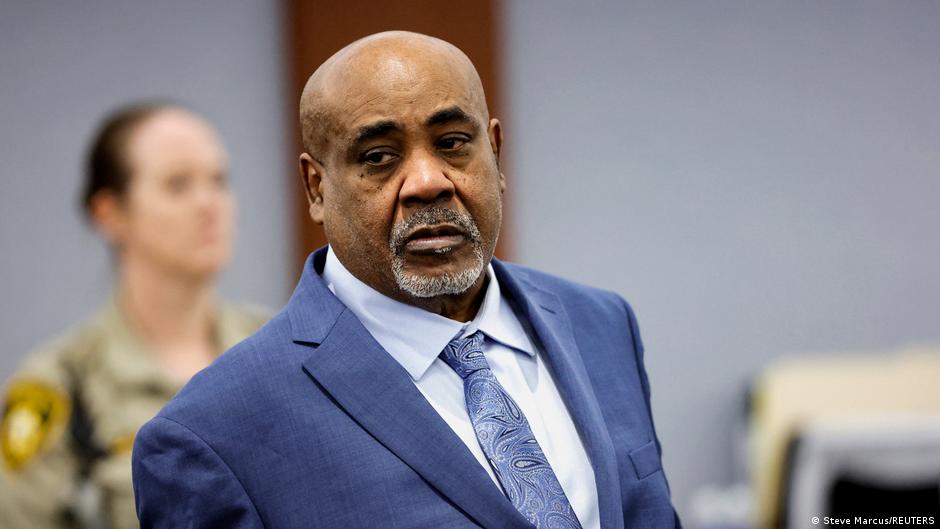
The murder trial over Tupac Shakur's 1996 killing opened with prosecutors arguing that Duane "Keffe D" Davis planned the shooting. Almost three decades after the drive-by shooting they opened their case by telling jurors the rapper was shot dead in an act of gang revenge masterminded by a mobster. But he did plan the shooting in retaliation of the beating of his nephew,” Chief Deputy District Attorney Binu Palal said.
Davis, a one-time leader of the South Side Compton Crips gang, is charged in Clark County, Nevada, with a single count of murder using a deadly weapon. Davis ordered the killing after his nephew, Orlando "Baby Lane" Anderson, had been beaten by a rival gang, Chief Deputy District Attorney Binu Palal told a court in Las Vegas Tuesday. Palal showed videos Tuesday of Shakur's entourage attacking Anderson.
"Then, two and a half hours later... Tupac is gunned down in a drive-by shooting from a white Cadillac in an act of revenge," the prosecutor told jurors. Palal said that Davis — who has been dubbed by the authorities as a "shot caller" — did not pull the trigger but "he did plan the shooting in retaliation of the beating of his nephew".
Palal went on to tell the jury: "Remarkably, you will learn that from Duane Davis himself," referring to Davis' previous interviews with law enforcement and the media, as well as his autobiography, where the accused describes Shakur's killing. Davis said in the interviews and his 2019 memoir, "Compton Street Legend," that he was riding in the car from which Shakur was shot. In an interview with a federal task force probing another killing, Davis spoke of the Shakur shooting.
He described handing a gun to the men in the backseat of the white Cadillac that fired on the rapper's black BMW. On Tuesday, prosecutors played audio of Davis explaining the moment Shakur was shot. Representing Davis, attorney Michael Sanft called the prosecution's narrative "fiction" during the defense's opening statement.
Sanft said prosecutors had no real proof that his client was culpable. He said that after 30 years a police investigation has repeatedly failed to turn up a definitive version of events. He called the investigation "biased," "sloppy" and "incomplete." "Just look at the actual facts.
Extract — continue reading at the source.