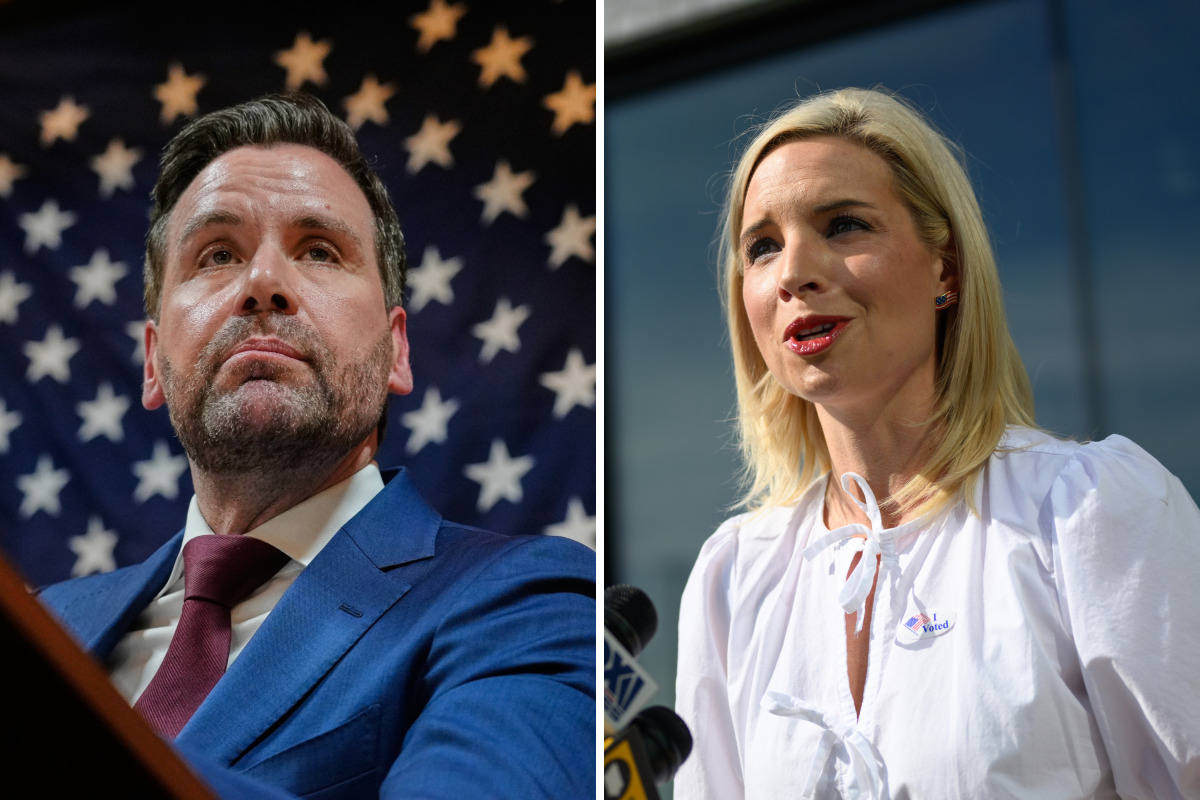
A new Marist poll shows Democrat Josh Turek leading Republican Ashley Hinson in Iowa's Senate election, a competitive race that in some ways parallels the conditions present during Democrats' last victory in a statewide Senate election 18 years ago. The poll, released on Tuesday, found that 50 percent of registered voters in Iowa back Turek, compared with 42 percent for Hinson. The poll surveyed 1,050 Iowa registered voters and was conducted between September 17 and 20.
Registered voters were contacted through phone, text, or online. The two are competing to succeed retiring Republican Senator Joni Ernst in a contest that could help determine control of the U.S. Shortly before the poll was released, Hinson publicly broke from President Donald Trump when she called for the end of the Iran war on Monday.
Trump endorsed Hinson last September. The last time Democrats won an Iowa Senate election was 18 years ago, when incumbent Senator Tom Harkin beat his Republican opponent, Christopher Reed. In the elections since, Ernst and Republican Chuck Grassley have had control of Iowa's two Senate seats.
This year's midterm elections could flip control of the House and Senate as Republican candidates work to overcome widespread American concerns tied to the economy, inflation, rising fuel costs, and the Iran war. Although Iowa has voted Republican in the Senate elections since 2008, the state has also had a history of voting for presidential candidates from both political parties, making the current political environment a competitive one. Trump won Iowa the last three election cycles, but before that, President Barack Obama won Iowa twice.
Newsweek reached out to Turek and Hinson's campaigns by email for comment on Tuesday, as well as to the Iowa DNC and Iowa GOP. In some ways, the current political environment parallels that of the 2008 election. Perhaps the strongest parallel between the two elections is the economic anxiety widespread not only across the state of Iowa, but also across the nation.
While there were key differences between both years, such as 2008's concerns being mostly connected to the financial crisis at the time, both cycles have been marked by widespread concerns about rising prices. Farmers, who are crucial to Iowa's economy, have been hit especially hard by the current economic climate as tariffs, the Iran war, and fuel costs deal repetitive blows. Hinson appears aware of that political risk.
Extract — continue reading at the source.