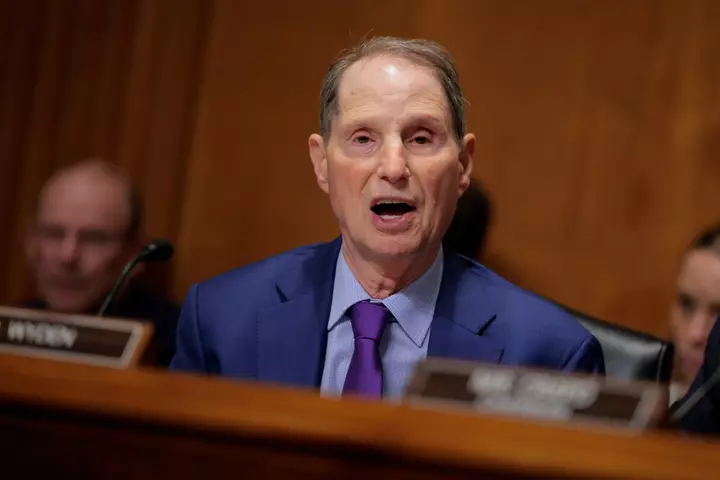
Senate Democrats introduced legislation Friday to expand unemployment benefits and establish federal minimum standards, positioning the measure as a preemptive safeguard against job displacement driven by artificial intelligence. The Stability and Opportunity for Workers Act, unveiled by Senate Finance Committee Ranking Member Ron Wyden of Oregon, aims to broaden system coverage, extend assistance during periods of economic downturn, and address growing worker anxiety surrounding emerging technology. Unemployment insurance in the United States is largely administered through state systems, so how much people receive and how long they can collect benefits can vary considerably depending on where they live.
Specifically, benefits could last 52 weeks when the unemployment rate reaches 8.5 percent, compared with the current standard of up to 26 weeks cited in coverage of the proposal. And although widespread AI-driven unemployment has not yet materialized, lawmakers are increasingly considering how the government should respond if automation causes significant displacement. Besides creating new minimum standards for unemployment benefits, the Stability and Opportunity for Workers Act would expand the kinds of workers covered by regular unemployment insurance and make benefits available for longer during periods of economic distress.
The proposal would also create a "jobseeker's allowance" intended to provide assistance to people who fall outside traditional unemployment insurance, including gig workers. Much of what we are hearing remains anecdotal, and we have yet to see the full economic impact materialize in the data,” Kevin Thompson, the CEO of 9i Capital Group and the host of the 9innings podcast, told Newsweek. A new Transition Wages program would provide financial assistance to people whose jobs have been displaced by technological change while they develop new skills.
Affected workers could receive up to 26 additional weeks of support while retraining. AI doesn't have to cause mass unemployment to create a financial crisis for individual workers,” Michael Ryan, a finance expert and the founder of MichaelRyanMoney.com, told Newsweek. A few months of unemployment checks won't necessarily solve that.” According to Roll Call, the legislation would also create income support that could last up to two years as workers retrain and establish a pilot program offering tuition assistance for workers enrolled in job-training programs.
Wyden said the broader package was not meant to represent Congress' final answer to AI-driven disruption. Policymakers are already debating whether AI will ultimately eliminate large numbers of jobs or create new ones. For now, there’s not been major workforce displacement due to AI, and AI-related job cuts have largely concentrated in technology.
Still, concern among workers is substantial. Nearly 80 percent of Americans in an October poll by The -NORC Center for Public Affairs Research said protecting workers in the age of AI was extremely or very important. That proposal would impose an excise tax on data center operators and eliminate access to certain federal tax incentives, with the broader goal of generating resources for worker assistance.
Extract — continue reading at the source.